
UV light installation in New York City
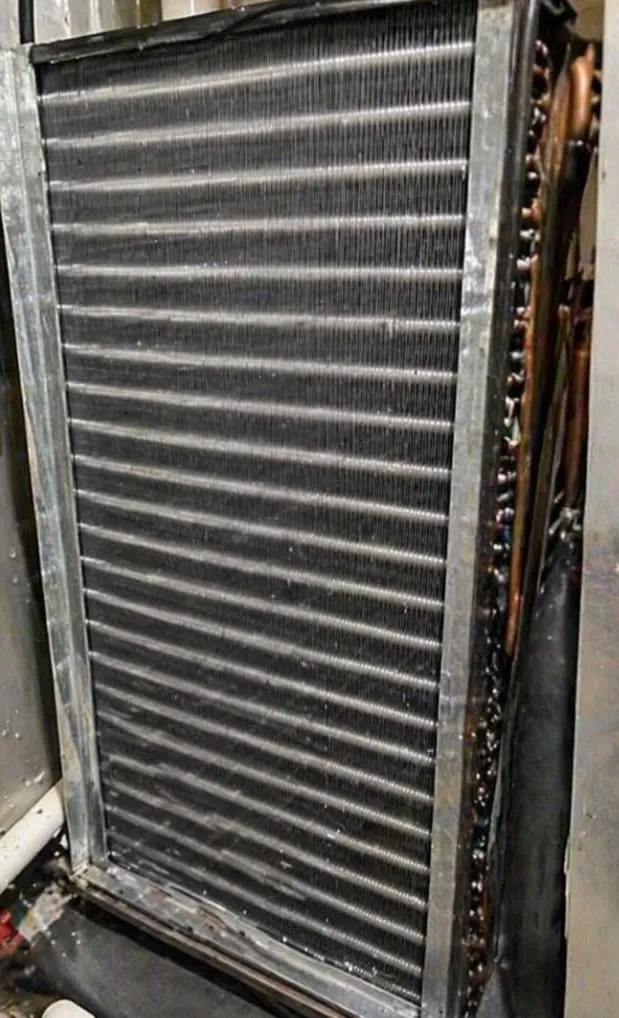
The cooling coil in your air handler stays damp all summer, and a damp, dark surface is where growth starts. We mount a UV-C lamp near the coil, usually right after a cleaning, to help keep that surface cleaner until the next one.
UV light installation, explained
A UV light for a heating and cooling system is a lamp that gives off UV-C, a kind of ultraviolet light, mounted inside the air handler or in the duct beside it. With the cabinet closed, the light stays inside with the coil.
It does the most good pointed at the coil and the drain pan. Those surfaces stay wet through the cooling season, sit in the dark and hold still, so the lamp shines on them hour after hour. That steady exposure helps keep them cleaner between cleanings. A lamp aimed only at moving air in a duct has just a moment with it, so expect less from that setup.
The lamp is not a filter. It traps nothing, and dust, hair and lint pass straight through the light and settle where they always did. It does not clean a dirty coil either, because light cannot get through a mat of dust. That is why it usually goes in right after coil cleaning or HVAC unit cleaning.
What is included
- Coil and drain pan checked first, and cleaned if they need it
- A mounting spot chosen so the lamp shines across the coil and pan
- Lamp fixed in place, with any opening made for it sealed
- Power supply connected and the wiring secured
- Plastic parts, wiring and flexible duct kept out of the direct light
- Bulb changes and shutoff explained
Signs you need it
- A musty smell that returns each cooling season
- Slime that keeps clogging the drain pan or condensate line
- Growth back on the coil between cleanings
- An air handler in a damp cellar or a closed closet
- An existing UV lamp whose bulb has stopped working
How the job goes
Check the coil
The cabinet is opened and the coil and pan are inspected. If they are coated, cleaning comes first, because the lamp only works on surfaces its light can reach.
Pick the position
We find a spot where the lamp can shine along the coil and the pan, away from materials that UV-C wears out, such as plastic, wire insulation and flexible duct.
Mount the lamp
With the power off, the lamp is fixed in place inside the cabinet or duct. If it mounts through the cabinet wall, the opening is sealed around it.
Connect the power
The lamp's power supply is connected the way its maker specifies, and the wiring is secured clear of moving parts.
Test and close
The lamp is switched on and confirmed working with the cabinet closed, so nobody looks at the bare bulb.
Explain the upkeep
We show you how to tell the lamp is on, how to switch it off before the cabinet is opened, and when to expect a bulb change.
Why it matters
The coil is the one place in the system where water, dust and darkness meet every day of the cooling season. In New York apartments, where the air handler is shut in a closet or above a ceiling, nobody sees what grows there. Growth narrows the gaps between the fins, feeds the slime that blocks condensate drains and gives the air a musty smell. A lamp shining on the coil is meant to slow that down.
It is an add-on, not a fix. If the filter does not fit, the ducts are dusty or the drain is already blocked, a lamp changes none of that. It is also not a medical device, and nobody should expect it to treat allergies or illness.
UV light installation: common questions
Does a UV light replace coil or duct cleaning?
No. The lamp removes nothing, so whatever dust is in the system stays there. Its job is to help keep a cleaned coil cleaner for longer, which is why it is installed after a cleaning and not instead of one.
How often does the bulb need replacing?
Periodically, on the schedule given by the lamp's maker. UV-C output fades with use even while the bulb still glows, so a lamp that looks fine may no longer be doing much.
Is UV-C light dangerous?
UV-C can injure eyes and skin on direct exposure. That is why the lamp sits inside a closed metal cabinet, and why it must be switched off before anyone opens that cabinet.
Related air duct services
Tell us what is going on. We will tell you what it needs.
Call or text with your ZIP code and a line about the problem. For dryer vents, text DRYER and your ZIP.