Chimney sweep in New York City
Every fire and every heating season leaves soot inside the flue, where you cannot see it. We sweep the flue, clean out the firebox and smoke shelf, look over the cap, crown and flashing, and show you photos of what we found.
Chimney sweep, explained
A chimney sweep is one visit that does two things. The flue is swept clean, and the chimney is looked over from the firebox to the cap. You finish with a clear flue and an honest account of the shape it is in.
Burning wood leaves soot and creosote on the flue walls, and a brush on flexible rods takes them off. What comes loose lands on the smoke shelf, the ledge behind the damper, and in the firebox, so those are cleaned too. The cap, the crown and the flashing are checked on the same visit, because that is where water gets in.
In New York City a chimney is often more than a fireplace. A brownstone or row house may have fireplaces on the floors above and a boiler or furnace in the basement, each venting into its own flue in the same brick stack. The heating flue works all winter whether or not anyone lights a fire, and it collects soot, scale and fallen mortar of its own.
What is included
- The flue swept along its full height
- Smoke shelf and smoke chamber cleaned out
- Firebox brushed and vacuumed
- Damper checked so it opens and closes
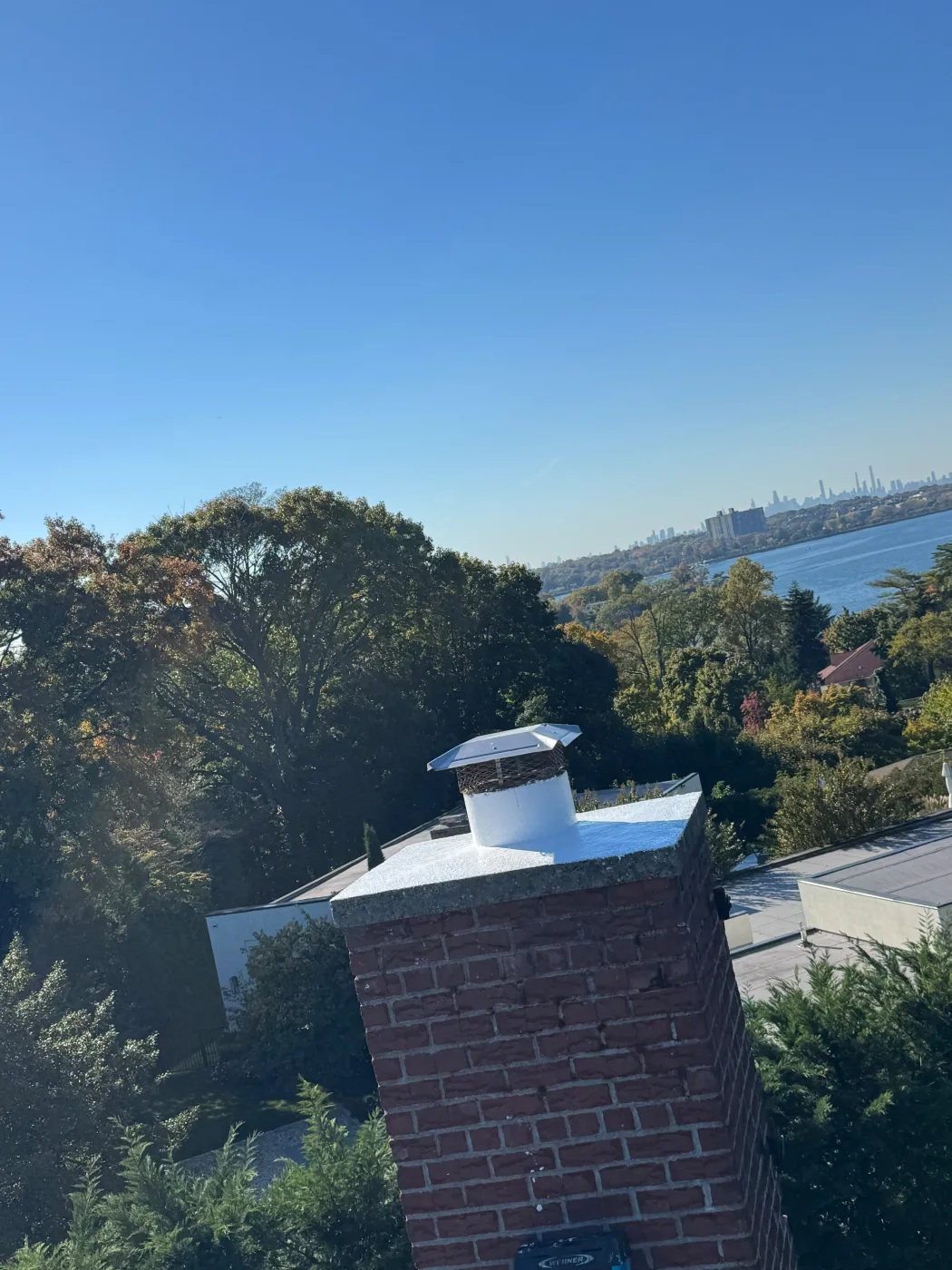
- Cap, crown and flashing looked over from the roof
- Plastic sheeting and a vacuum to contain the soot
- Photos of what we found and what we left behind
Signs you need it
- More than a year of fires since the last sweep
- Smoke coming into the room when the fire is lit
- A sharp, smoky smell from the fireplace in damp weather
- Black flakes or grit dropping into the firebox
- A boiler or furnace flue nobody has checked since you moved in
- A fireplace that came with a home you just bought
How the job goes
Cover the room
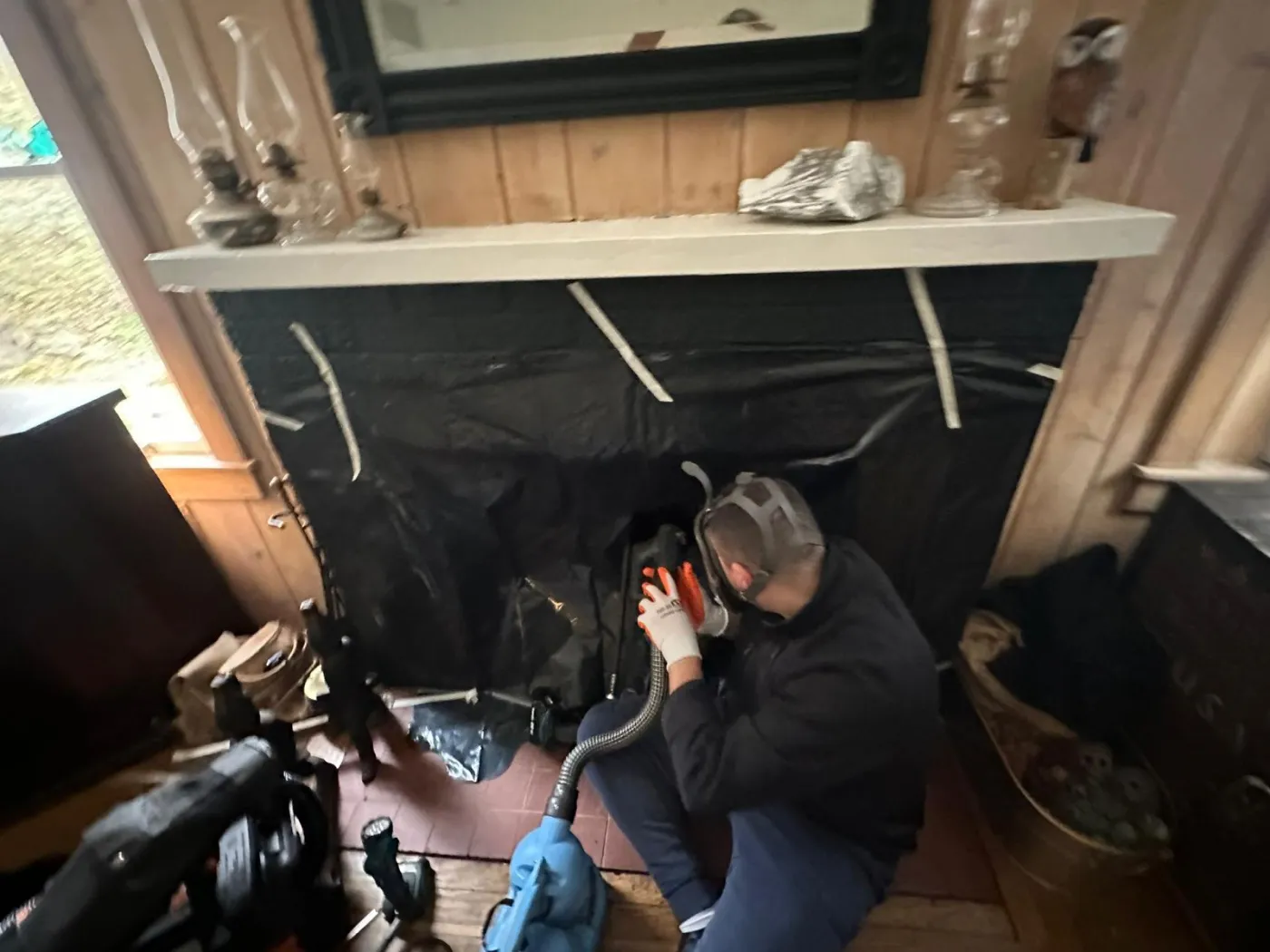
Plastic sheeting goes down around the fireplace and a vacuum runs while we work, to keep soot off your floors and furniture.
Look it over
Before any brushing we check the firebox, the damper and what can be seen of the flue, so we know what is in there and whether something is blocking it.
Sweep the flue
A brush on flexible rods travels the height of the flue and knocks the soot and creosote off the walls.
Clean out below
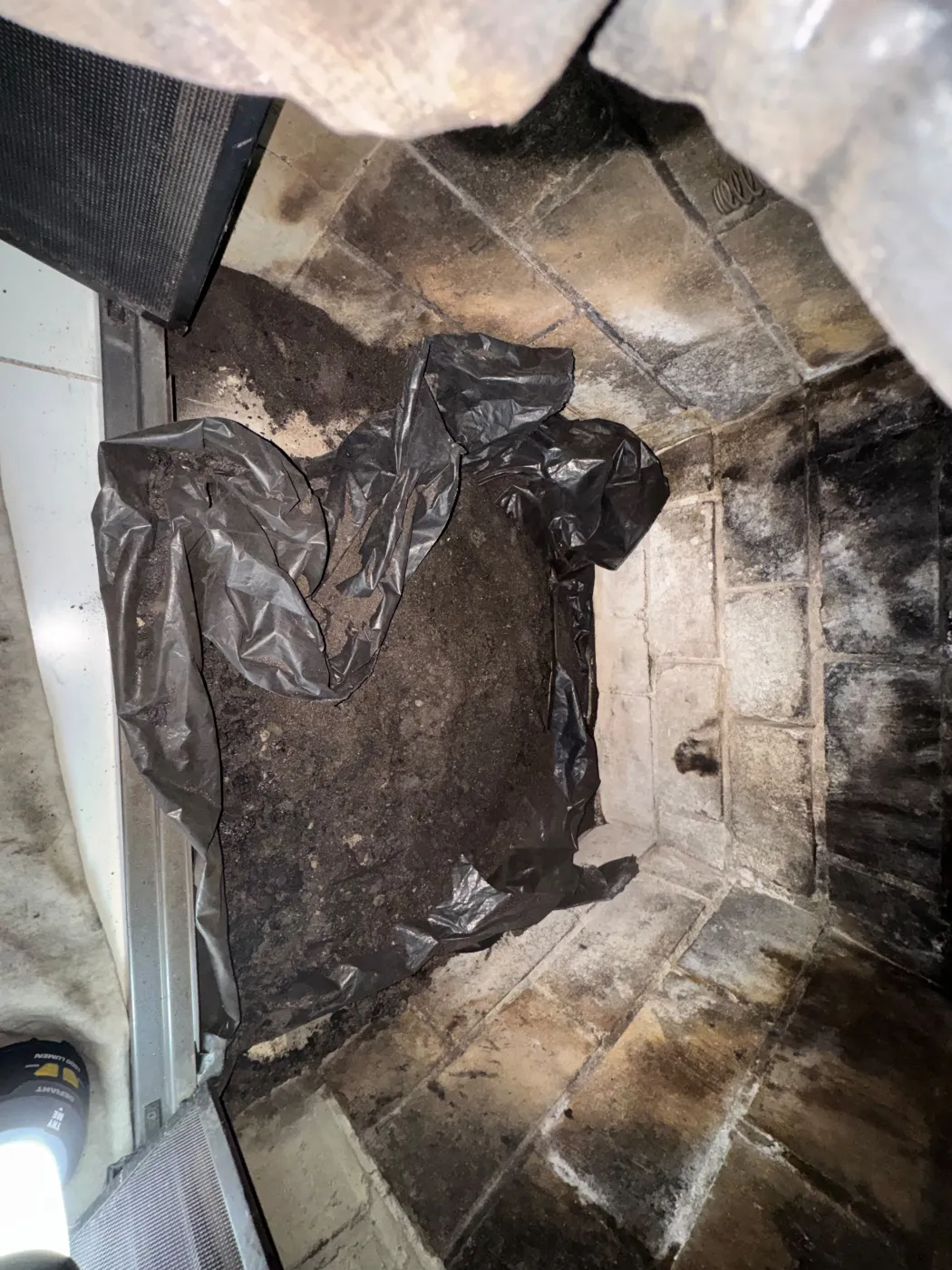
Everything that came down is brushed and vacuumed out of the smoke chamber, the smoke shelf and the firebox.
Check the top
From the roof we look at the cap, the crown and the flashing, and at the brick and mortar of the stack itself.
Show you
You see photos of the flue and the chimney top. If something needs repair, you get a quote before any of that work starts.
From our own jobs
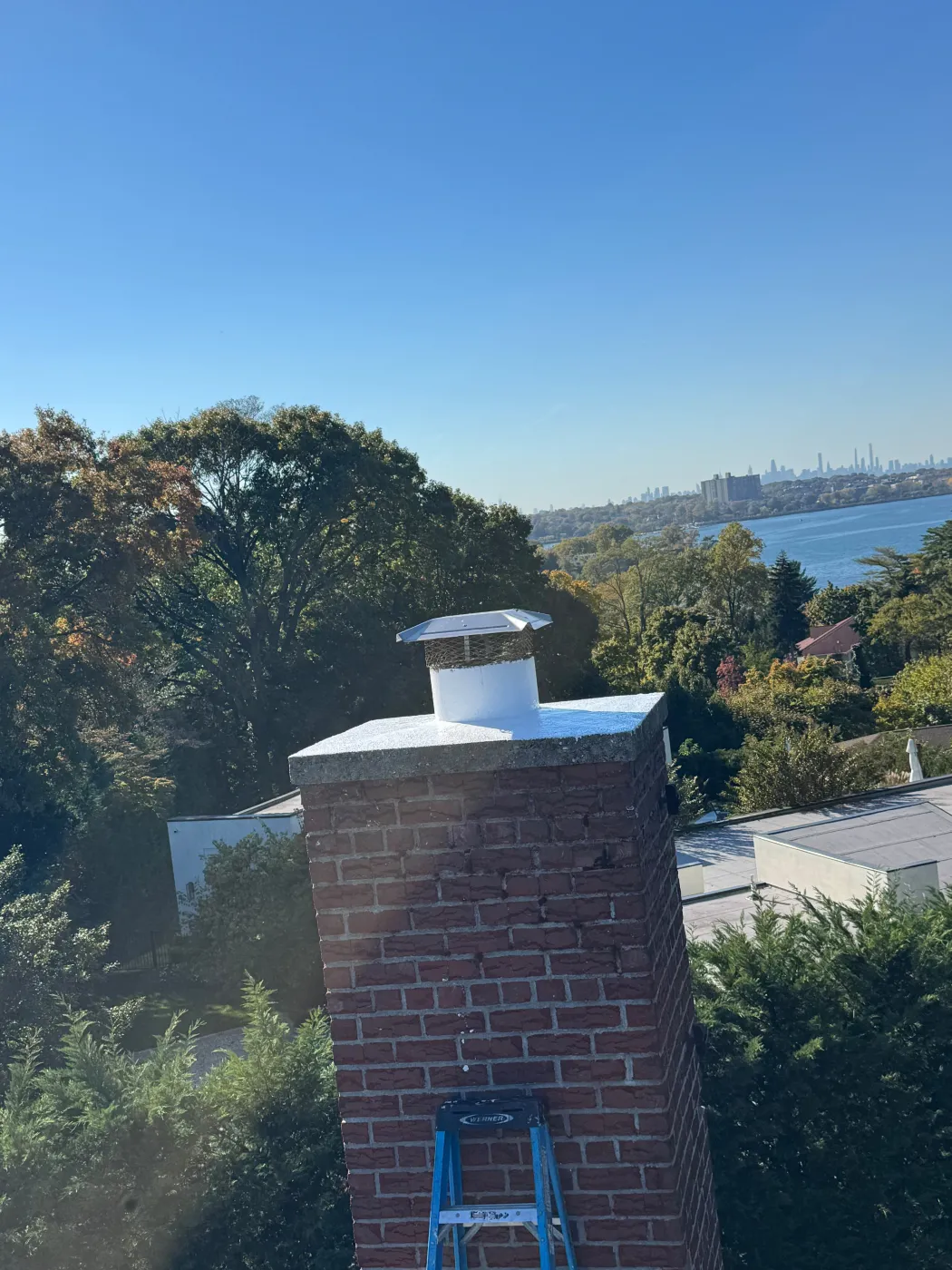
Our photos, not stock.
Why it matters
NFPA 211, the national standard for chimneys, fireplaces and vents, says they should be inspected at least once a year. The reason is that almost everything that goes wrong with a chimney happens out of sight: inside the flue, behind the damper or up on the roof.
Creosote is fuel. Once enough of it coats a flue, a hot fire below can ignite it, and a fire inside the chimney can crack the liner and heat the structure around it. A flue choked by soot, a nest or fallen brick is the other danger: smoke backs up into the room, and with a boiler or furnace so can carbon monoxide, which you cannot see or smell.
The look that comes with a sweep catches the slower problem, which is water. A missing cap, a cracked crown or loose flashing lets rain into the stack, and over a New York winter that water freezes and pries brick and mortar apart.
All 21 chimney services
Sweeping is where most chimney work starts, and what it turns up decides what comes next. The other twenty chimney services fall into a few groups. Cleaning and inspection come first: chimney cleaning covers the removal of soot and creosote in detail, a chimney inspection is the closer check inside and out, and chimney maintenance is the yearly routine that ties the two together. Heating appliances have their own pages: furnace chimney cleaning, boiler chimney cleaning, and vent installation for the metal pipe that joins the appliance to the chimney.
Caps and crowns keep water out at the top. If a flue has never had a cover, that is rain cap installation. A cap that is rusted through or gone calls for cap replacement, and one that is only loose or torn can often be saved with a cap repair. Crown repair seals or rebuilds the slab around the flue. An open top also lets animals in. Nest removal clears out what birds, squirrels or raccoons have left in a flue and closes it off with a screened cap.
Flues and liners carry the heat and exhaust. Flue repair deals with cracked tiles, open joints and the spot where an appliance pipe enters the chimney wall. Liner repair covers clay and metal liners that have worn out, and flue installation gives an unlined or badly sized chimney a new flue. Chimney insulation keeps the exhaust warm so it drafts well, and damper repair fixes the plate that closes a fireplace flue when it is not in use.
Masonry is the stack itself, and on older buildings it needs the most attention. Chimney repair is the general page for cracked brick, missing mortar and leaks. Chimney pointing renews worn mortar joints, chimney restoration is the larger job of bringing an old stack back, and chimney installation covers a new chimney where one is needed. We do all of it in Manhattan, Brooklyn, Queens, the Bronx and Staten Island.
Go to a service
- Chimney sweep
- Chimney cleaning
- Chimney inspection
- Chimney repair
- Chimney restoration
- Chimney maintenance
- Chimney cap replacement
- Chimney cap repair
- Rain cap installation
- Chimney crown repair
- Chimney flue repair
- Chimney flue installation
- Chimney liner repair
- Chimney damper repair
- Chimney pointing
- Chimney insulation
- Chimney vent installation
- Chimney installation
- Furnace chimney cleaning
- Boiler chimney cleaning
- Nest removal
On the job
Short clips from real chimney jobs.
Chimney sweep: common questions
How often should a chimney be swept?
Have it looked at every year. Whether it needs sweeping depends on how much you burned: a fireplace used most winter evenings usually does, and one lit only a few times may not. A boiler or furnace flue needs the same yearly look, because it runs all season.
Do you sweep chimneys that serve a boiler or furnace, not a fireplace?
Yes. A heating flue is swept from the cleanout at its base or from the roof, and the pipe that connects the appliance to the chimney is checked too. Many New York chimneys carry both kinds of flue in one stack.
I just bought a house with a fireplace. Can I use it?
Not until someone has looked up the flue. Fireplaces in older New York houses are sometimes blocked, unlined or sealed at the top, and none of that shows from the room. A sweep tells you what you have.
How do I get a quote?
Call or text (917) 983-1283 with your ZIP code. Tell us what the chimney serves, a fireplace, a boiler or a furnace, and when it was last swept if you know. A photo of the fireplace or the chimney top helps.
Related chimney services
Tell us what is going on. We will tell you what it needs.
Call or text with your ZIP code and a line about the problem. For dryer vents, text DRYER and your ZIP.