
Chimney damper repair in New York City
A damper that will not open fills the room with smoke, and one that will not close sends your heat up the chimney all winter. We get it moving again, repair it, or replace it with a damper that seals.
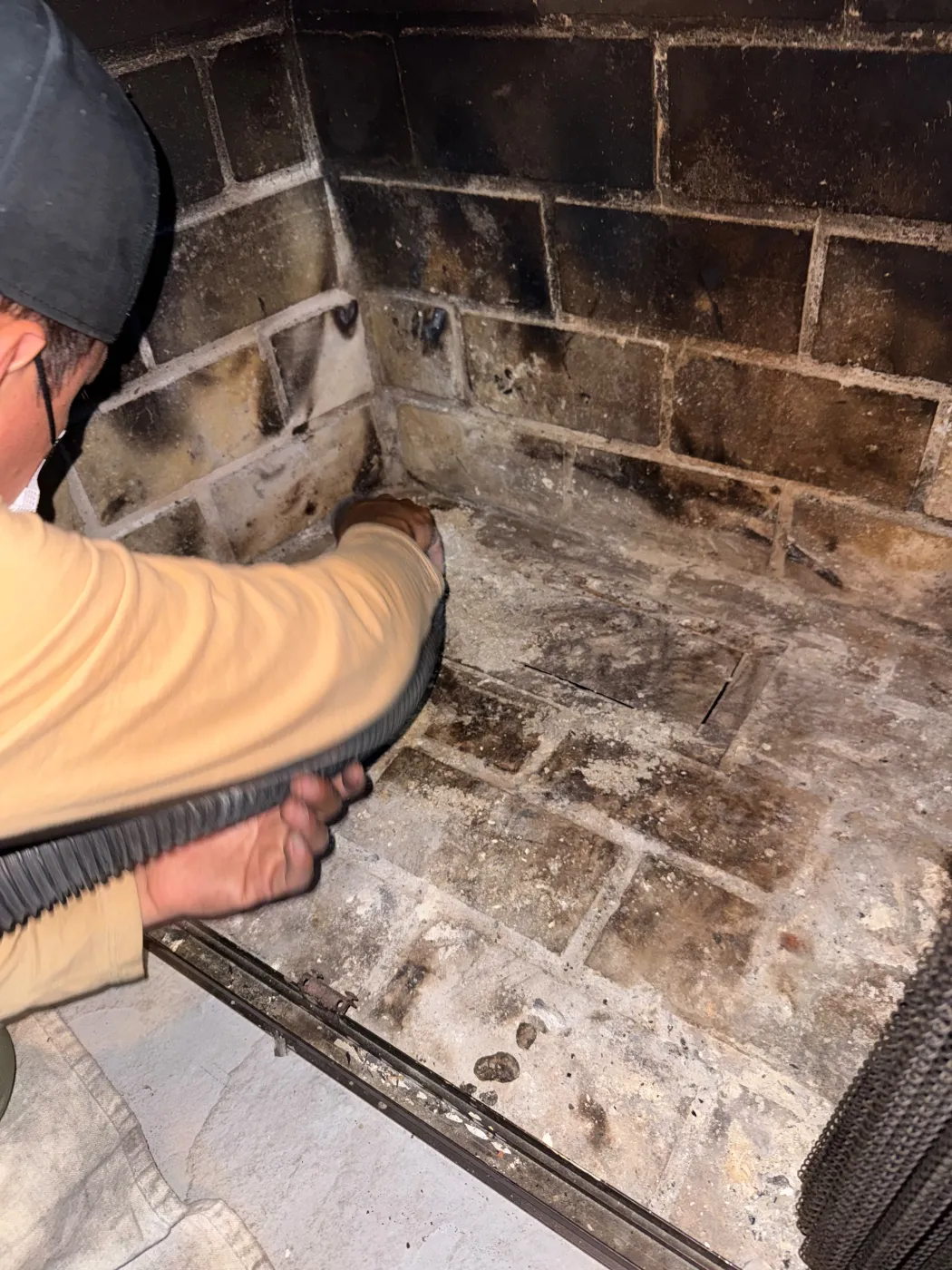
Chimney damper repair, explained
The damper is the metal door in a fireplace chimney. You open it before lighting a fire so smoke can leave, and close it once the fire is fully out so the flue is not an open hole in the house. Most fireplaces have a throat damper: a cast iron or steel plate just above the firebox, worked by a handle, a lever or a knob on the face of the fireplace.
Throat dampers live in a hard spot. Rain and damp air come down an uncapped flue and rust the plate and its hinge. Heat warps it so it no longer sits flat. Soot and fallen mortar pile up behind it on the smoke shelf until it jams. Handles snap, and the plate can drop off its pivots.
Many New York brownstone and row house fireplaces still have their original dampers. Some have sat unused for so long that nobody in the house knows whether the damper is open or shut. If you are bringing a fireplace back into use, the damper is one of the first things to check, along with a full chimney inspection.
What is included
- Firebox, throat and smoke shelf cleaned so the damper can be reached
- Plate, frame, hinge and handle checked
- A stuck damper loosened and cleared of rust and debris
- Broken handles and worn parts replaced where a match can be found
- A top-mounted damper fitted when the old one is past repair
- Opening and closing tested, with photos of the result
Signs you need it
- Smoke coming into the room when you light a fire
- A handle that will not move, or moves without doing anything
- A cold draft from the fireplace when it is not in use
- Rust flakes or bits of metal in the firebox
- No way to tell whether the damper is open or closed
How the job goes
Look and test
We work the handle, look at the plate and frame with a light, and check the top of the chimney, since a missing cap is often the reason a damper rusted.
Clear the throat
Soot and debris are swept and vacuumed off the damper and the smoke shelf behind it. Many stuck dampers are simply buried.
Loosen or repair
Rust is worked loose, the plate is set back on its pivots, and a broken handle or rod is replaced if a matching part will fit.
Replace if needed
If the plate is warped, cracked or rusted through, we quote a top-mounted damper. It sits on top of the flue, closes against a gasket, and is worked by a cable that runs down to a handle in the firebox.
Test it with you
You open and close the damper yourself before we leave, so you know how it feels and where the handle sits in each position.
Why it matters
A damper that sticks shut, or opens only partway, is a smoke problem. The fire cannot draft, and smoke and carbon monoxide come into the room instead of going up the flue.
A damper that will not close is a heat problem. Warm air rises out of the house through the open flue all winter and cold air drops down it. A warped throat damper leaks even when it is shut, because metal resting on metal never seals tightly. That is why a top-mounted damper is often the better replacement: it closes the flue at the top with a gasket, and while it is closed it also keeps rain and animals out.
Chimney damper repair: common questions
How do I know if my damper is open?
Shine a flashlight up past the top of the firebox. With a throat damper open you can see into the flue; closed, you see a metal plate. If you cannot tell, do not light a fire to find out.
Should I repair the old damper or switch to a top-mounted one?
If the plate is sound and only stuck, or the handle is broken, a repair is usually enough. If the plate is warped or rusted through, parts for an old damper can be hard to match, and a top-mounted damper seals better than the original did.
Why did my damper rust?
Almost always water. Rain falls straight down a flue with no cap, or a cracked crown lets water in, and it lands on the damper. Fixing the damper without fixing the way the water gets in means doing it twice, so we check the top of the chimney at the same visit and tell you if it needs a new cap.
Related chimney services
Tell us what is going on. We will tell you what it needs.
Call or text with your ZIP code and a line about the problem. For dryer vents, text DRYER and your ZIP.