
Chimney rain cap installation in New York City
A flue with no cap is an open pipe pointed at the sky, and every storm sends water straight down it. We fit a rain cap with a mesh screen over the open flue, to keep rain, animals and debris out while smoke and exhaust still get out.
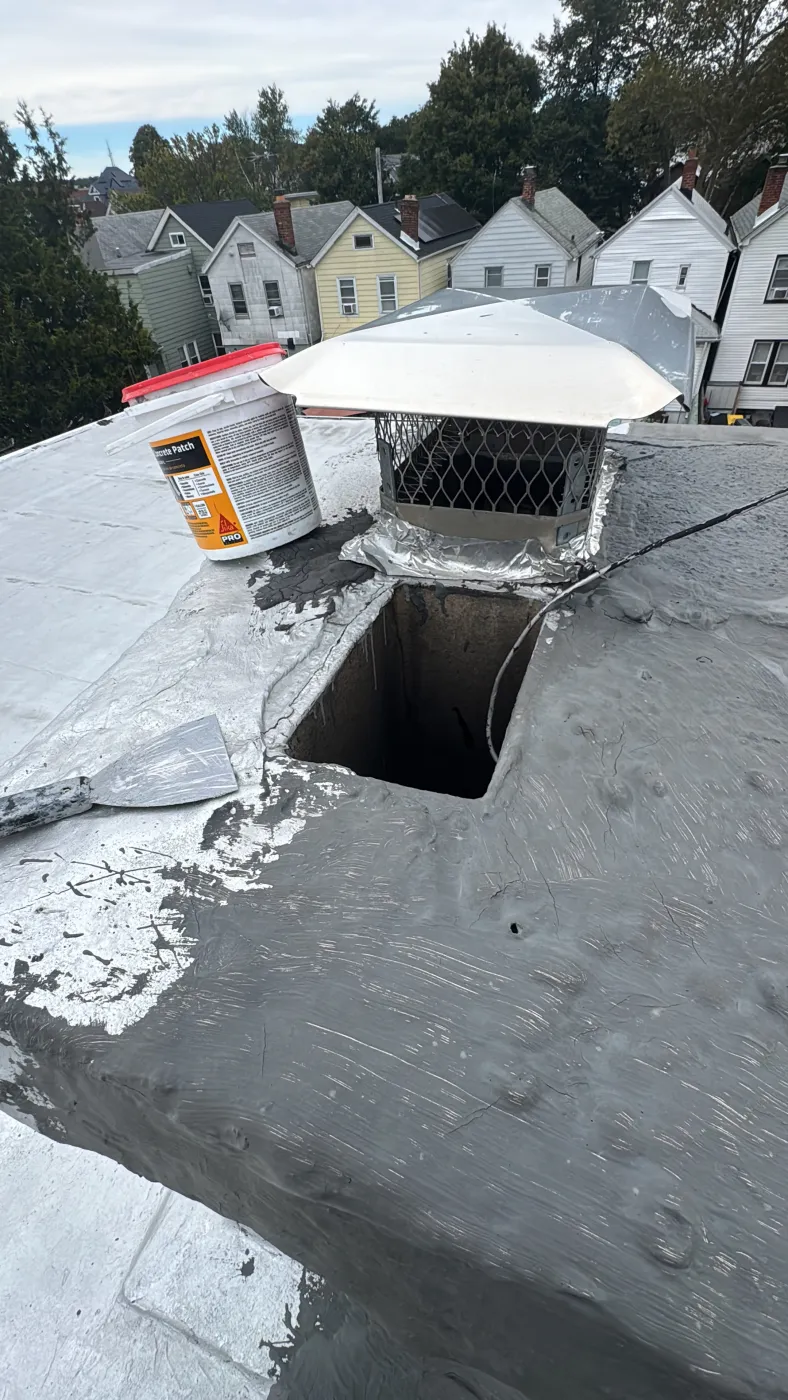
Rain cap installation, explained
Rain cap installation is for a flue that has never had a cover. A great many older New York chimneys were built that way: the flue simply ends at the top of the stack, open.
It is especially common on flat roofs. The chimneys on row houses and small apartment buildings are often short brick stacks, sometimes shared between neighbors, that nobody sees from the street. They may serve a fireplace, a boiler or a furnace, or a flue that went out of use long ago and still takes in water.
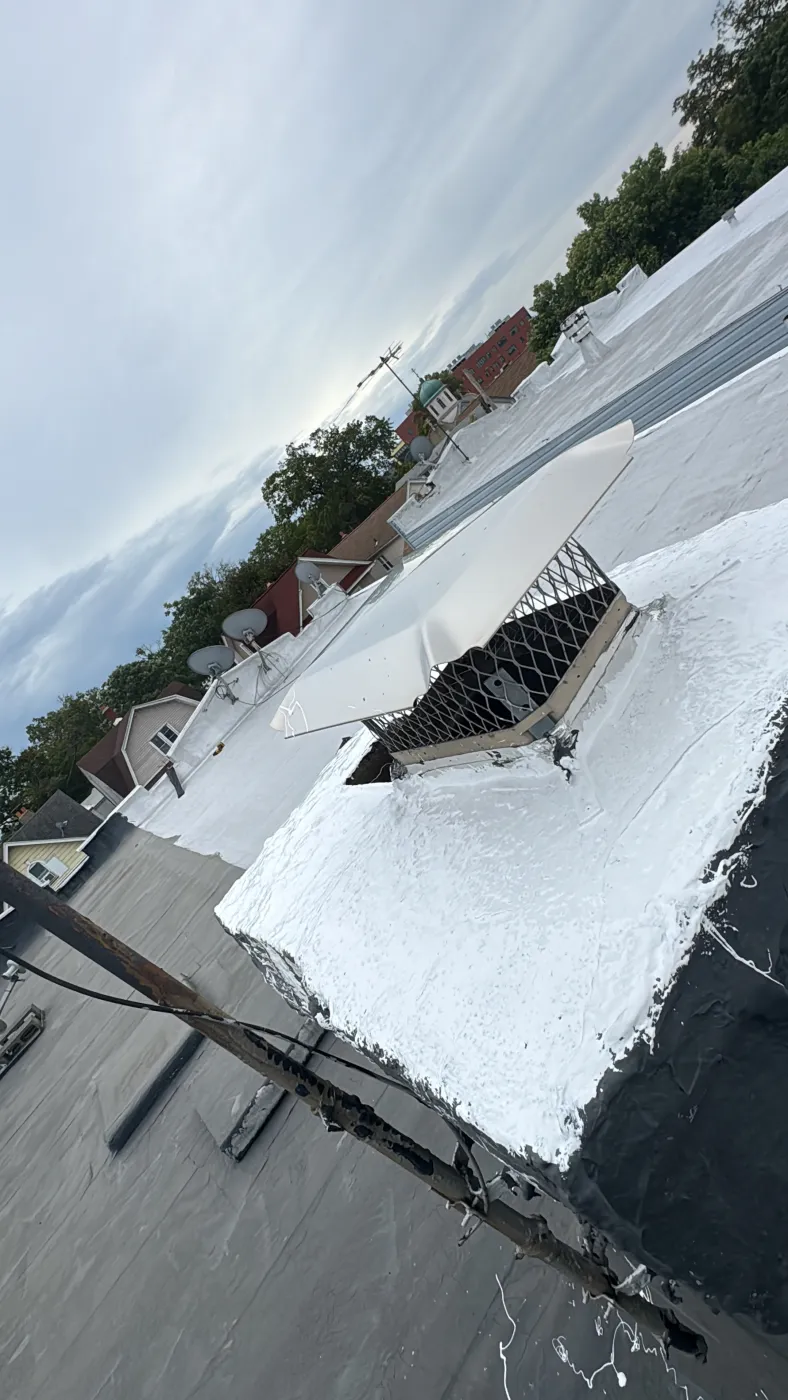
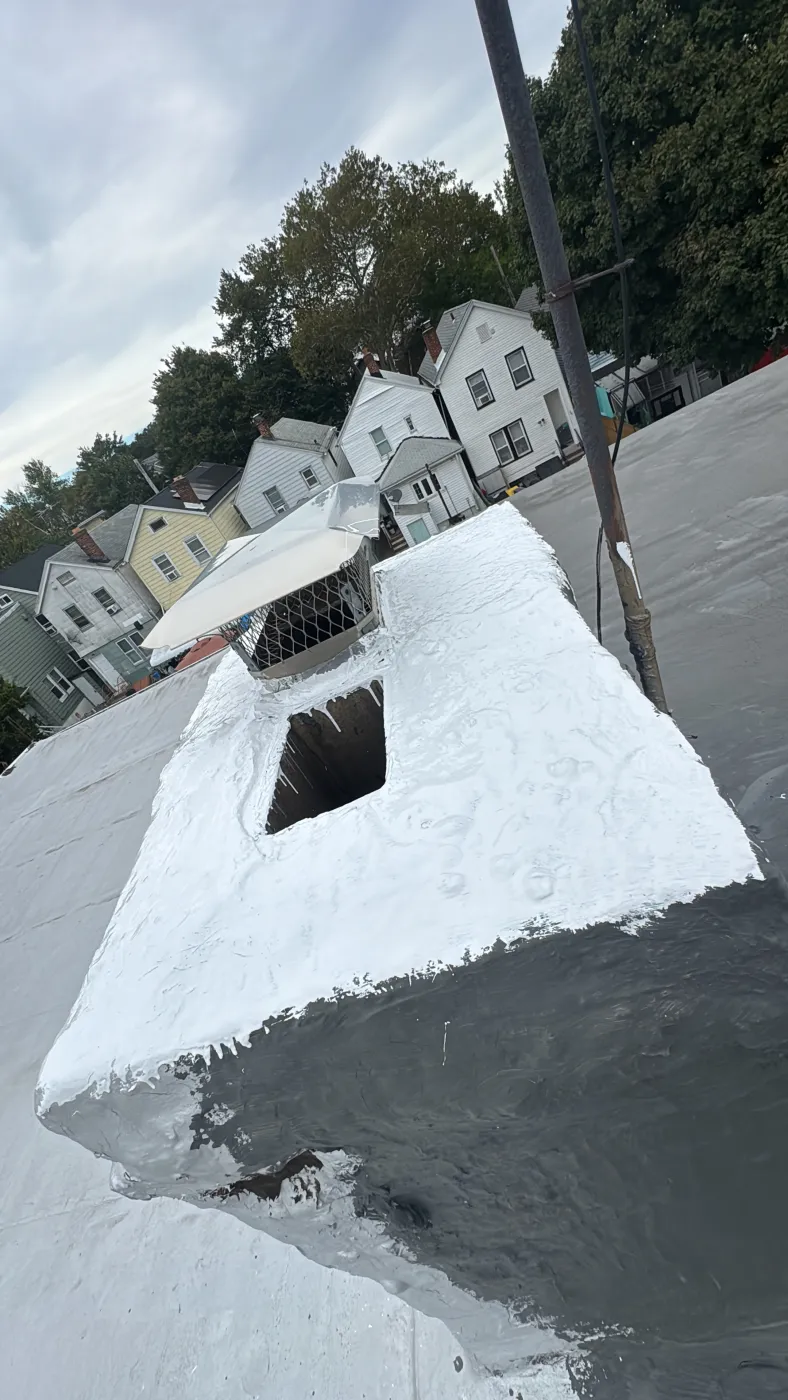
A rain cap is a metal lid held above the flue opening, with a mesh screen around the sides. The lid sheds the rain. The screen keeps out birds, squirrels, raccoons, leaves and windblown trash, while leaving the opening clear for the draft.
This is a first-time fitting, so there are no old brackets to reuse and the flue top has to be made ready. If your flue had a cap that has rusted or blown away, that job is cap replacement.
What is included
- The open flue measured and what it serves confirmed
- The flue checked for nests, debris and water damage
- The top of the flue cleaned and made ready for the cap
- A rain cap with a mesh screen fitted over the opening
- The base fastened and sealed to the flue or the masonry
- Photos of the open flue and of the cap in place
Signs you need it
- An open hole at the top of the chimney, with no cover
- Water in the firebox or at the base of the flue after rain
- A rusted damper or rusty streaks in the firebox
- A damp, sooty smell after wet weather
- Leaves, twigs or feathers coming down the flue
- A flat-roof chimney you have never seen the top of
How the job goes
Look at the flue
We check what the flue serves, how it ends at the top, whether as a clay tile that rises above the stack or an opening flush with the brick, and what shape the masonry around it is in.
Clear it first
Anything that has collected in an open flue comes out before it is covered: leaves, nesting material, fallen mortar.
Choose the cap
The cap is matched to the opening. A raised tile takes a cap that clamps to it, and a flush opening takes one that fastens to the top of the stack.
Prepare the top
Loose mortar is cleaned off and the surface the cap will sit on is sealed, so the base has something solid to hold.
Fit and fasten
The cap is set over the flue and secured, with the lid clear of the opening so smoke and exhaust can pass.
Share the photos
You get photos of the open flue as we found it and of the finished cap.
From our own jobs
Our photos, not stock.
Why it matters
Rain that falls into an open flue has nowhere good to go. In a fireplace it rusts the damper and leaves a damp, sooty smell in the room. In a heating flue it runs to the bottom, where it rusts the connector pipe and soaks the base of the chimney. Inside the flue itself it works on the mortar joints through every freeze and thaw.
An uncovered flue is also an open door. Birds and squirrels nest in it, and a nest or a fallen animal can block it. A blocked flue is a hazard: smoke from a fireplace, or carbon monoxide from a boiler or furnace, comes back into the building instead of leaving it.
Rain cap installation: common questions
My chimney has gone without a cap for as long as anyone remembers. Why add one now?
Because water has been getting in all that time, and the damage it does is slow and hidden. Open flues are also where nests end up. A cap keeps both out from then on.
Will a cap affect the draft?
A cap that fits should not. The lid sits above the opening and the mesh sides are open, so smoke and exhaust leave as before. On a windy roof a cap can even steady the draft, by keeping gusts from blowing straight down the flue.
Do boiler and furnace flues need rain caps too?
Yes. They take in the same rain and attract the same animals, and a blockage there is more dangerous because the exhaust is invisible. The cap has to suit a heating flue and leave its opening clear, so say what the flue serves when you ask for a quote.
What about a flue that is no longer used?
It still needs a cover. An unused flue takes in as much rain as a working one, and the water soaks into the chimney wall and can show up as damp patches indoors. Tell us the flue is out of use, so the right cover is chosen for it.
Related chimney services
Tell us what is going on. We will tell you what it needs.
Call or text with your ZIP code and a line about the problem. For dryer vents, text DRYER and your ZIP.