
Air duct disinfecting in New York City
Ducts that have had mold, water, pests or a smell that will not leave need more than brushing. After the ductwork is cleaned we apply a disinfecting treatment to the cleaned surfaces, and we show you where the moisture is coming from so it can be fixed.
Air duct disinfecting, explained
Disinfecting is a second step, not a different kind of cleaning. Once the dust and debris are out of the ductwork, a treatment is applied to the cleaned surfaces inside it. It is meant for systems with a particular history: mold at the vents or in the ducts, a leak or flood that wet the ductwork, mice, insects or birds that got in, or an odor that stayed after a cleaning.
The order matters. A treatment applied over dust reaches the top of the dust and nothing underneath. That is why the ducts are cleaned first, and why treating dirty ducts is not a shortcut around cleaning them.
Mold in ductwork is a moisture problem before it is a duct problem. It grows where dust and water meet: on ducts that sweat in a humid cellar, under a flat roof that has leaked, beside a coil whose drain pan has overflowed. The treatment deals with what is on the surfaces now. The moisture source has to be fixed too, or the growth can return.
What is included
- Inspection to find where the mold, moisture or odor starts
- Affected ductwork fully cleaned first
- Treatment applied to the cleaned duct interiors and plenums
- Registers and grilles cleaned and treated
- Wet or moldy insulation and flexible duct flagged for replacement
- Photos of what was found, including the moisture source
Signs you need it
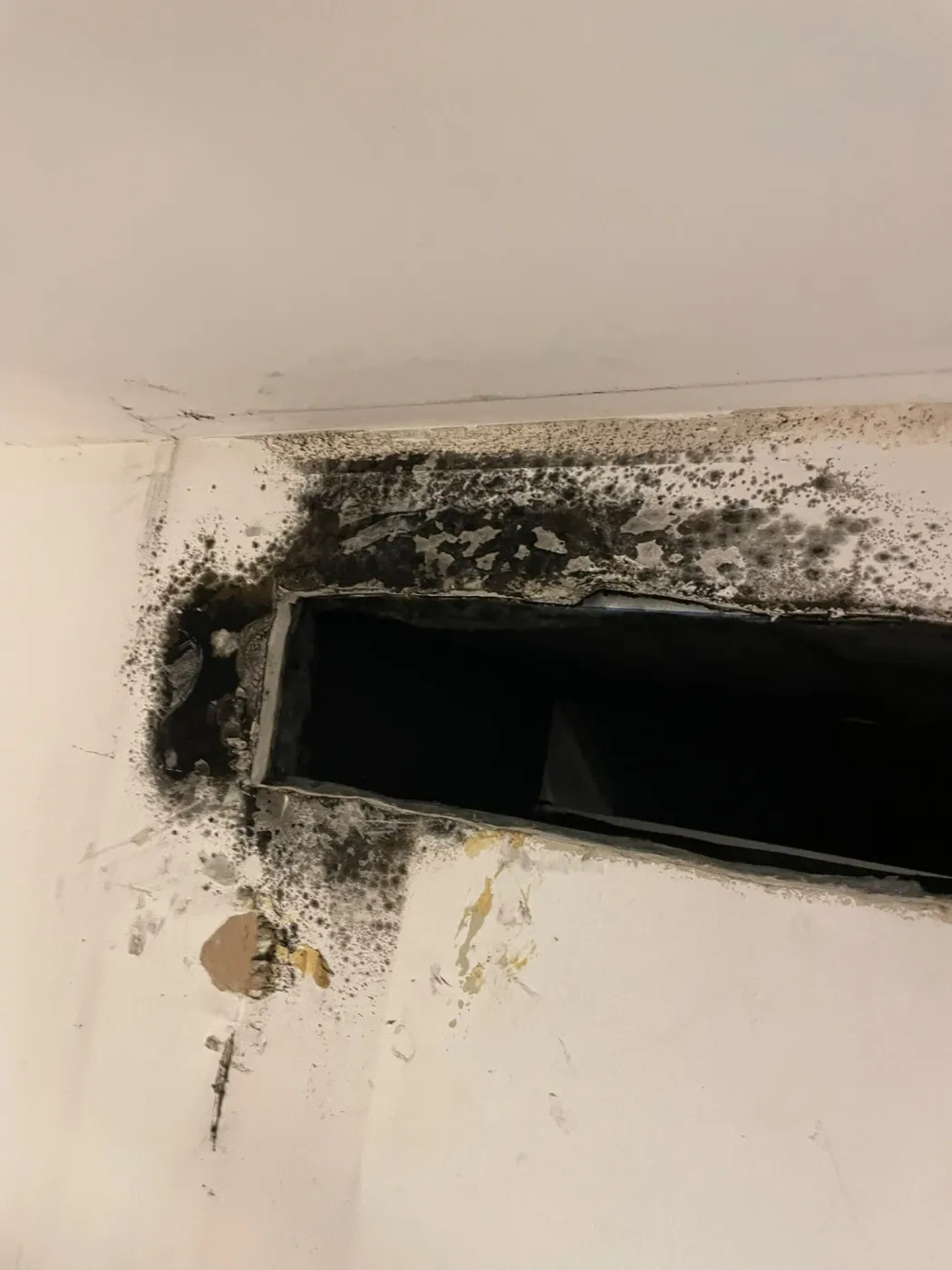
- Dark spotting on or around a vent
- A musty smell that gets stronger when the system runs
- Ductwork that was wet in a leak or flood
- Droppings or nesting material in the ducts
- An odor that stayed after the ducts were cleaned
How the job goes
Find the cause
We look at the vents, inside the ducts, at the coil and drain pan and at the spaces the ducts run through, and photograph any growth, staining or water.
Clean first
The affected ductwork is brushed and vacuumed under suction, and any pest debris is removed, so the treatment can reach the duct surface itself.
Apply the treatment
With the system off, the disinfecting treatment is applied to the cleaned interior of the ducts and plenums.
Treat the vents
Registers and grilles are cleaned and treated, and the marks around the vent opening are wiped down.
Wait, then restart
The system stays off for as long as the treatment calls for. Then it is run and checked.
Show the source
You see photos of the ductwork before and after, and of the leak, blocked drain or condensation that still needs fixing.
From our own jobs
Our photos, not stock.
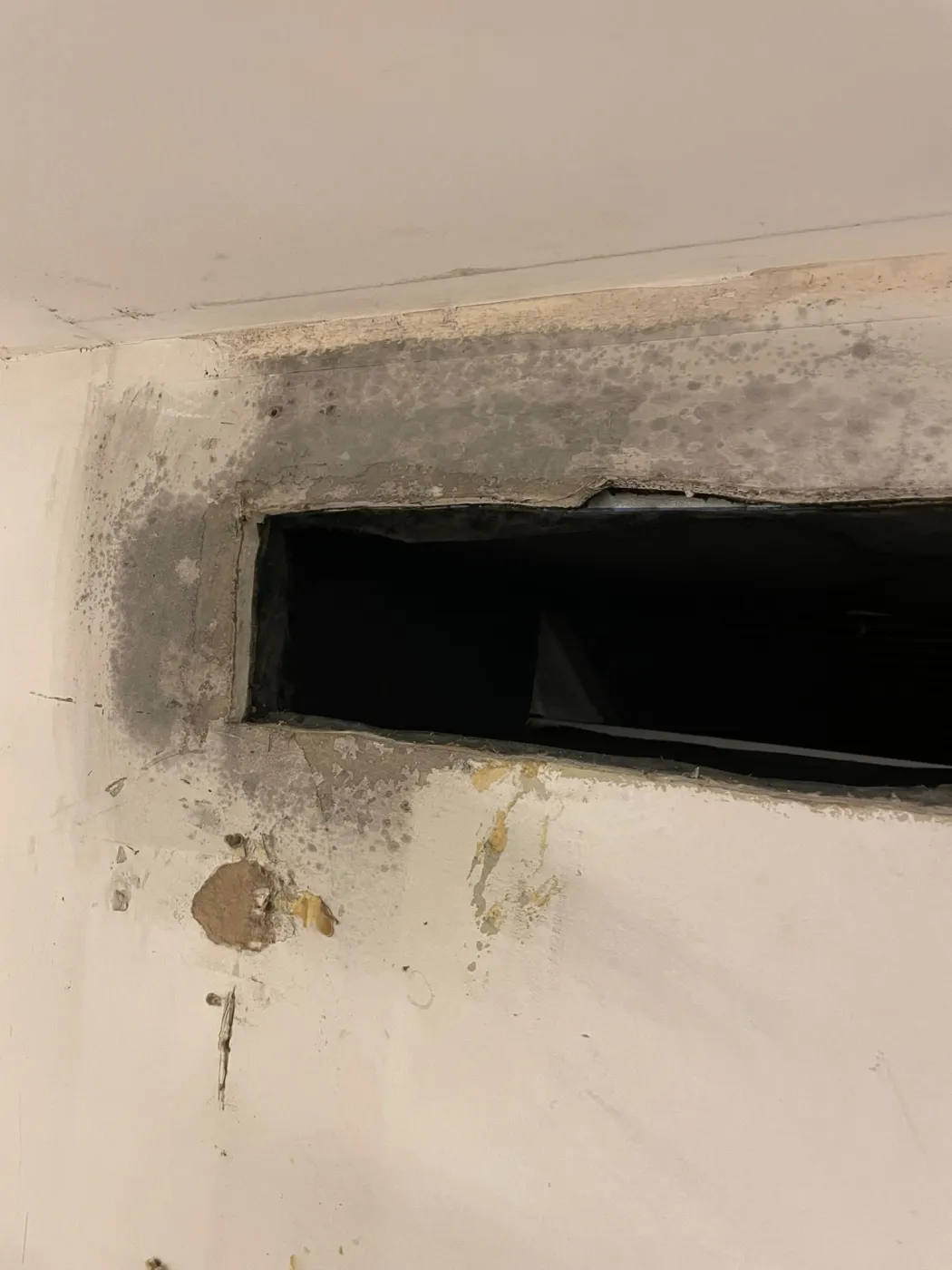
The same air vent, with mold around the opening and then after cleaning and mold treatment.
Why it matters
Supply ducts lead to every room, so growth or odor in one section does not stay there. Mold in the air stream can aggravate allergies, and a smell that comes back each time the system starts is hard to live with.
It also matters to be straight about what the treatment is. It treats cleaned ductwork. It is not a coating that keeps ducts clean, and it does not change the conditions that let mold grow. Bare metal can be cleaned and treated, but duct insulation or flexible duct that has been soaked and gone moldy usually has to be replaced.
Air duct disinfecting: common questions
Do ducts need disinfecting every time they are cleaned?
No. For ordinary household dust, air duct cleaning is the whole job. Disinfecting is for ducts with a specific history: mold, water, pests or an odor that cleaning alone did not clear.
Can you treat the ducts without cleaning them first?
It would not do much. The treatment has to touch the duct surface, and in a dirty duct that surface is under a layer of dust. Cleaning first is what lets the treatment reach it.
Will the mold come back?
It can, if the moisture stays. The treatment deals with the cleaned surfaces as they are today and does not stop water from returning. Fix the leak, the blocked drain or the condensation, and the ducts have a much better chance of staying dry.
Is the dark stuff around my vent mold or dust?
Not every dark mark is mold. Dust sticks to a damp grille and leaves streaks where air leaks past its edges. Spotty growth, a musty smell and moisture nearby point to mold. Either way the first step is the same: find out what is making that spot damp.
Related air duct services
Tell us what is going on. We will tell you what it needs.
Call or text with your ZIP code and a line about the problem. For dryer vents, text DRYER and your ZIP.