
Chimney insulation in New York City
A cold flue drafts poorly and collects moisture and creosote. We insulate the liner so exhaust stays warm on its way up and leaves the chimney instead of condensing inside it.
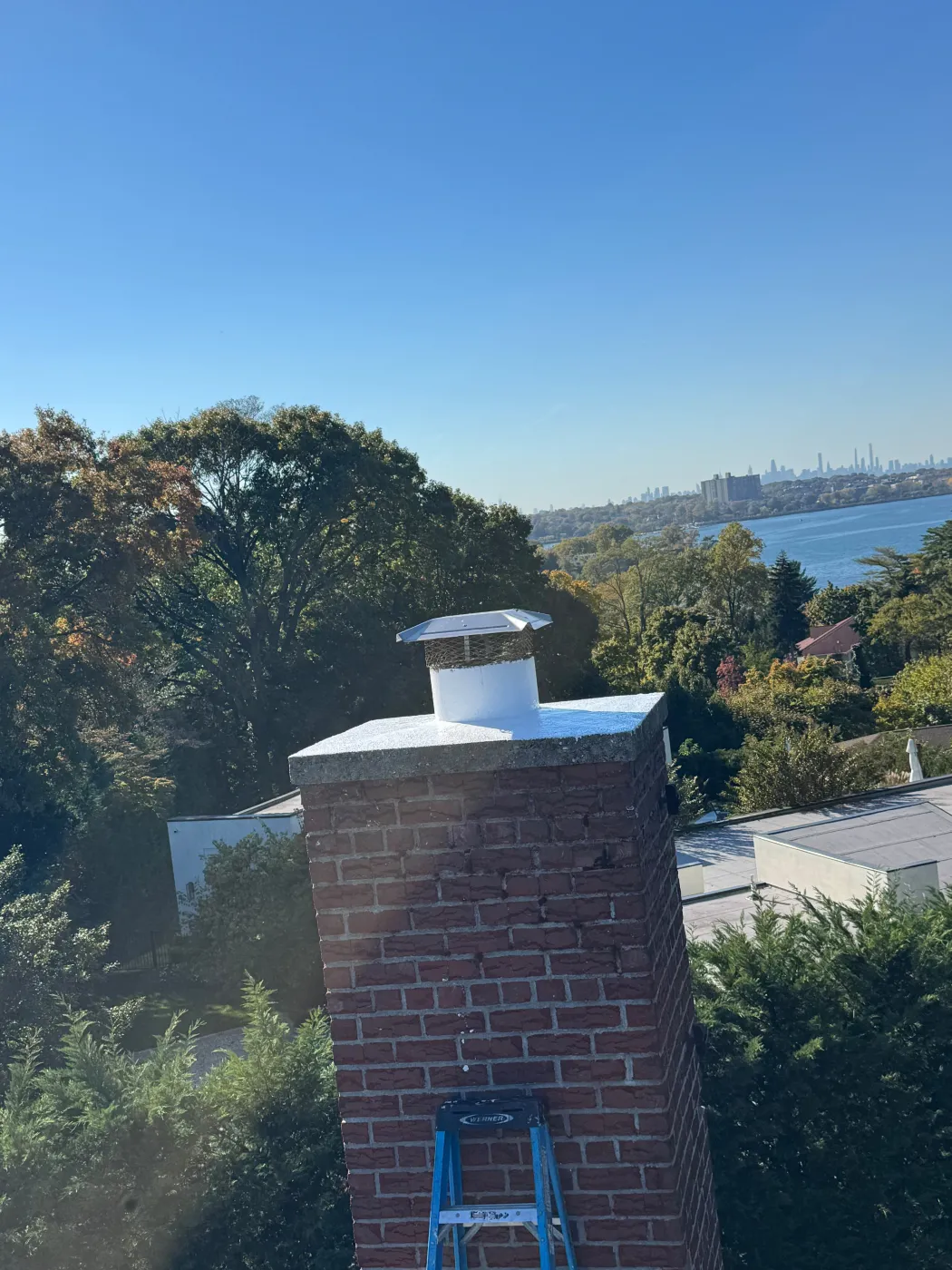
Chimney insulation, explained
Chimney insulation means insulating the flue liner, the metal tube that carries exhaust up through the chimney. It is done in one of two ways. A blanket of insulation is wrapped around the liner before it is lowered into the chimney, or an insulating mix is poured into the space between the liner and the brick once the liner is in place.
The reason is simple. Exhaust rises because it is warmer than the air around it. If the flue walls are cold, the exhaust cools as it climbs, slows down and drops its moisture on the way. In a wood-burning flue that moisture carries creosote. In a boiler or furnace flue it is acidic, and it attacks the liner and the mortar.
Insulation matters most on exterior chimneys, the kind built on an outside wall with cold air on three sides, which many detached houses in the city have. A chimney that runs up through the middle of a row house stays warmer, but a tall one can still run cold near the top.
Insulation is nearly always done together with a new liner, because a wrap has to go on before the liner goes in. If you are planning a chimney flue installation, that is the time to decide on it.
What is included
- The flue inspected, including the space around the liner
- The flue swept before any work
- Insulation wrapped around the new liner, or poured around it
- The liner connected and sealed at the bottom
- The top of the flue closed with a plate and a cap
- A draft check, and photos of each stage
Signs you need it
- Smoke rolling back into the room when a fire is first lit
- Creosote building up again soon after a sweep
- Water streaks or rust at the damper or the cleanout
- White staining on the outside of the chimney
- A chimney on an outside wall that is slow to draw
- A new liner about to go in
How the job goes
Inspect the flue
We check the size, shape and condition of the flue and how much room there is around a liner. That decides whether a wrap or a poured insulation suits the chimney, and the quote covers liner and insulation together.
Sweep and prepare
The flue is swept clean. For a wrap, the liner is laid out and the blanket is fitted around it along its full length and secured.
Lower the liner
The insulated liner goes down the chimney and is connected at the bottom. For a poured insulation, the liner goes in first and the mix is poured around it from the top.
Close the top
A plate seals the top of the flue around the liner and a cap goes on, so rain cannot reach the insulation.
Check the draft
We run the appliance or test the fireplace, confirm the flue is drawing, and show you the photos.
Why it matters
A warm flue works better in every way that matters. Draft is stronger and steadier, so fires start without smoking and burners vent cleanly. Less moisture condenses, so there is less creosote to sweep out of a wood-burning flue and less acidic water eating at a boiler flue.
Insulation also puts a layer between the hot liner and the masonry around it, and the house beyond that. With a wood stove or insert, where the flue runs hot, that separation is a real part of what makes the installation safe.
It is not a cure for everything. A flue that is the wrong size, blocked or leaking has to be put right first, and a chimney inspection is how you find that out.
Chimney insulation: common questions
Does every liner need insulation?
Not always. A short chimney inside the house, serving an appliance with hot exhaust, may draft well without it. Insulation earns its place on exterior chimneys, tall flues, wood stoves and inserts, and newer boilers and furnaces with cooler exhaust.
Can you insulate a liner that is already installed?
Sometimes. If the liner is sound and there is enough space around it, insulation can be poured in from the top. A wrap cannot be added afterward, because it goes on before the liner is lowered.
Can a clay tile flue be insulated?
Not directly. Clay tiles are built into the chimney, so there is nothing to wrap. Insulating that kind of flue means fitting an insulated metal liner inside it, sized to the fireplace or appliance.
Related chimney services
Tell us what is going on. We will tell you what it needs.
Call or text with your ZIP code and a line about the problem. For dryer vents, text DRYER and your ZIP.