
Dryer vent clogs in New York City
When a dryer vent is fully or mostly blocked, clothes stay wet, the dryer overheats and the hot, damp air has nowhere to go. We find where the blockage is, clear it and show you what caused it.
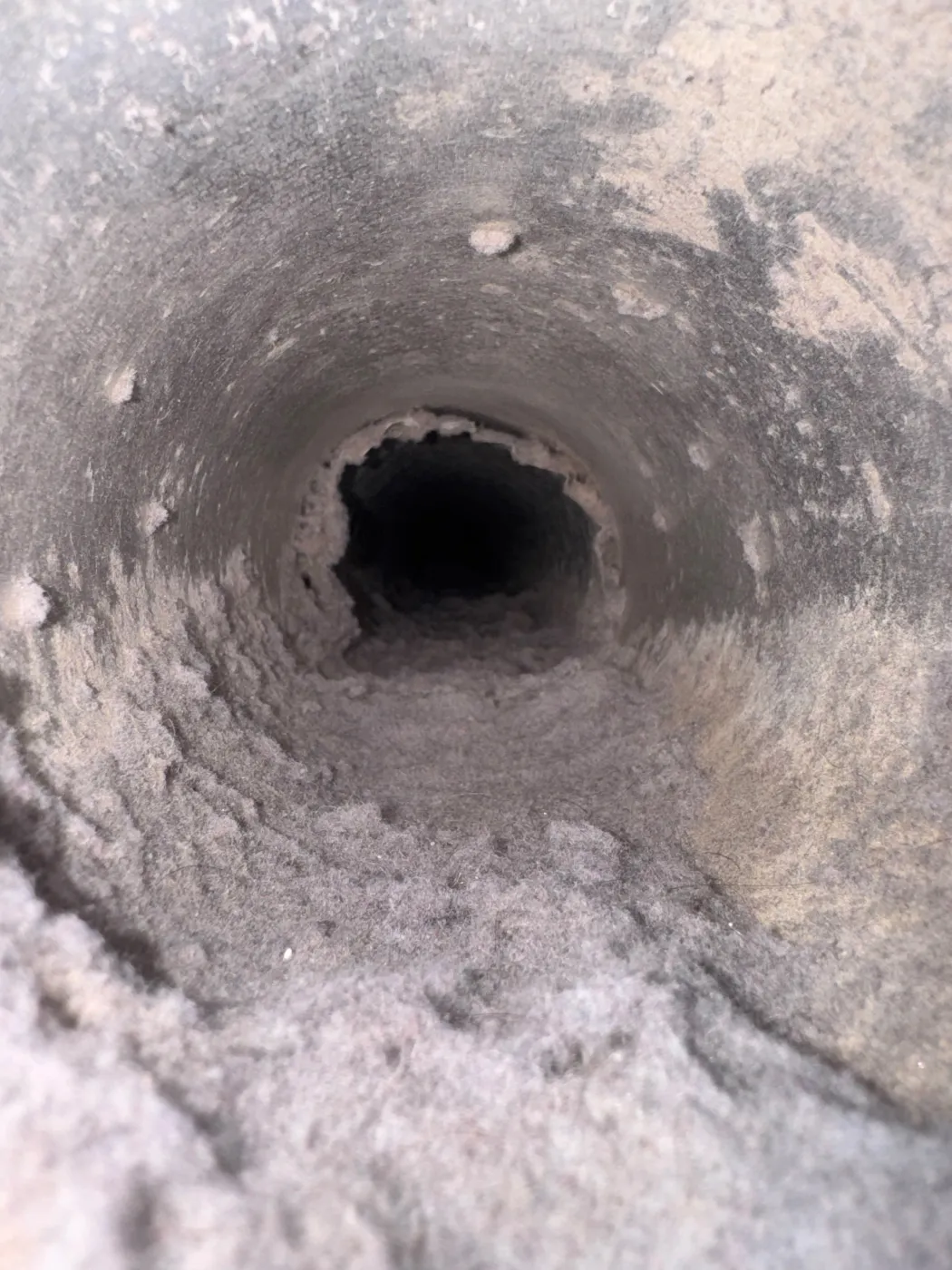
Dryer vent clogs, explained
A clog is different from ordinary buildup. With buildup, the dryer still dries, only more slowly. With a clog, almost no air reaches the outlet. A full cycle leaves the load hot and wet, the laundry area steams up, and some dryers shut themselves off partway through.
Lint is the usual cause, but not the only one. It packs tight at an elbow, at a joint between sections, or in a low spot where a hose sags. Sometimes the duct is clear and the hose behind the dryer has been flattened against the wall. Sometimes the trouble is at the far end: a nest built inside the hood, a flap stuck shut with lint or paint, or a screen over the outlet that has matted over like a second lint filter.
In New York buildings the search is harder, because the duct may cross a finished basement ceiling, climb inside a wall or end on a flat roof where nobody looks.
Until the line is cleared, stop using the dryer. Running it against a blocked vent only adds heat.
What is included
- Airflow checked at the outlet and at the back of the dryer
- The blockage located: hose, duct, joint or outlet
- Packed lint broken up and removed
- Nests and debris taken out of the outlet hood
- Stuck flaps released and matted screens cleared or taken off
- Photos of the blockage and of the cleared line
Signs you need it
- A full cycle that leaves the load hot and still wet
- The dryer shutting off before the cycle ends
- No air, or barely any, at the outside outlet
- Condensation on walls or windows near the dryer
- Twigs or nesting material sticking out of the hood
How the job goes
Confirm the blockage
With the dryer running briefly, we check for air at the outlet. Little or none means the line is blocked somewhere along the way.
Check the near end
The dryer comes out and the hose comes off. If the dryer blows strongly with nothing attached, the trouble is in the hose or the duct, not the machine.
Check the far end
From the ground, a ladder or the roof, we open the hood and look for a nest, a jammed flap or a clogged screen.
Find the plug
Flexible rods are fed in from each end. Where they stop is where the blockage sits.
Clear the line
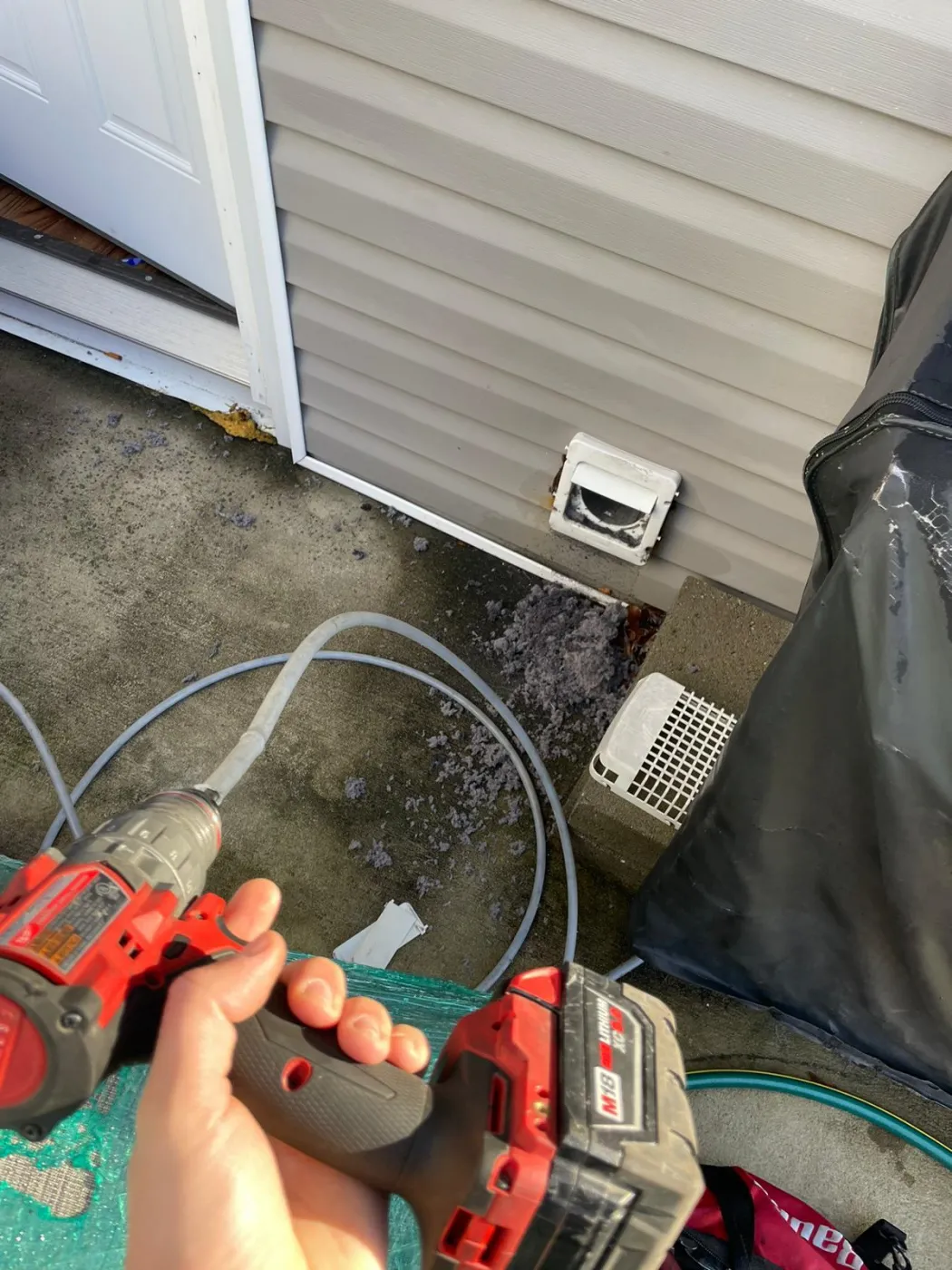
The plug is broken up with a rotary brush and drawn out with a vacuum. Then the remaining line is brushed, so that loose lint does not become the next clog.
Test and explain
The dryer is reconnected and run, and you see photos of what was blocking the line.
From our own jobs
Our photos, not stock.
Why it matters
A blocked vent traps heat in the dryer and in the duct, right where the lint is. That is the condition dryer fires start in. If the dryer burns gas, the vent is also its exhaust, and a blocked line can send combustion gases, including carbon monoxide, back into the room.
The water in the clothes has to go somewhere too. With the line blocked, it comes out as damp air around the dryer, which is how a clog leads to peeling paint and mold.
Clearing the plug is not always the end of it. A flattened hose, a screen on the outlet or a route with too many turns will block again. When we find a cause like that, we quote the repair or replacement before doing anything more.
Dryer vent clogs: common questions
My dryer tumbles but no longer heats. Is that a clog?
It can be the result of one. Dryers have a safety cutoff that stops the heat when the machine overheats, and a blocked vent is a common reason for it to trip. Clearing the vent removes the cause, but the cutoff itself may then need replacing by an appliance technician.
Is there anything I can check before calling?
You can check the two ends. See whether the hose behind the dryer is kinked or flattened, and look at the outlet outside for a nest or a flap that will not open. Do not push at a plug in a concealed duct from one end, because that tends to pack it tighter.
There is a bird's nest in my dryer vent. What happens?
The nest is removed from the hood and from the duct behind it, since nesting material is often pushed well inside. Afterward the outlet needs a cover that closes when the dryer is off. Plain mesh is the wrong choice, because lint mats over it.
What should I tell you when I get in touch?
What the dryer is doing, when it started and whether you can feel any air at the outlet outside. To start, text DRYER and your ZIP code to (917) 983-1283. You get a quote before any work begins.
Related dryer vent services
Tell us what is going on. We will tell you what it needs.
Call or text with your ZIP code and a line about the problem. For dryer vents, text DRYER and your ZIP.