
Annual dryer vent cleaning for property managers in New York City
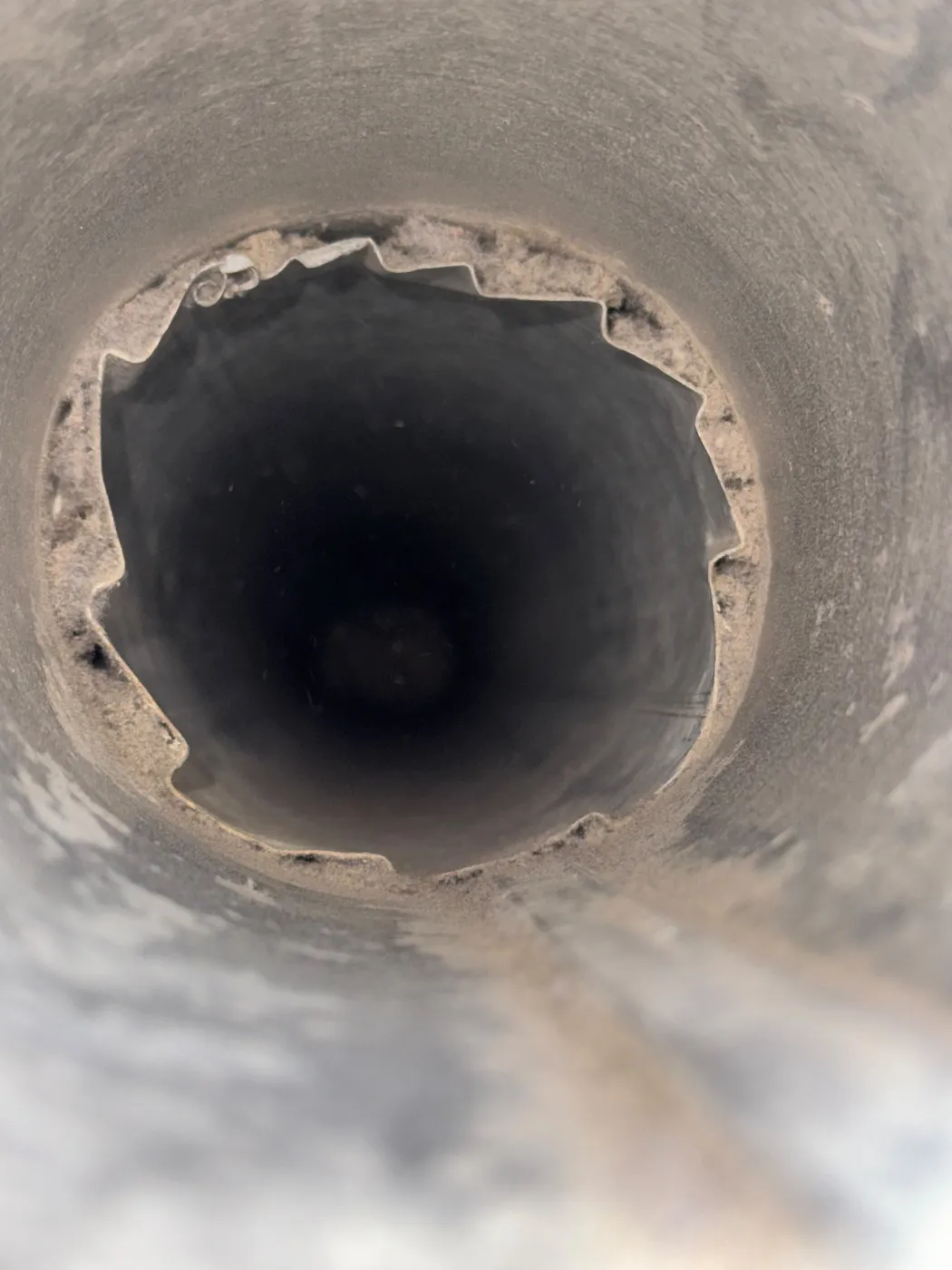
In many buildings, dryer vents get cleaned one unit at a time, after a complaint, and the rest are forgotten. We clean every unit and riser on one scheduled visit and give you photos of each line for your records.
Annual cleaning for property managers, explained
This service is for whoever is responsible for the building: a property manager, a landlord, a co-op or condo board, a super. Instead of each resident arranging a cleaning when a dryer stops drying, the whole building is done together, once a year, on dates you set.
It fits two kinds of building. In the first, every apartment has its own dryer, and each unit's duct either runs to its own outlet on the outside wall or joins a shared riser up to the roof. In the second, residents share a laundry room where a row of machines feeds one exhaust. Plenty of New York buildings have both.
A shared riser is the reason unit-by-unit cleaning falls short. Lint from every floor ends up in the same vertical duct, and one resident's cleaning stops at the wall of their apartment. When the riser narrows, every dryer connected to it loses airflow, including the ones that were just cleaned.
What is included
- A schedule worked out with you by line, floor or unit
- Each in-unit dryer pulled out and its vent brushed to the outlet or riser
- Shared risers cleaned along their full height
- Laundry room dryers and their common exhaust cleaned
- Photos of every line, sorted by unit
- A note of any hose or duct that needs repair
Signs you need it
- Slow-dryer complaints that keep coming from the same line or floor
- No record of when the building's vents were last cleaned
- Lint around roof outlets or on the wall below an outlet hood
- Residents booking their own cleanings one unit at a time
- A board or insurer asking how the dryer vents are maintained
How the job goes
Survey the building
We look at how the dryers are vented: individual outlets, shared risers, a laundry room exhaust. You get a quote for the whole building before anything is scheduled.
Set the dates
You choose the day or days. We work out an order by line or floor, so that residents can be told when to expect us.
Notify residents
You send the notice the way your building normally does. We tell you what to ask of residents: empty the dryer, clear the space around it and arrange for someone to let us in.
Clean each unit
In each apartment the dryer is pulled out, the hose and duct are brushed and vacuumed, the dryer is reconnected and run, and photos are taken before and after.
Clean shared parts
Risers, the laundry room exhaust and the outlets on the roof or walls are cleaned on the same visit, so that lint from the units is not left sitting in the shared duct.
Hand over records
You receive the photos sorted by unit, with a note of any unit we could not enter and any vent that needs repair.
From our own jobs
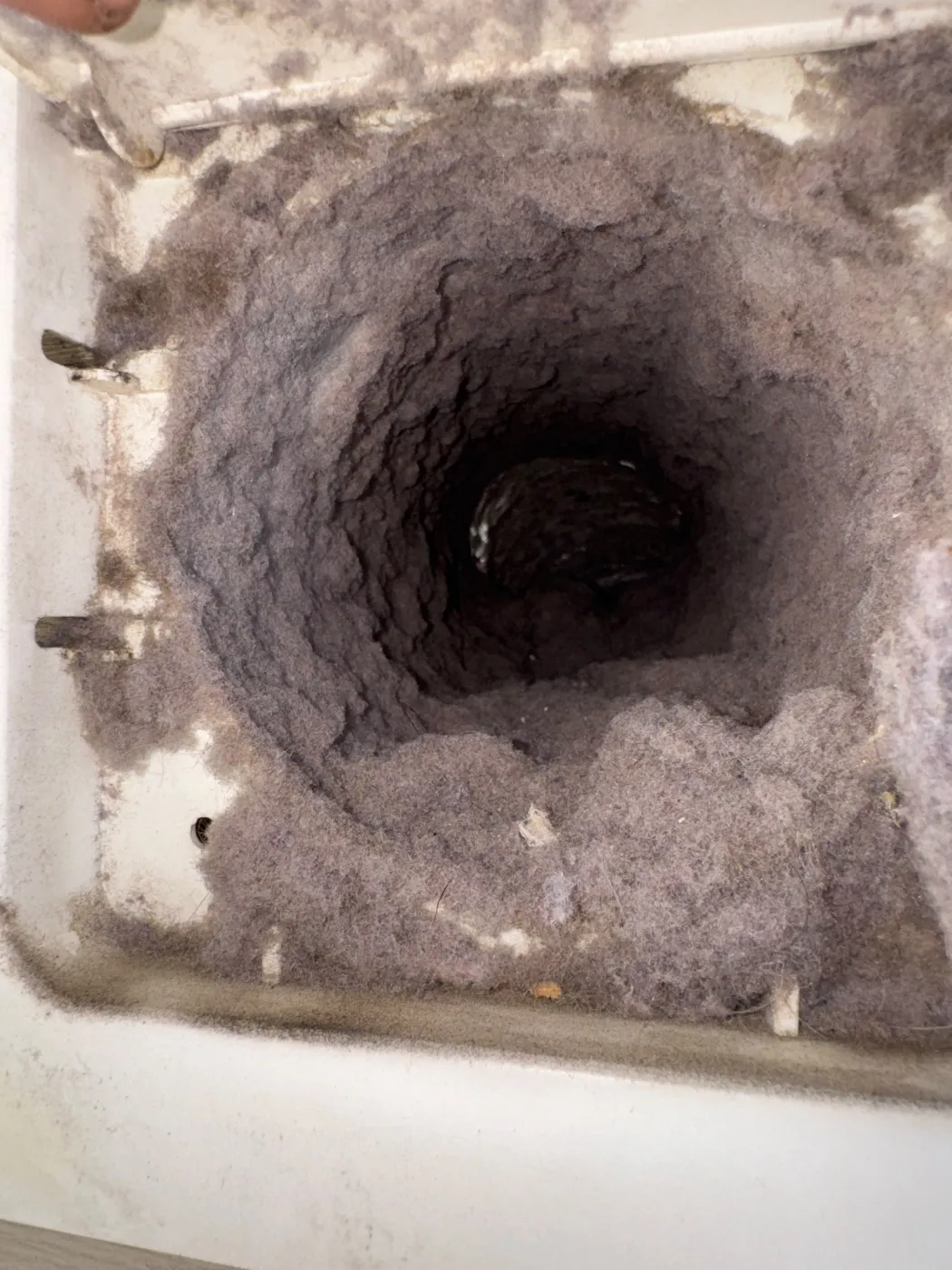
Our photos, not stock.
Why it matters
The U.S. Fire Administration counts about 2,900 home clothes dryer fires reported each year and names failure to clean as the leading cause. In a multi-unit building a dryer fire is never one household's problem, and a vent that nobody is assigned to clean is a vent that does not get cleaned.
A yearly visit turns the job into a line on the calendar. Slow dryers are dealt with before residents call about them, and small defects such as a crushed hose or a stuck flap are caught while they are still small.
The photos matter as much as the cleaning. When a board member, an insurer or a new owner asks what was done, you can show them each line.
Annual cleaning for property managers: common questions
How do you get into occupied apartments?
Access is arranged by you, the way your building handles any in-unit work: the resident is home, or the super lets us in. Units we cannot enter are noted, so that you can decide whether to schedule a return visit.
Is the vent the resident's responsibility or the building's?
That depends on your lease, proprietary lease or bylaws, and it is not something we can decide for you. In practice the ducts inside the walls and any shared riser serve the whole building, which is why many managers arrange the cleaning centrally.
What happens when a unit's vent turns out to be damaged?
We photograph it, tell you what is wrong and leave the decision to you. The usual finds are a crushed or torn hose behind the dryer and plastic hose that should come out. Dryer vent repair and dryer vent replacement explain what those jobs involve.
How do we get a quote for a building?
Call or text (917) 983-1283. Tell us how many units have dryers, how many floors there are, whether there is a laundry room and how the vents leave the building, if you know. A walk-through with the super usually answers the rest.
Related dryer vent services
Tell us what is going on. We will tell you what it needs.
Call or text with your ZIP code and a line about the problem. For dryer vents, text DRYER and your ZIP.