
HVAC unit cleaning in New York City
All the air in your ducts passes through one metal cabinet, and that cabinet collects dust, water and slime where nobody looks. We open the furnace or air handler and clean what is inside: coil, blower, drain pan, condensate line, filter slot and the cabinet itself.
HVAC unit cleaning, explained
The HVAC unit is the cabinet at the center of the duct system. In a house with a furnace, it is the furnace with the cooling coil mounted on it. In an apartment, or a home with a heat pump, it is an air handler: one box that holds the filter, the blower and the coil. All the return air comes into this cabinet and all the supply air leaves from it.
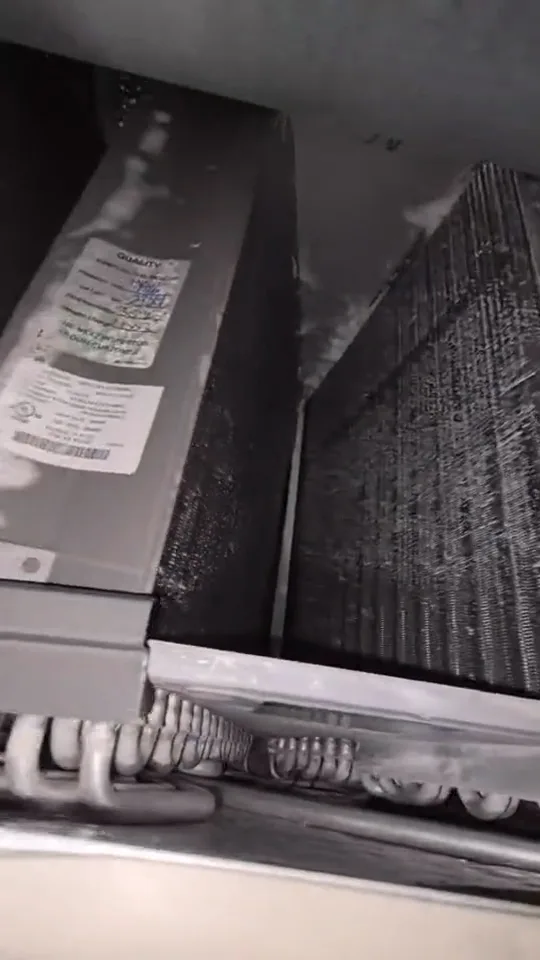
Each part collects something different. Dust slips around a loose filter and lines the filter slot. It packs onto the blower wheel and sticks to the coil, which is wet through the cooling season. Under the coil, the drain pan catches the water the coil pulls out of the air, and a slime forms there and works its way into the condensate line. Unit cleaning is all of those small jobs done with the cabinet open once.
In New York apartments the air handler is often in a hallway closet or above a bathroom ceiling. When the condensate line clogs there, the water ends up in your ceiling or your neighbor's. In houses the furnace usually shares a cellar with the laundry and takes in its lint.
What is included
- Filter slot cleaned and the fit of the filter checked
- Blower wheel, housing and compartment cleaned
- Evaporator coil brushed, washed and rinsed
- Drain pan cleaned of slime and sediment
- Condensate line cleared and tested with water
- Cabinet interior vacuumed and wiped down
- Photos of each part before and after
Signs you need it
- Water in or around the unit, or a ceiling stain below it
- A musty smell at the unit or from the nearest vents
- Cooling that shuts itself off when the drain backs up
- Dust tracks around the edges of the filter
- The cabinet has not been opened since the unit was installed
How the job goes
Power off, panels off
Power is cut at the unit, the doors and panels come off, and each compartment is photographed the way we found it.
Filter and return side
The filter slot and the return side of the cabinet are vacuumed, and the filter track is checked for gaps that let air slip around the filter.
Remove the blower
The blower is taken out where the unit allows, and the wheel and housing are cleaned outside the cabinet.
Wash the coil
Dry dust is lifted off the coil first. Then the coil is washed and rinsed, with the runoff caught by the drain pan.
Pan and drain line
The pan is cleaned out and the condensate line is cleared. Water is poured through to confirm it drains, and a safety switch on the drain is checked if the unit has one.
Reassemble and run
The cabinet is wiped, the blower, filter and panels go back, and the system is run to check airflow and drainage.
From our own jobs
Our photos, not stock.
Why it matters
Ducts are only passages. The unit is where the air is filtered, moved, heated and cooled, and where water is made. If the ducts are cleaned and the cabinet is left dirty, the first thing the clean ducts receive is dust from the blower and coil.
Water is the bigger risk. A blocked condensate line is a very common reason for an air conditioner to leak, and the leak tends to show up as a stained ceiling or a wet floor, not at the unit. In an apartment building the damage does not stop at your own walls.
HVAC unit cleaning: common questions
How is this different from coil cleaning or blower cleaning?
Those pages cover single parts. Unit cleaning opens the cabinet once and does the coil, blower, drain pan, condensate line, filter slot and cabinet interior together. If only one part is dirty, coil cleaning or blower cleaning alone may be all you need.
Is this the same as a tune-up from a heating and cooling company?
No. A tune-up checks how the equipment operates: refrigerant, electrical parts, burners and controls. Unit cleaning removes dust, slime and growth from inside the cabinet and clears the drain. They go well together, and neither replaces the other.
Why is there water under my air handler?
Usually because the condensate line is blocked. The coil pulls water out of humid air, the pan catches it and the line carries it to a drain. When slime plugs the line, the pan fills and overflows. Switch the cooling off, because the water keeps coming while the system runs.
Related air duct services
Tell us what is going on. We will tell you what it needs.
Call or text with your ZIP code and a line about the problem. For dryer vents, text DRYER and your ZIP.