
Chimney vent installation in New York City
The metal pipe between your boiler, furnace or water heater and the chimney is a common place for exhaust to leak into the basement. We install new vent pipe with the right slope, tight joints and a sound connection at the chimney wall.
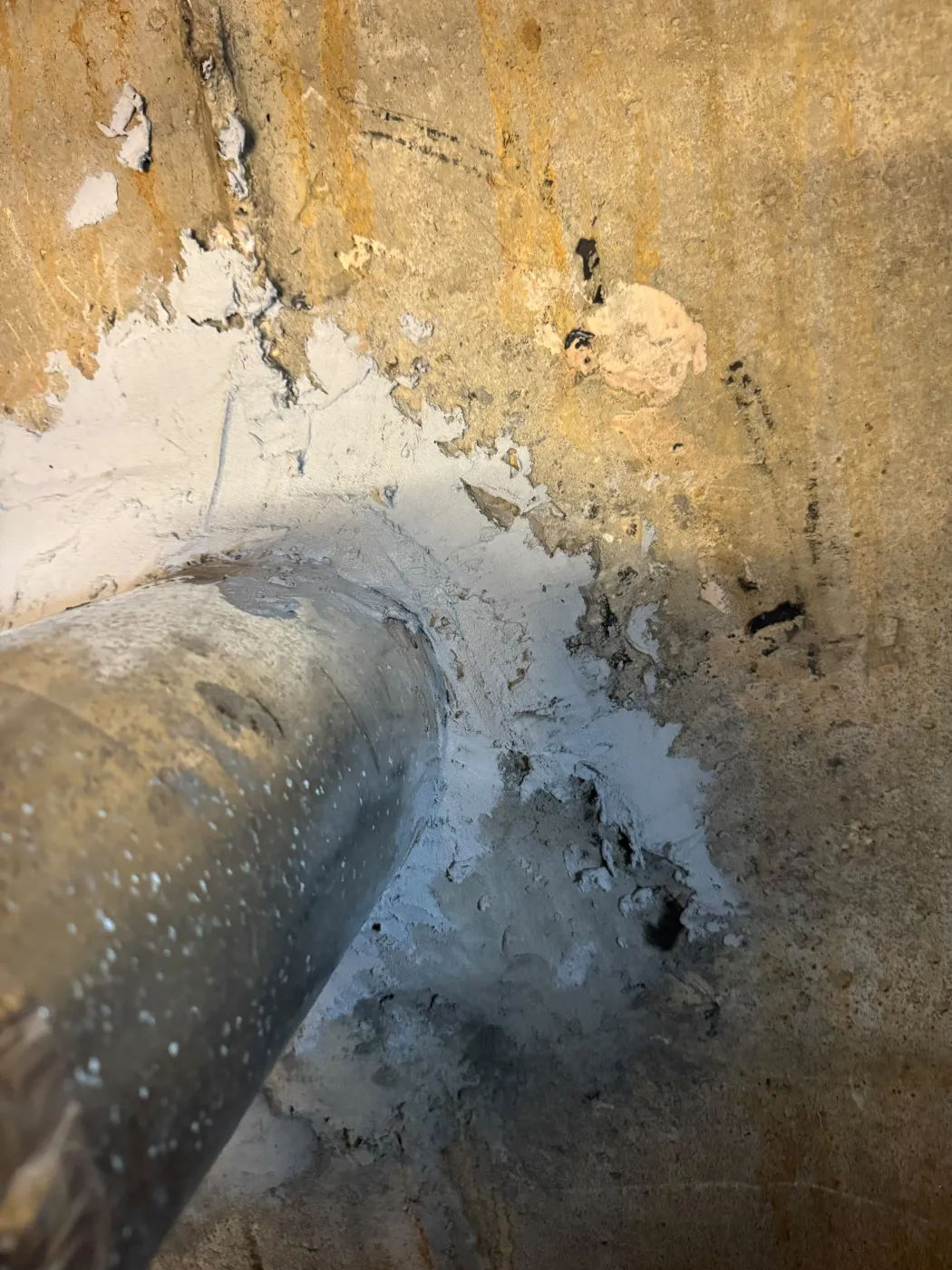
Chimney vent installation, explained
Every boiler, furnace and water heater that burns gas or oil makes exhaust, and that exhaust has to get outdoors. In most New York houses and small buildings it travels through a metal vent pipe, also called a connector, that runs from the appliance to an opening in the chimney wall.
That pipe has a few plain requirements. It should rise toward the chimney along its whole length, because warm exhaust wants to go up and stalls in a pipe that runs flat or dips. It should take the shortest practical route with few bends. Its joints should be fastened and tight, and it should be supported so it cannot sag or pull apart. Where it enters the chimney, the opening around it should be sealed.
Vent pipe does not last as long as the chimney it feeds. Moisture in the exhaust rusts it from the inside, joints loosen, and pipes get knocked or rerouted when a new appliance goes in.
This page is about the pipe between the appliance and the chimney. The passage inside the chimney is a separate job: see chimney flue installation. If the pipe is fine and only the opening in the chimney wall is crumbling, chimney flue repair covers it.
What is included
- The old pipe, the chimney opening and the base of the flue checked
- New metal vent pipe of the type the appliance calls for
- A steady upward slope, with supports along the run
- Every joint fastened and tight
- The connection at the chimney wall sealed
- A draft check with the appliance running, and photos
Signs you need it
- Rust, pinholes or white streaks on the vent pipe
- A pipe that sags, runs flat or slopes down toward the chimney
- Joints that have slipped apart or are held with tape
- Soot marks around the joints or above the appliance
- Crumbling mortar where the pipe enters the chimney
- A new boiler, furnace or water heater connected to old pipe
How the job goes
Check the whole path
We look at the appliance outlet, the existing pipe, the opening in the chimney wall and the base of the flue behind it, and plan a run that rises steadily with the fewest turns. You get a quote before any pipe comes down.
Remove the old pipe
With the appliance off and cool, the old pipe is taken down, and soot and debris at the chimney opening are cleaned out.
Fit the new pipe
New sections are assembled from the appliance to the chimney, each joint fastened, with supports so the pipe keeps its slope.
Seal the wall
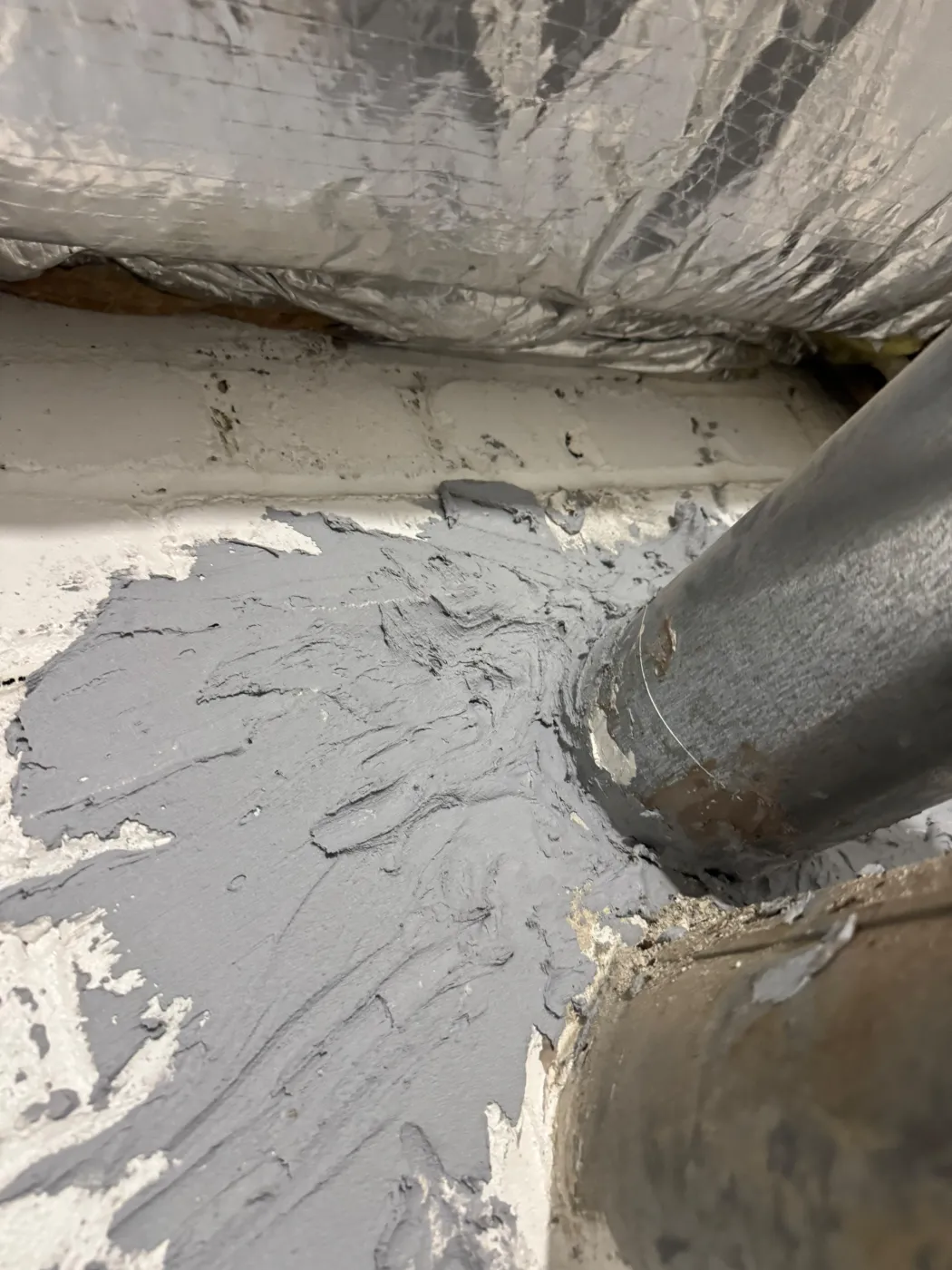
The pipe is set into the chimney opening without blocking the flue behind it, and the gap around it is closed with mortar or sealant.
Run and check
The appliance is turned back on and we check that exhaust is being drawn into the pipe and up the chimney, not spilling into the room.
From our own jobs
Our photos, not stock.
Why it matters
The vent pipe is the one part of the exhaust path that runs through a room you can stand in. A hole, an open joint or a gap at the wall lets exhaust into the basement. Exhaust can carry carbon monoxide, which has no smell, and from the basement it rises through the house.
A pipe with the wrong slope or too many turns causes a quieter problem. The exhaust moves slowly, cools and leaves moisture in the pipe, which rusts it out, and it can spill back at the appliance.
Chimney vent installation: common questions
Does the vent pipe need replacing when I get a new boiler or water heater?
Often, yes. A new appliance may have a different outlet size or sit in a different spot, and old pipe that looks fine from outside can be thin with rust inside. Have the pipe checked whenever the equipment changes.
My new furnace vents through a plastic pipe out the wall. Is that the same thing?
No. High-efficiency equipment vents through its own sealed pipe straight outdoors, in the material and layout its maker specifies, and it does not use the chimney. If a water heater was left on the chimney by itself after a change like that, its venting should be checked too.
Can a boiler and a water heater share one chimney?
They commonly do. What matters is how the two pipes join or enter the chimney, and that the flue is the right size for both together. We check how yours are connected and tell you if anything should change.
Related chimney services
Tell us what is going on. We will tell you what it needs.
Call or text with your ZIP code and a line about the problem. For dryer vents, text DRYER and your ZIP.