
Chimney repair in New York City
A chimney stands above the roof in all weather, and its bricks, mortar, crown and flashing wear out one piece at a time. We find the part that has failed, show you photos of it and repair it before water does more damage.
Chimney repair, explained
Chimney repair means fixing a specific fault: a cracked brick, an open mortar joint, a leak at the flashing, a cap that has come loose, a crown that has split. The chimney as a whole is sound, and one part of it is not.
Nearly all of it comes back to water. Brick and mortar soak up rain. In a New York winter that water freezes and expands inside the masonry, and each cycle opens the cracks a little wider. Faces flake off bricks, joints crumble, and the next storm has an easier way in.
Each kind of repair has its own page. Worn joints are covered under chimney pointing, the slab on top under crown repair, the cover over the flue under cap repair, and faults inside the chimney under flue repair. This page is the place to start when you know something is wrong and are not sure what to call it.
When the damage runs through the whole stack of a very old chimney, patching one spot will not hold for long. That larger job is chimney restoration.
What is included
- The source of the problem found before anything is patched
- Cracked or flaking bricks cut out and replaced
- Missing mortar repacked
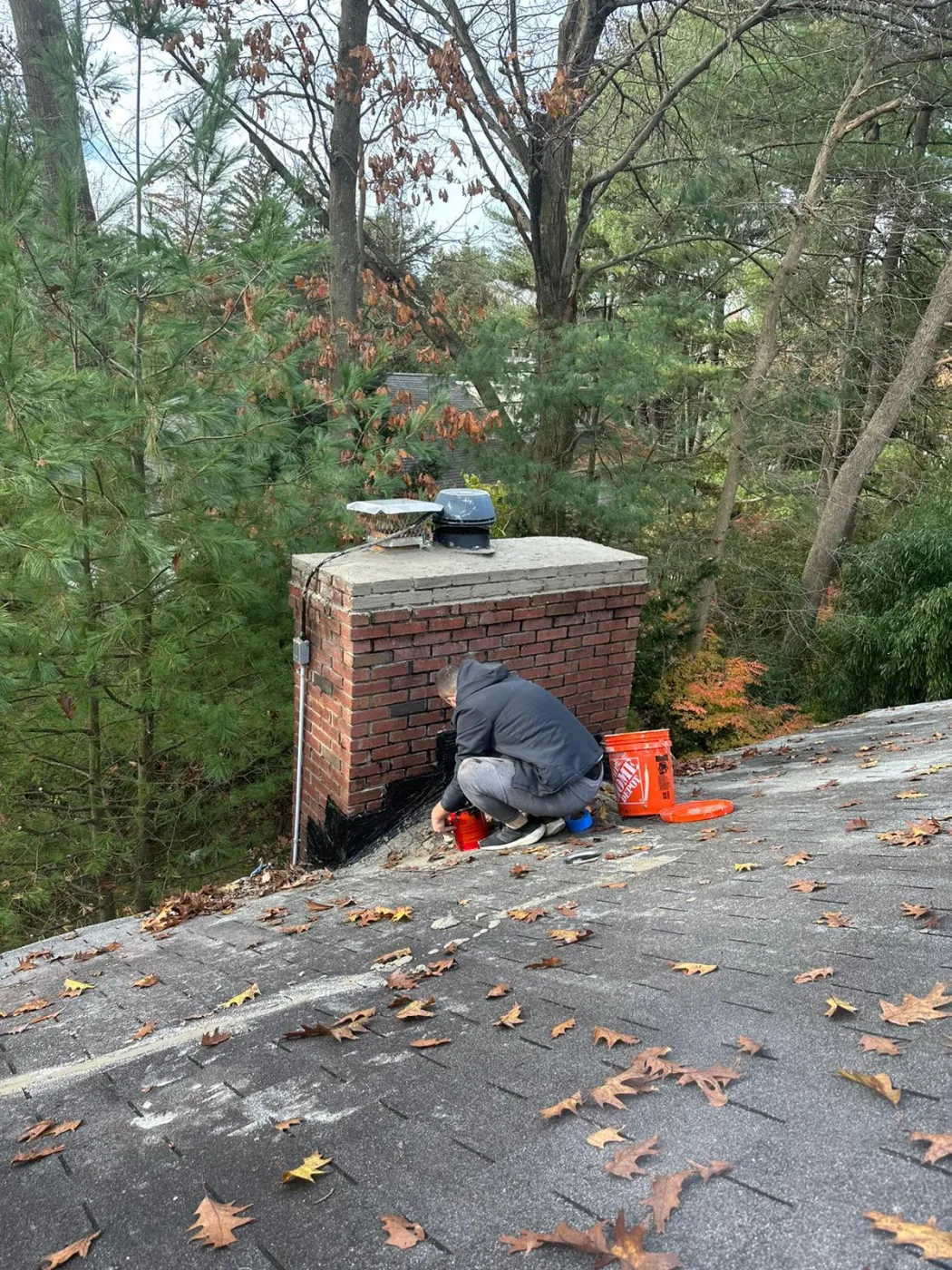
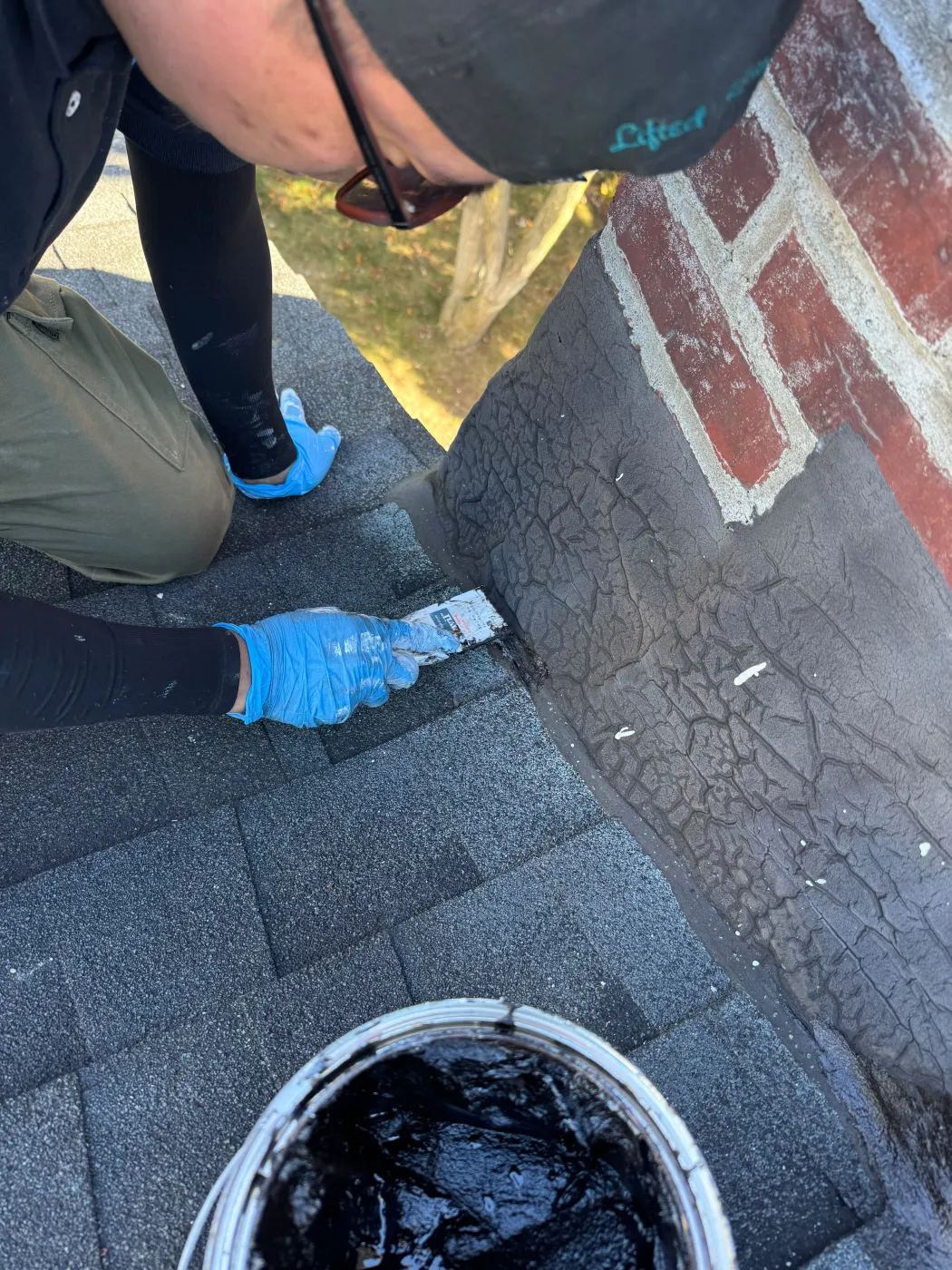
- Flashing resealed where the chimney meets the roof
- Loose caps secured and damaged crowns sealed or rebuilt
- Photos of the fault and of the finished repair
Signs you need it
- Water stains on a ceiling or wall beside the chimney
- Pieces of brick or mortar on the roof or the ground below
- Gaps you can see between the bricks
- White, powdery staining on the brickwork
- A cap that rattles, leans or has gone missing
- A damp, musty smell from the fireplace after rain
How the job goes
Find the source
A leak near a chimney can start at the cap, the crown, the flashing or the brick itself. We check each one, because sealing the wrong spot fixes nothing.
Show and quote
You see photos of the damage, hear what the repair involves and get a quote before work starts.
Set up
The ladder goes up and tools and materials are brought to the chimney, with the roof around it kept clear of loose debris.
Make the repair
Damaged bricks come out and new ones go in, open joints are repacked with mortar, and loose or lifted flashing is sealed back to the masonry.
Check the rest
With the fault fixed, we look over the neighboring joints, the crown and the cap, so you know about any second weak spot before the next storm finds it.
Hand over photos
You get photos of the finished work next to the ones taken when we arrived.
From our own jobs
Our photos, not stock.
Why it matters
A chimney fault does not stay the size it is. An open joint lets in water, the water breaks up the brick beside it, and a small masonry job turns into a rebuild of the top courses. Indoors, the same water shows up as stained plaster and damp framing well before anyone connects it to the chimney.
There is a safety side as well. Loose bricks and a slipping cap sit above a sidewalk, a yard or a neighbor's roof. Cracks that reach the flue can let heat and exhaust out of the chimney where they do not belong.
Chimney repair: common questions
How do I know where a chimney leak is coming from?
From indoors you usually cannot. Water travels along the framing before it shows, so the stain is often some way from the entry point. On the roof the usual suspects are the flashing, the crown, a missing cap and worn mortar joints, and they are checked in turn.
Can a chimney be repaired in winter?
Some repairs can, and some should wait. Mortar and sealant need dry, mild weather to set properly. A loose cap or an active leak can often be made safe first, with the permanent masonry work scheduled for a better stretch of weather.
Is repair enough, or does the chimney need rebuilding?
If the damage is limited to a few bricks, a run of joints or one component, repair is the right size of job. If bricks are loose all the way around, the stack leans or the mortar has turned to sand throughout, rebuilding is safer. Photos from the roof make the difference easy to see.
What should I send you for a quote?
Call or text (917) 983-1283 with your ZIP code and a few words on what you have noticed: a stain, a fallen brick, a noise in the wind. Photos of the chimney from the ground or from a window help us understand what we will be looking at.
Related chimney services
Tell us what is going on. We will tell you what it needs.
Call or text with your ZIP code and a line about the problem. For dryer vents, text DRYER and your ZIP.