Commercial air duct cleaning in New York City
In a commercial space the ducts move more air, for more hours, with more people adding to the dust. We clean the supply and return ductwork and the diffusers, and check the air handling equipment, in offices, shops, clinics, gyms and restaurant dining rooms.
Commercial air duct cleaning, explained
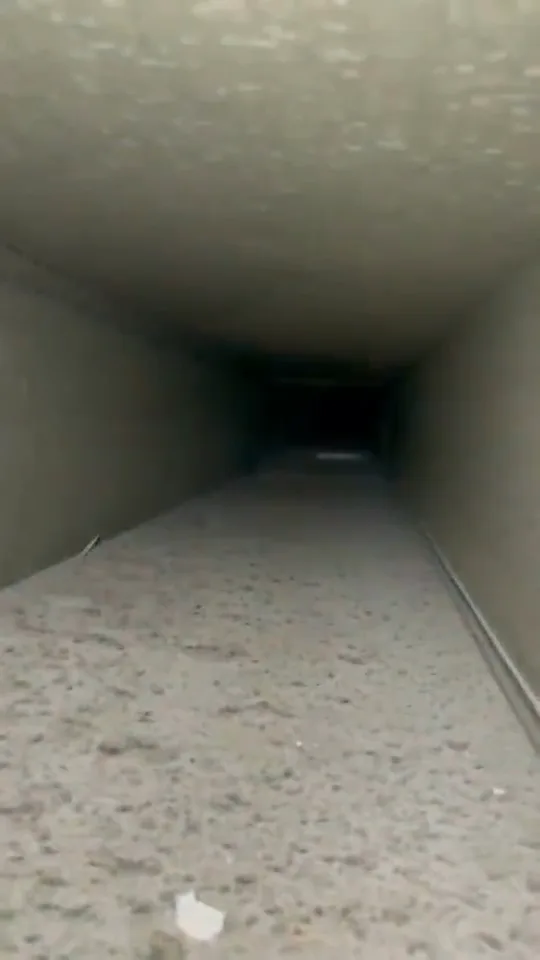
Commercial ductwork is a bigger version of the same idea, laid out differently. One or more units sit on the roof or in a mechanical closet. A main trunk runs above a suspended ceiling, branch ducts drop to ceiling diffusers, and the return air often travels back through the open space above the tiles. The runs are longer, and many ducts are lined inside with insulation that holds on to dust.
What ends up in those ducts depends on the business: paper dust and carpet fiber in an office, fabric lint in a clothing shop, hair and product in a salon, humid air and lint in a gym. In a restaurant we clean the heating and cooling ductwork for the dining room and the office.
New York adds its own. A storefront door opens onto the sidewalk all day and lets in street dust and soot. Rooftop units pull city air through filters that are easy to forget. And spaces change tenants: each build-out leaves drywall dust behind, which is what after-renovation air duct cleaning is for.
What is included
- Supply trunks and branch ducts cleaned
- Return ducts and return grilles cleaned
- Ceiling diffusers and registers taken down and cleaned
- Lined ductwork cleaned gently so the lining is not torn
- Rooftop unit or air handler opened and inspected
- Photos by area for the owner, tenant or manager
Signs you need it
- Dust caked on diffusers and return grilles
- Specks falling on desks, shelves or tables under a vent
- Staff or customers mentioning stale air
- Some areas always stuffy while others get plenty of air
- A build-out or change of tenant since the last cleaning
How the job goes
Survey the space
We find each unit, trace which trunks and diffusers it feeds, and check how the ductwork can be reached above the ceiling and on the roof. Then you get a quote.
Plan around your hours
The work is divided by unit or by zone so it can be fitted around the times the space is in use. Tell us your hours when you call.
Shut down one zone
The unit serving that zone is switched off, its diffusers are covered, and a vacuum is connected to that section of ductwork.
Clean trunk and branches
Branch ducts are brushed from the diffuser back to the trunk. Large trunks are cleaned by hand through access openings, with brush and vacuum.
Open the unit
Filters, coil, blower and drain pan are checked at the rooftop unit or air handler, and cleaned where that is part of the quote.
Close up and report
Access openings are sealed, ceiling tiles and diffusers go back, the unit is restarted, and you get photos sorted by area.
Why it matters
In a business, dusty ductwork shows up as cost before anyone thinks of the ducts. Merchandise and desks need wiping more often. Dust collects on the diffusers and drops onto whatever is below. People who spend the whole working day in the space notice the air, and they say so.
The equipment pays too. Dust that gets past loaded filters coats the coil and blower, and a unit that runs longer to hold the temperature uses more electricity and wears faster. Because the units sit on the roof or above the ceiling, nobody sees it happening. Photos from inside give an owner or manager something concrete to act on and to keep on file.
Commercial air duct cleaning: common questions
Do you clean restaurant kitchen exhaust hoods?
No. Kitchen hood and grease exhaust cleaning is a different trade with its own methods. In a restaurant we clean the heating and cooling ductwork that serves the dining room, the office and other space outside the cooking line.
Can the work be done while we are closed?
Tell us your hours when you call, and what the space is used for. Splitting the job by unit or zone gives more room to plan it around the times people are in the space.
Do you need access to the roof and the ceiling?
Usually both. Rooftop units are opened to check filters, coil and blower, and ductwork above a suspended ceiling is reached by lifting tiles along its route. If the landlord controls the roof, arrange access before the visit.
Who arranges duct cleaning, the tenant or the landlord?
That depends on the lease. Some make the tenant responsible for the heating and cooling equipment serving their space, and others leave it with the owner. Check before you call, because we need permission to open the units.
Related air duct services
Tell us what is going on. We will tell you what it needs.
Call or text with your ZIP code and a line about the problem. For dryer vents, text DRYER and your ZIP.