Chimney cap replacement in New York City
A cap that has rusted through, blown off or lost its screen leaves the flue open to rain, animals and debris. We take off what is left of the old cap and fit a new one with a mesh screen, sized to your flue.
Chimney cap replacement, explained
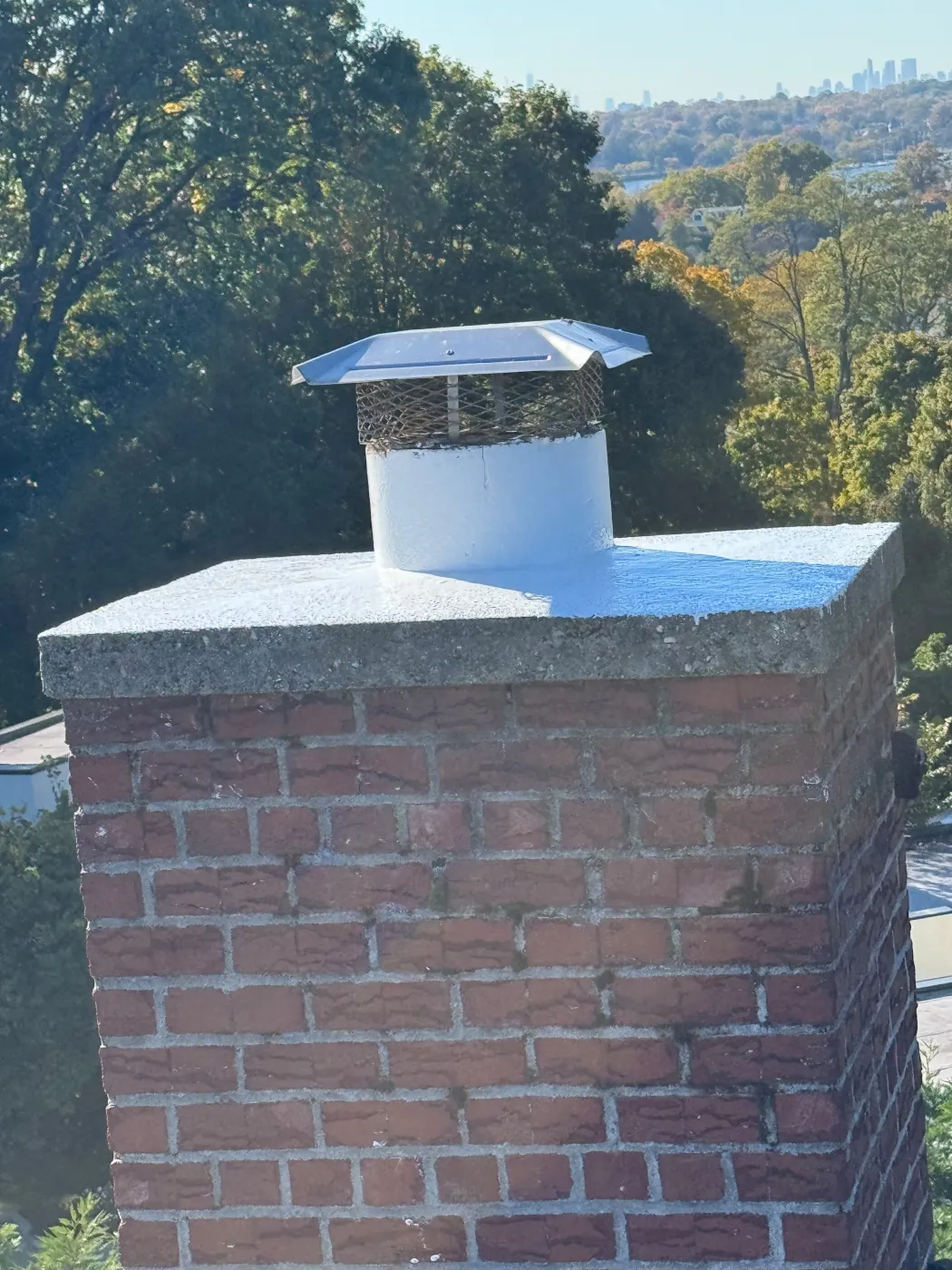
A chimney cap is the metal cover over the top of the flue. It has a lid that sheds rain, a mesh screen around the sides that lets smoke out and keeps animals and leaves from getting in, and a base that fastens it to the flue or the crown. Cap replacement means taking off a cap that is past saving, or the remains of one, and fitting a new one.
Caps wear out. Thin steel rusts, and the rust runs down the crown and the brick as an orange stain before the metal gives way. Wind works a cap loose, and raccoons and squirrels pull at the mesh. Sometimes the first sign is the cap itself lying on the roof or in the yard.
The new cap has to fit the flue it covers. A single flue with a clay tile standing above the crown takes a cap that clamps onto the tile. Where several flues share a stack, as they often do on New York row houses, one larger cap fastened to the crown can cover them all. Either way the lid must sit high enough that it does not hold back the draft.
If your cap is only loose or has a small tear, a cap repair may be all it needs. If the flue never had a cap in the first place, see rain cap installation.
What is included
- The flue measured so the new cap fits
- The old cap and its rusted fasteners removed
- The flue top and crown checked for damage under the old cap
- The flue checked for nests or debris that got in while it was open
- A new cap with a mesh screen fitted and secured
- Photos of the old cap and the new one in place
Signs you need it
- Rust stains running down the crown or the brick
- A lid that is split or rusted through
- Mesh that is corroded or mostly gone
- The cap found on the roof or the ground
- Rain dripping into the firebox
- Birds or squirrels heard in the flue
How the job goes
Measure the flue
We measure the flue tile or the crown and note how many flues the stack has, since that decides the size and type of cap.
Remove the old cap
What is left of the old cap comes off, along with seized screws and any rusted metal still clinging to the tile.
Check underneath
With the top exposed, we look at the flue tile and the crown for cracks, and down the flue for anything that has fallen or moved in.
Fit the new cap
The new cap is set square over the flue and fastened to the tile or the crown, tight enough to hold against the wind.
Show the new cap
You get photos from the roof: the old cap, the flue top and the new cap in place.
From our own jobs
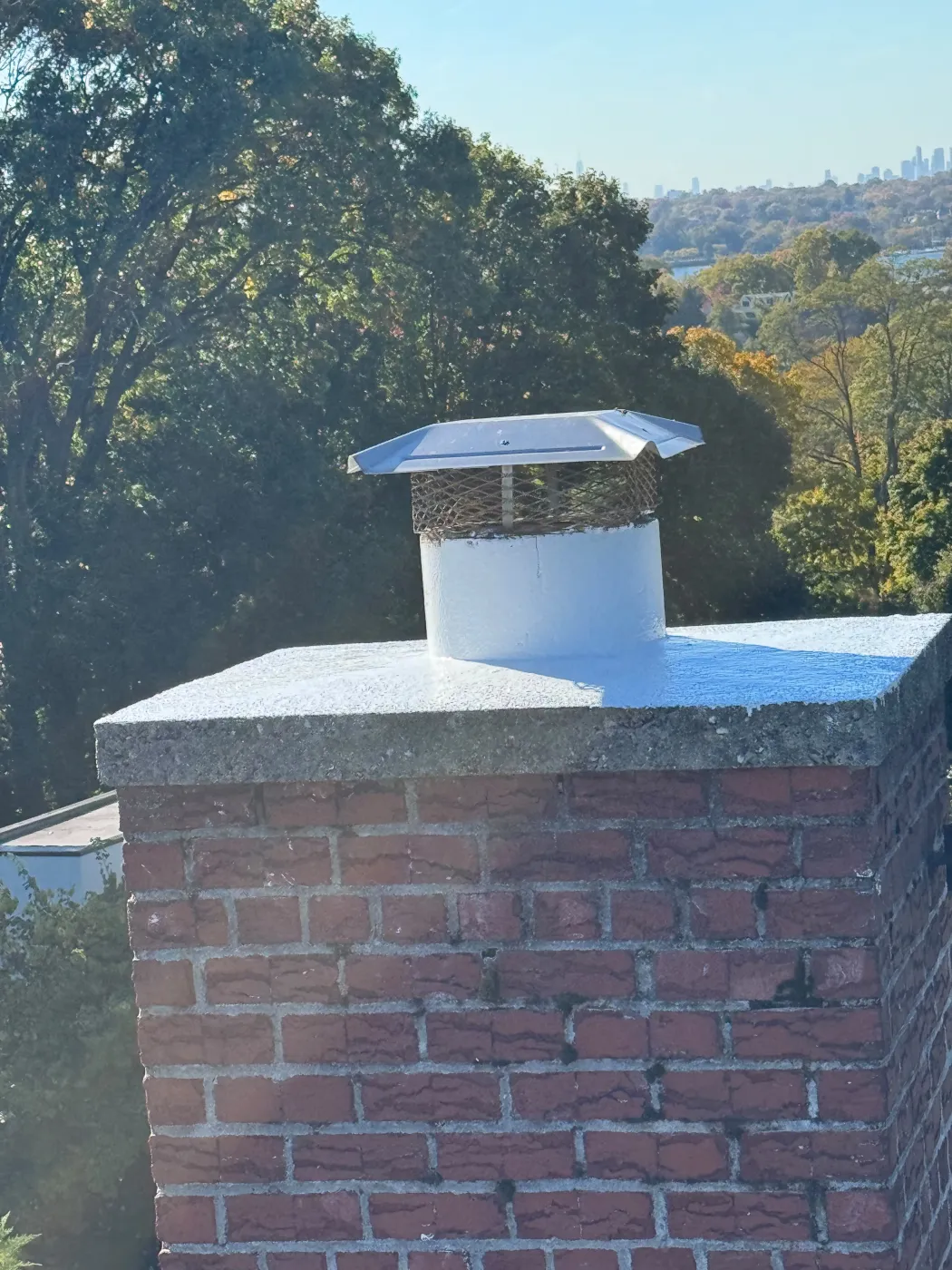
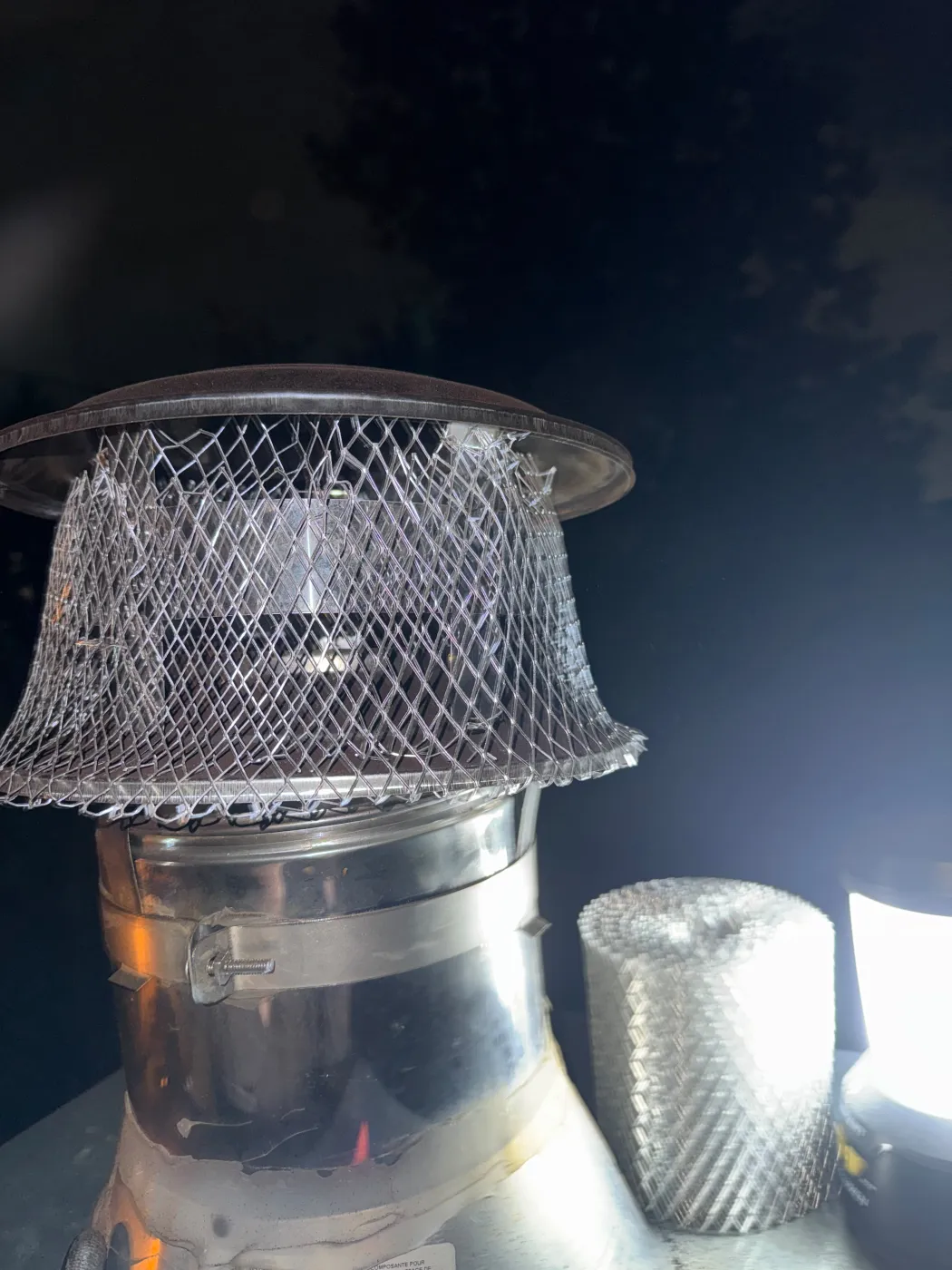
Our photos, not stock.
Why it matters
A flue that has lost its cap takes in every rain. In a fireplace flue the water rusts the damper and turns the soot into a sour-smelling sludge. In a boiler or furnace flue it runs to the base of the chimney and rusts the pipe that connects the appliance.
The screen matters as much as the lid. A flue without one is a sheltered cavity, and birds, squirrels and raccoons treat it that way. A nest can block the flue completely, and a blocked flue sends smoke or carbon monoxide back into the building. The mesh also helps keep sparks from a wood fire from reaching the roof.
Chimney cap replacement: common questions
Should I repair my cap or replace it?
Replace it when the metal itself has failed: rusted through, split, or too thin to hold a screw. Repair is for a sound cap with one problem, such as a loose base or a tear in the mesh. Photos from the roof usually settle it.
What kind of cap lasts in New York weather?
The metal is what counts. Stainless steel and copper stand up to rain and flue gases far longer than thin painted or galvanized steel, which is what most rusted caps turn out to be. Ask what the new cap is made of when you get your quote.
Does every flue need its own cap?
Every flue needs to be covered, but not always separately. Flues that share a stack can each take a small cap, or share one larger cap fixed to the crown. Which is better depends on how the flues sit and the state of the crown.
How do you get to the cap?
The work is done from the roof. On a house with a pitched roof that means a ladder outside. On a flat-roofed row house or apartment building it is usually the roof hatch or the stair bulkhead. Tell us how your roof is reached when you call or text (917) 983-1283.
Related chimney services
Tell us what is going on. We will tell you what it needs.
Call or text with your ZIP code and a line about the problem. For dryer vents, text DRYER and your ZIP.