
Chimney pointing in New York City
Mortar wears out long before brick does, and a chimney takes more weather than any other masonry on the house. We cut out the worn joints and pack them with new mortar so the stack sheds water again.
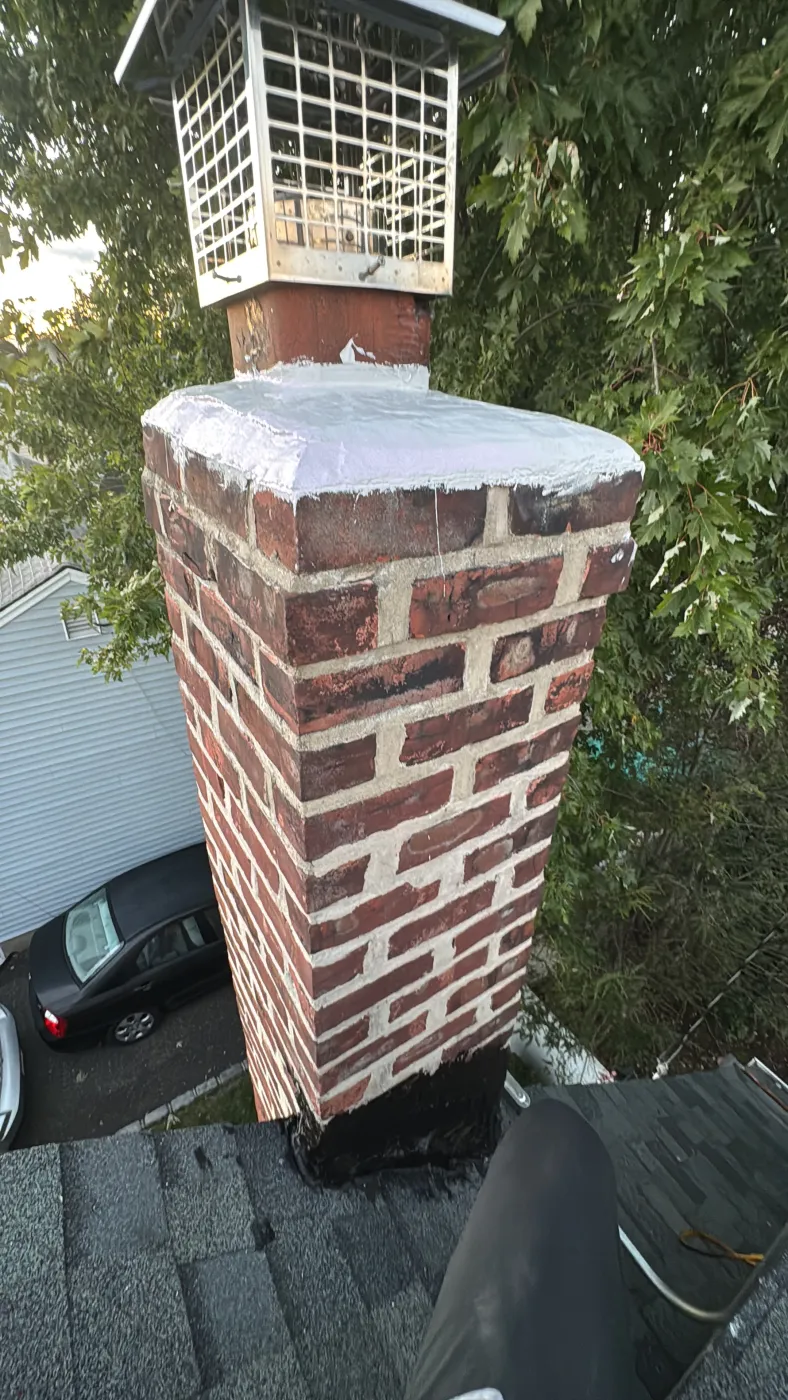
Chimney pointing, explained
Pointing, also called repointing or tuckpointing, is the repair of the mortar joints between bricks. The worn mortar is cut out to a sound depth, and new mortar is packed in and shaped. The bricks stay where they are.
The part of a chimney above the roof stands in the open on every side. Rain soaks into the joints. In a New York winter that water freezes, expands and thaws again, over and over, and each round loosens a little more mortar. Once a joint has opened up it takes in more water, and the damage speeds up.
Many chimneys on the city's row houses and brownstones still have their original soft mortar. When it turns sandy and starts to fall out, the bricks are next. Pointing done in time is a modest repair. Left alone, the same chimney ends up needing whole courses rebuilt, which is chimney restoration.
What is included
- Every face of the stack checked, joint by joint
- Worn mortar cut out to a sound depth
- Joints brushed clean of dust and loose grit
- New mortar chosen to suit the brick and the old joints
- Joints packed full and tooled to shed water
- Brick faces cleaned of mortar smears
- Crown and flashing looked at while we are up there
Signs you need it
- Gaps or deep recesses between the bricks
- Mortar that crumbles when you rub it
- Sand or bits of mortar on the roof or in the gutters
- Loose bricks near the top of the stack
- White staining on the brick
- Damp patches on a ceiling or wall beside the chimney
How the job goes
Check the stack
We look at every side of the chimney from the roof and test the joints, so we know which are worn, how deep the wear goes and whether any bricks have come loose.
Cut out the old
Failing mortar is ground or raked out of the joints to a depth where what remains is firm. Sound joints are left alone.
Clean and dampen
Dust is brushed out and the joints are dampened, so the new mortar bonds to the brick and does not dry out too soon.
Pack the joints
New mortar is pressed into the joints in layers until they are full, with no hollow spots behind the surface.
Tool and clean
Each joint is shaped so water runs off it, and the brick faces are brushed clean. You get photos of the stack before and after.
From our own jobs
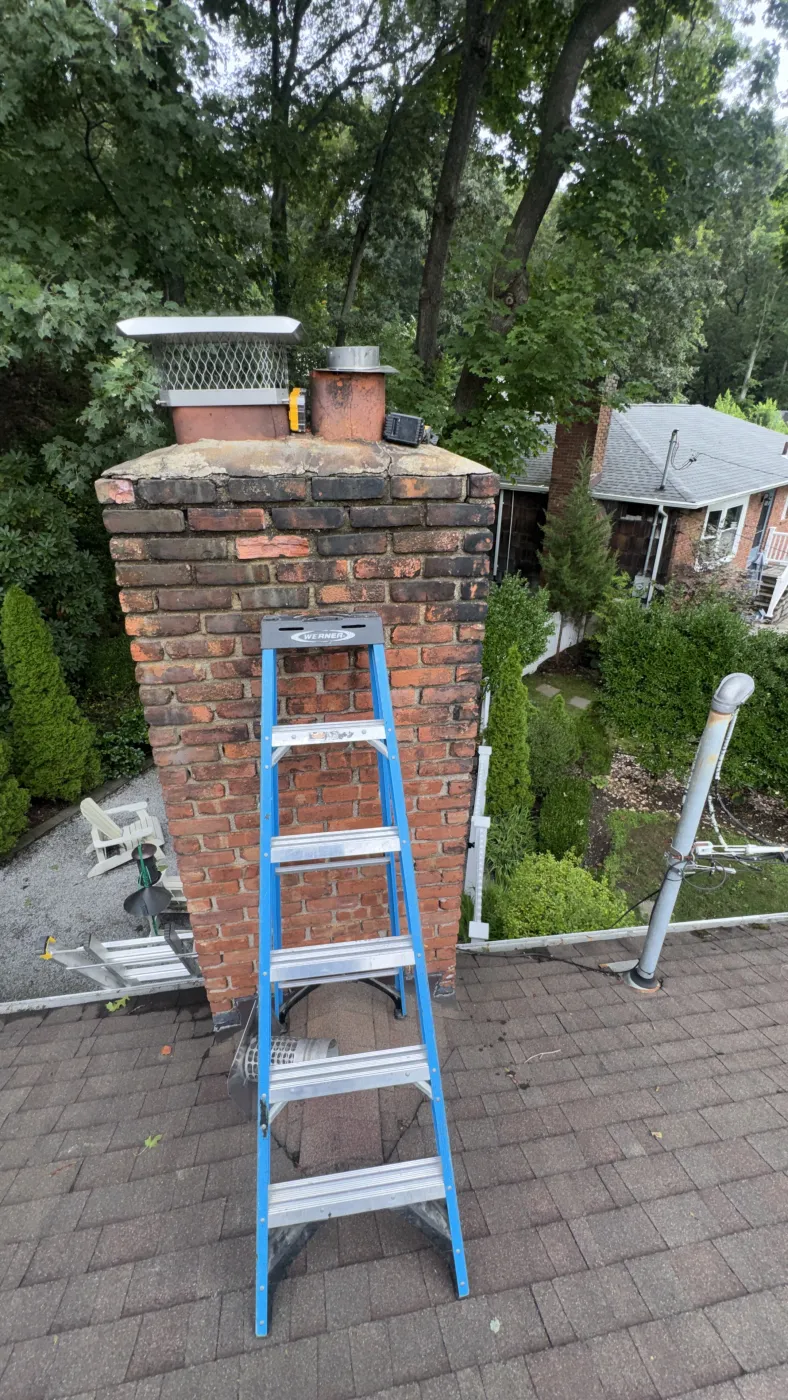
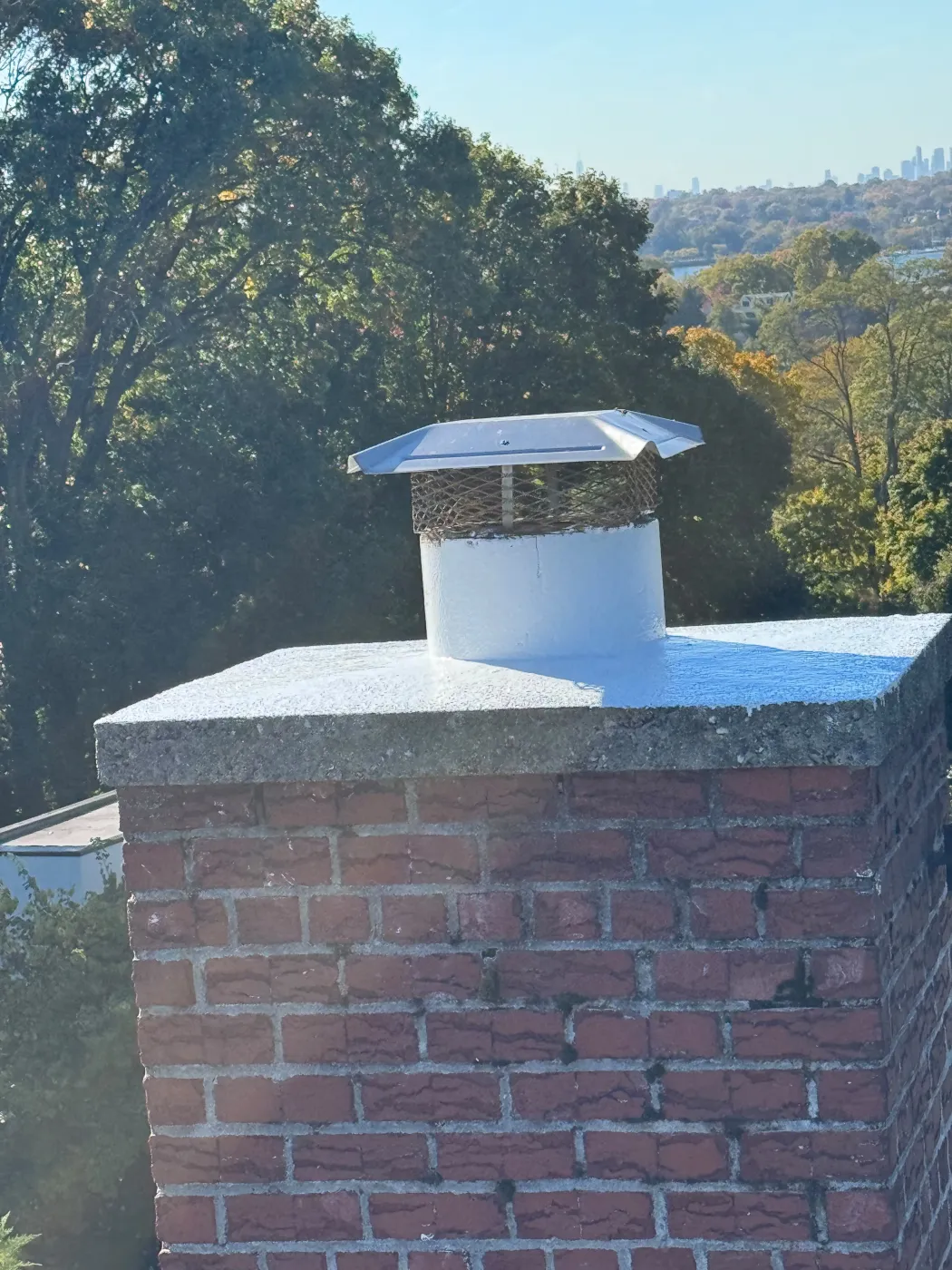
Our photos, not stock.
Why it matters
A chimney is held together by its mortar. When the joints open, water gets inside the stack, and from there it travels: into the flue, down to the damper and firebox, and into the ceilings and walls next to the chimney. A leak blamed on the roof is sometimes coming through the chimney's joints.
Open joints also weaken the stack. Bricks loosen, the top courses start to shift, and pieces can fall onto the roof or the yard below. Pointing stops that while the bricks are still sound, and it costs far less than taking the stack down and building it again.
Chimney pointing: common questions
How do I know if my chimney needs pointing or rebuilding?
If the bricks are solid and in line and only the mortar is worn, pointing is the repair. If bricks are cracked, loose or shifted, or the stack is leaning, new mortar in the joints will not fix it and those courses have to be rebuilt. We tell you which after seeing it up close.
Does the new mortar have to match the old?
Yes, in two ways. It should be close in color so the repair does not stand out. More important, it should suit the brick: old, soft brick paired with a much harder mortar can crack and flake at the edges, so the mix is chosen for the chimney it is going into.
Can pointing be done in winter?
Fresh mortar should not freeze before it has cured, so pointing is done in mild weather. If joints are open in the cold season, we can look at the stack, show you the damage and plan the work for when conditions allow.
Will pointing stop my chimney from leaking?
It stops water coming through the joints, which is one common path. Water also gets in through a cracked crown, loose flashing or a missing cap. We check those at the same visit, so you are not fixing one leak and leaving another.
Related chimney services
Tell us what is going on. We will tell you what it needs.
Call or text with your ZIP code and a line about the problem. For dryer vents, text DRYER and your ZIP.