
Chimney cleaning in New York City
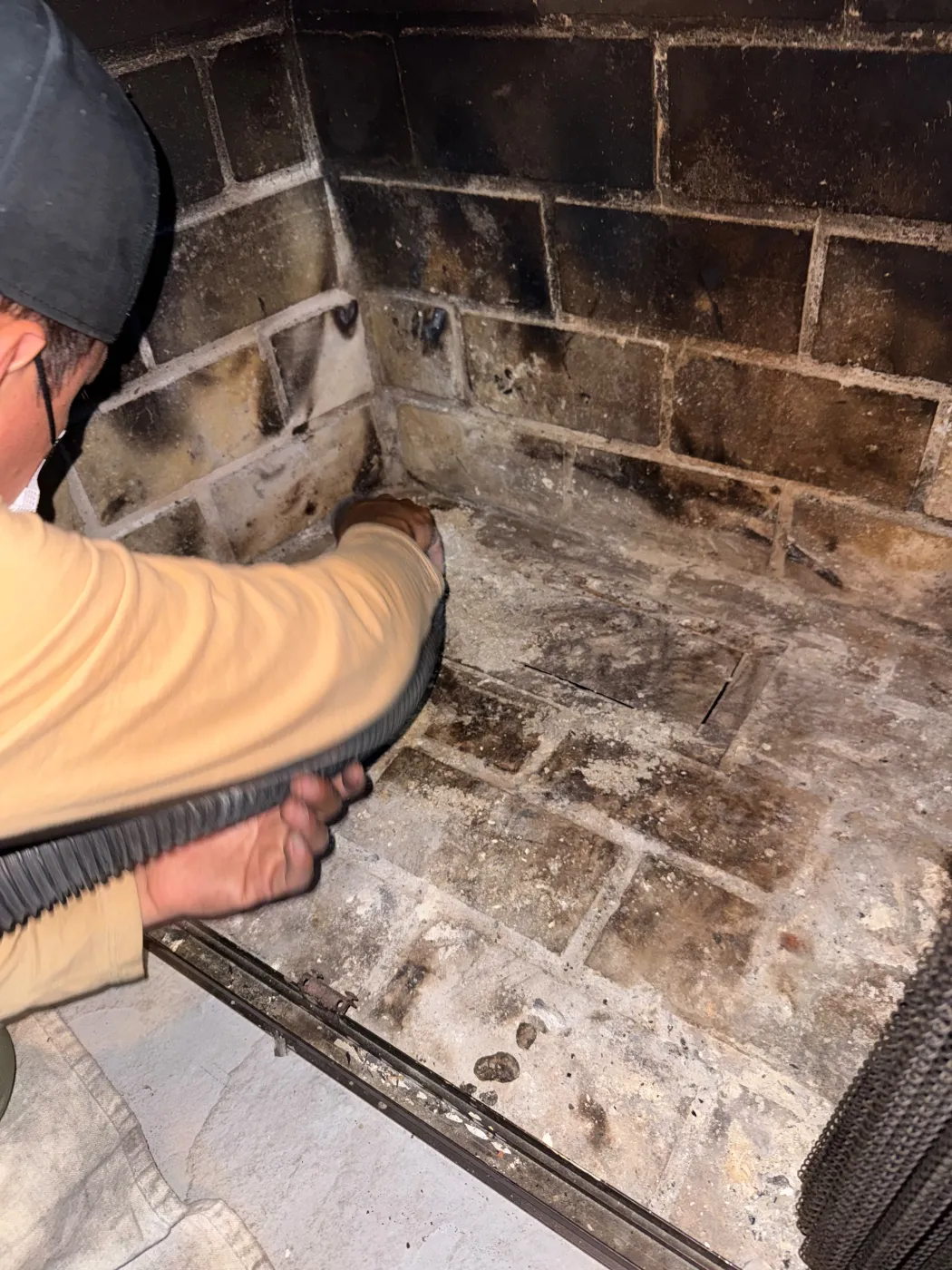
Soot and creosote coat the inside of a flue a little more with every fire, and creosote burns. We brush the deposit off the flue, the smoke chamber and the firebox and take it away, with the room covered while we work.
Chimney cleaning, explained
Chimney cleaning is the removal of whatever has built up inside the chimney: soot, creosote and loose debris. It covers the flue, the smoke chamber above the damper and the firebox where you build the fire.
Creosote is what wood smoke leaves behind when it cools on the flue walls, and it does not stay the same. It starts as dry, flaky soot that brushes off easily. With slow, smoky fires or damp wood it turns into hard, crunchy flakes that take more work. At its worst it becomes glaze: a dense, shiny coating that looks like tar poured down the flue, and that an ordinary brush will not move.
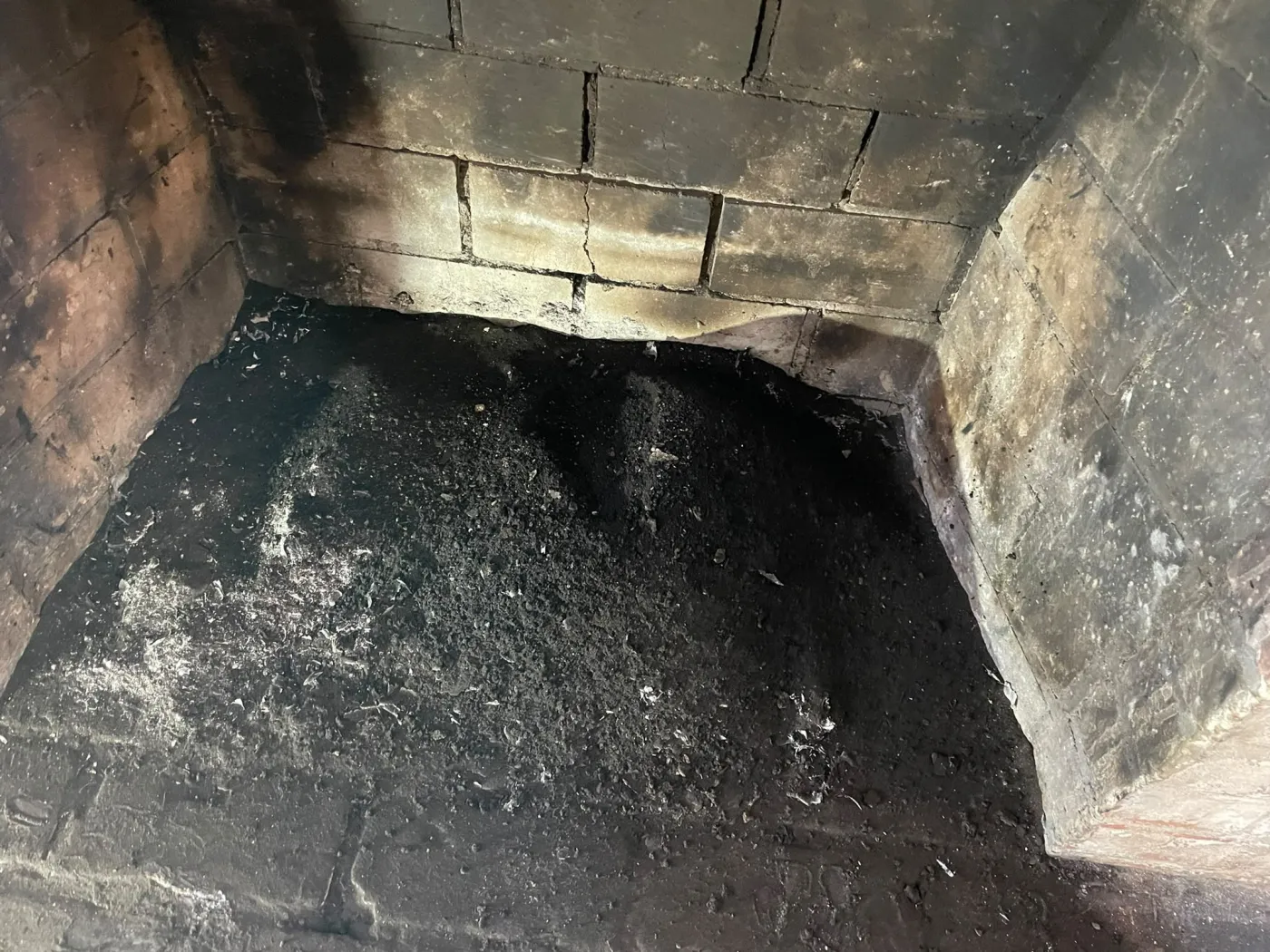
The rest is debris. In an older New York chimney that means sand and chunks of mortar from worn joints, flakes of clay tile, leaves, and sometimes twigs from a nest.
This page is about the cleaning itself. Our chimney sweep page describes the full visit, which pairs the cleaning with a look at the cap, crown and flashing.
What is included
- Flue walls brushed from the firebox to the top
- Smoke chamber and smoke shelf brushed out
- Firebox walls and floor cleaned
- Loose mortar, tile flakes and nesting debris removed
- Plastic sheeting laid down and a vacuum running throughout
- Soot collected and taken away
- Photos of the flue before and after
Signs you need it
- A thick, crusty layer of soot on the damper or firebox walls
- Shiny black patches inside the firebox or flue
- Fires that are hard to start or burn sluggishly
- Smoke rolling out of the firebox opening
- A campfire or tar smell from a cold fireplace
- Bits of soot or mortar landing in the firebox
How the job goes
Contain the mess
Plastic sheeting covers the firebox floor and the hearth in front of it, and the vacuum starts before the brush does, so loosened soot is pulled away instead of drifting into the room.
Read the deposit
We look at what is on the walls, whether flaky soot, hard flakes or glaze, because that decides how much work the flue needs.
Brush the flue
A brush on flexible rods, turned by hand or by a drill, scrubs the flue along its whole length until the deposit is off the liner.
Clear the smoke chamber
The sloped walls above the damper and the smoke shelf behind it are brushed, since much of what leaves the flue settles there.
Empty the firebox
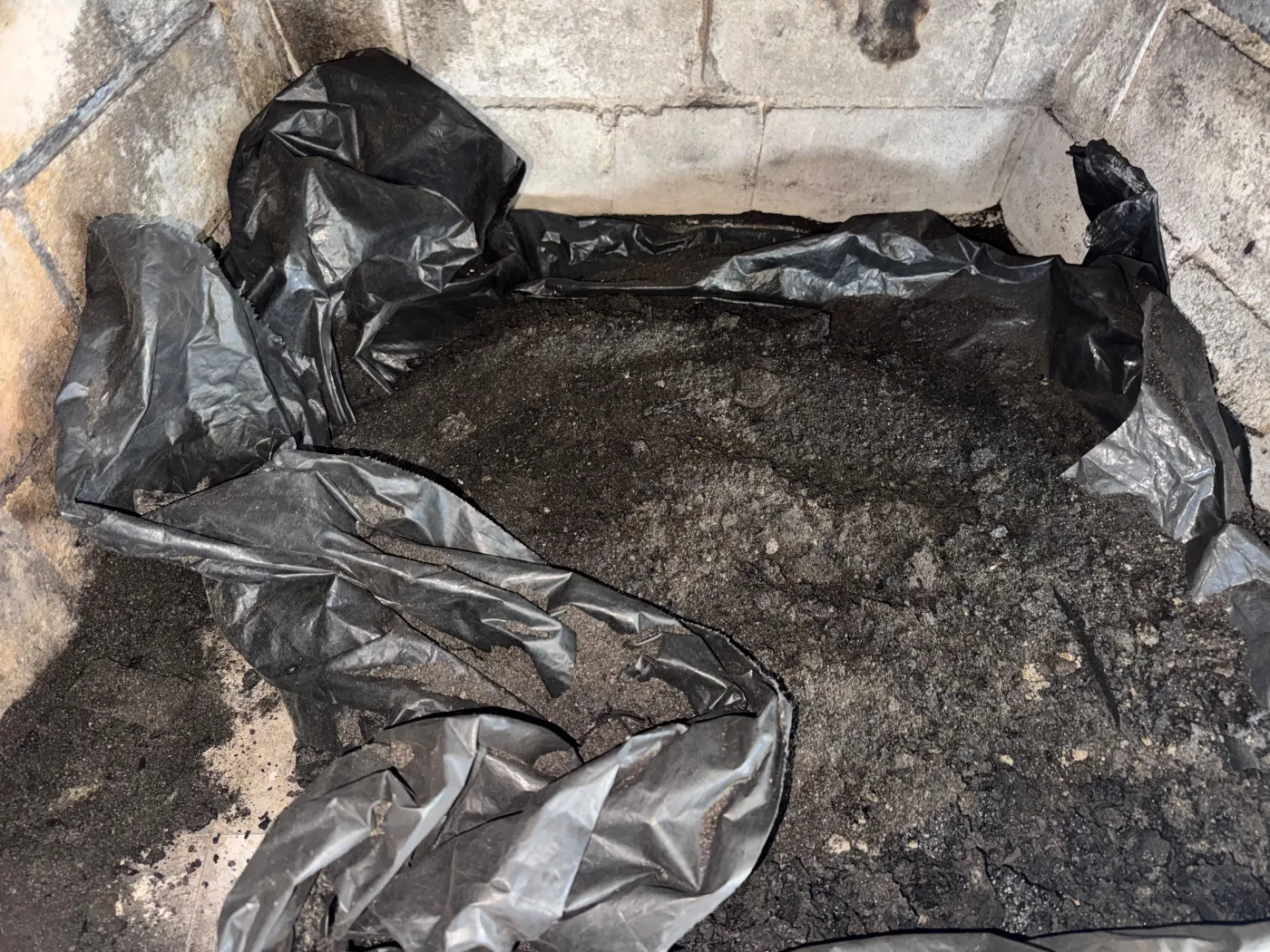
Soot and debris that fell onto the sheeting are gathered up, and the firebox walls and floor are brushed and vacuumed.
Photograph the result
We take photos up the cleaned flue and show them to you next to the ones from before.
From our own jobs
Our photos, not stock.
Why it matters
Creosote is the fuel for a chimney fire. The thicker and harder it gets, the more of it there is to burn and the more difficult it is to remove. Taking it off while it is still flaky is straightforward.
A coated flue is also a narrower flue. Smoke rises more slowly, more of it cools and sticks, and some of it comes back into the room.
A flue also has to be clean before anyone can judge its condition. Cracked tiles and open joints hide under soot, which is why a chimney inspection of a dirty flue often starts with a cleaning.
Chimney cleaning: common questions
What is the difference between a chimney cleaning and a chimney sweep?
The two words are often used for the same visit. On this site the sweep page covers the visit as a whole, including the check of the chimney top. This page goes into what is removed from the flue and how.
Can glazed creosote be removed?
Often, but not with brushing alone. Glaze needs slower mechanical work or a treatment that breaks it down first. If the liner under it turns out to be damaged, relining may be part of the answer, and we show you photos before going further.
Will soot get into the room?
The work is set up to prevent that. The hearth and floor are covered, and a vacuum runs at the firebox the whole time the brush is in the flue. It helps to move rugs and anything fragile away from the fireplace beforehand, and to let the fire go cold well ahead of the visit.
What can I burn to slow creosote down?
Dry, seasoned hardwood, with enough air for a bright fire. Wet or freshly cut wood and fires left to smolder make cooler, thicker smoke, and that is what condenses in the flue. No wood stops creosote altogether, so the flue still needs checking each year.
Related chimney services
Tell us what is going on. We will tell you what it needs.
Call or text with your ZIP code and a line about the problem. For dryer vents, text DRYER and your ZIP.