
Residential air duct cleaning in New York City
The ducts in a home collect what the household makes: dust, pet hair, lint and whatever the last occupants left behind. We clean every supply and return run, room by room, and show you photos from before and after.
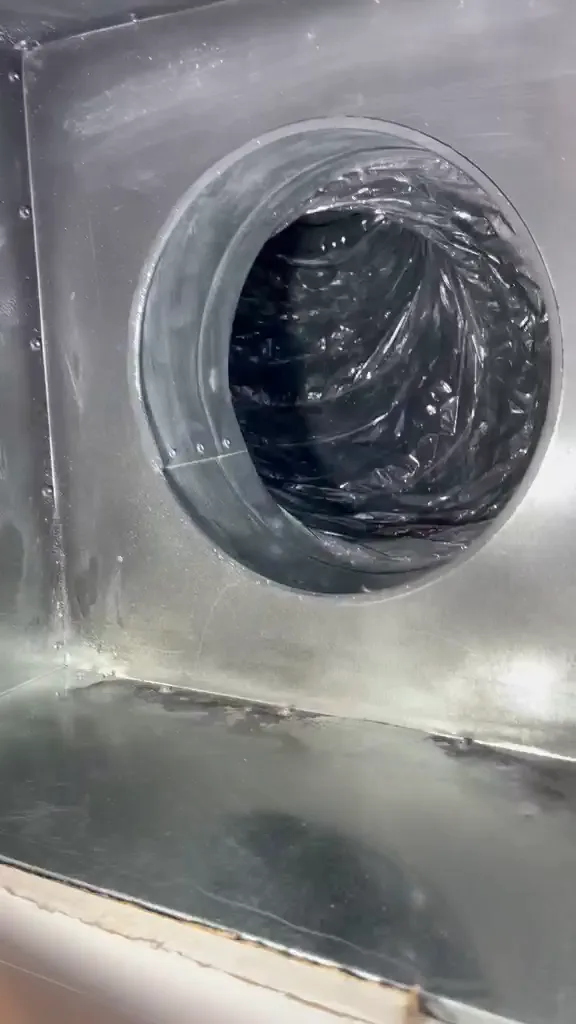
Residential air duct cleaning, explained
The ducts in a home fill up with ordinary things: dust from bedding and carpets, pet hair and dander, lint, a film from cooking, and in older houses bits of plaster and sawdust left from when the system was put in. The return side is usually the dirtiest, because it carries room air to the filter before anything has been taken out of it.
New York homes hide their ductwork in different ways. A detached house tends to have a furnace or air handler in the basement, with sheet metal trunks and a branch to each room. Many brownstones and row houses were built for radiators and got central air later, so the ducts are often flexible lines run through closets and soffits. An apartment with its own system often has a compact air handler in a closet or above a dropped ceiling.
People usually call at a turning point: a move into a place with an unknown history, a new dog or cat, allergies that flare when the heat comes on. Work on the home is another reason, and after-renovation air duct cleaning has its own page.
What is included
- Every supply register and return grille removed and cleaned
- Each supply run brushed and vacuumed back to the trunk
- Return side cleaned from the grilles back to the unit
- Flexible duct cleaned with a softer brush
- Crushed, torn or disconnected sections pointed out
- Photos from each part of the system, before and after
Signs you need it
- Dust back on shelves soon after you clean
- Pet hair caught behind the return grille
- Allergy symptoms that seem worse when the system runs
- You moved in and do not know when the ducts were last cleaned
- Crumbs, toys or debris visible down a floor register
How the job goes
Walk the home
We go room to room with you, find every register and return, and locate the furnace or air handler. You see photos from inside the ducts and get a quote before we start.
Farthest rooms first
With the system off and the vacuum connected near the unit, cleaning begins at the registers farthest from it and works back. Each run is brushed while the other openings stay covered.
Clean the return side
Return grilles come off and the return ducts are brushed and vacuumed. This is where most of the pet hair turns up.
Refit and restart
Registers and grilles are cleaned and screwed back on, the filter goes back in its slot, and the system is run to check that air comes from every register.
Go over the photos
You see each area before and after, along with anything we noticed, such as a loose duct connection or a filter that does not fit.
From our own jobs
Our photos, not stock.
Why it matters
At home the system runs while you sleep. Dust, dander and pollen sitting in the ducts get stirred every time the blower starts, and for some people that can aggravate allergies. Cleaning does not change what comes into the home from now on. It removes what has already collected.
It also gives you a known starting point. After a move, the dust in the ducts belongs to people and pets you never met. Once it is out, what builds up next is your own, and a filter that fits and gets changed on time will slow it down.
Residential air duct cleaning: common questions
What should I do before you arrive?
Clear a path to the furnace or air handler, and move rugs or furniture that sit on floor registers and return grilles. Keep pets in a closed room while the registers are off.
Can you clean the ducts in an apartment or condo?
Yes, when the apartment has its own air handler and ductwork. If the air comes from equipment that serves the whole building, the request has to go through management. If you have units under the windows and no ducts, you want PTAC cleaning.
We have pets. Does that change the job?
It changes where the work is. Hair and dander collect at the return grilles, in the return ducts and on the filter, so those get the most attention. Pets also load a filter faster, so check yours more often.
Can flexible duct be cleaned without damage?
Yes, with a softer brush and a lighter hand than sheet metal needs. Flexible duct has a thin inner liner, so we look for tears and kinks first. A section that is already torn or crushed is better replaced than brushed.
Related air duct services
Tell us what is going on. We will tell you what it needs.
Call or text with your ZIP code and a line about the problem. For dryer vents, text DRYER and your ZIP.