Chimney flue repair in New York City
A flue is supposed to be a closed passage from the fire or the boiler to the open air, and a cracked tile or a gap at the pipe connection breaks it. We find the opening, show you photos of it and close it, so exhaust goes up the chimney and not into the building.
Chimney flue repair, explained
The flue is the passage inside the chimney that carries smoke and exhaust to the top. In most lined masonry chimneys the lining is clay tiles stacked end to end, with a mortar joint between each pair. Flue repair fixes the places where that passage has opened up.
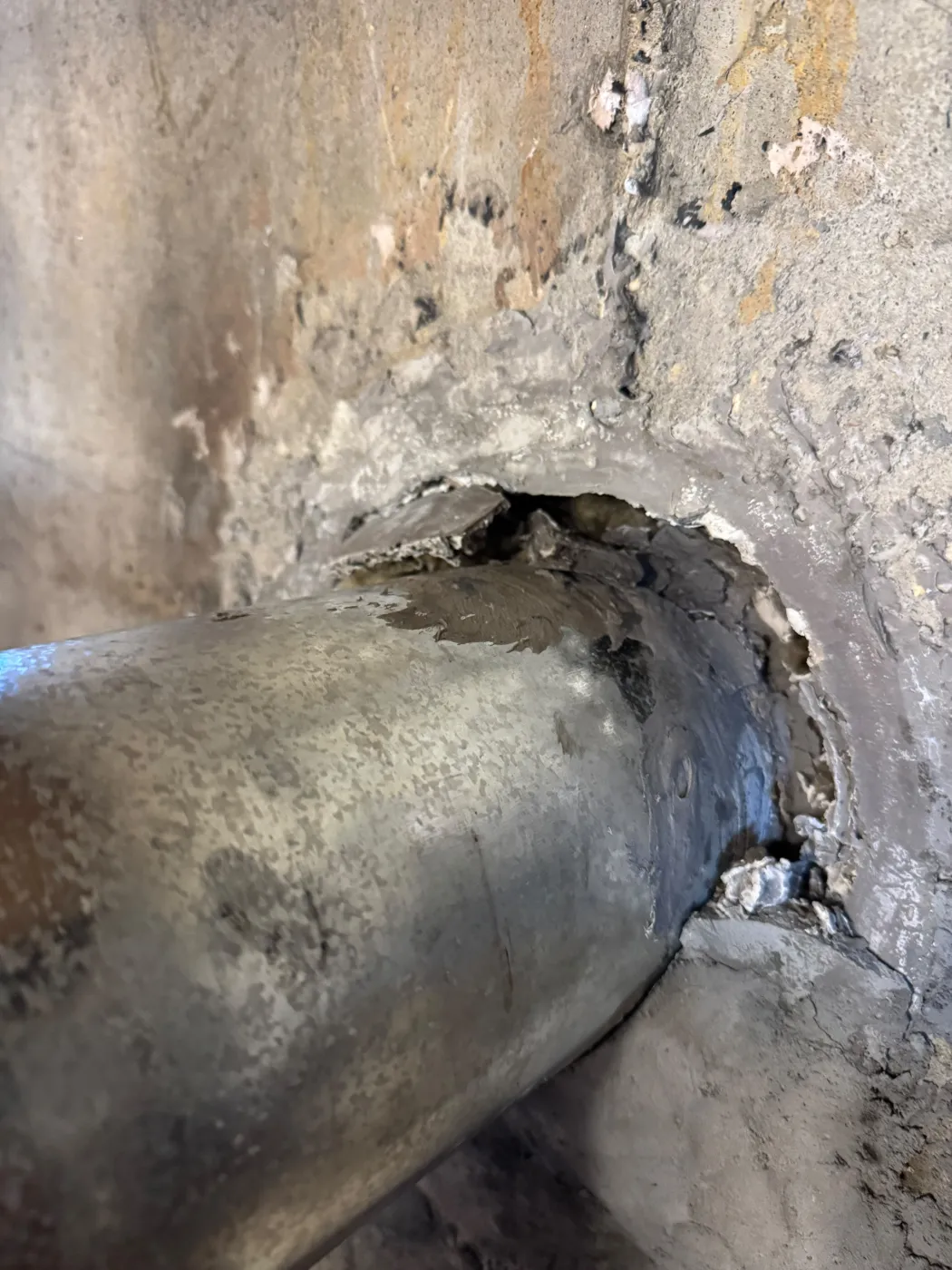
There are three usual faults. Tiles crack, from the heat of a chimney fire, from water and frost, or from the building settling. The mortar between tiles washes out and leaves open joints. And where the metal pipe from a boiler, furnace or water heater enters the chimney wall, the mortar around the pipe crumbles and leaves a gap.
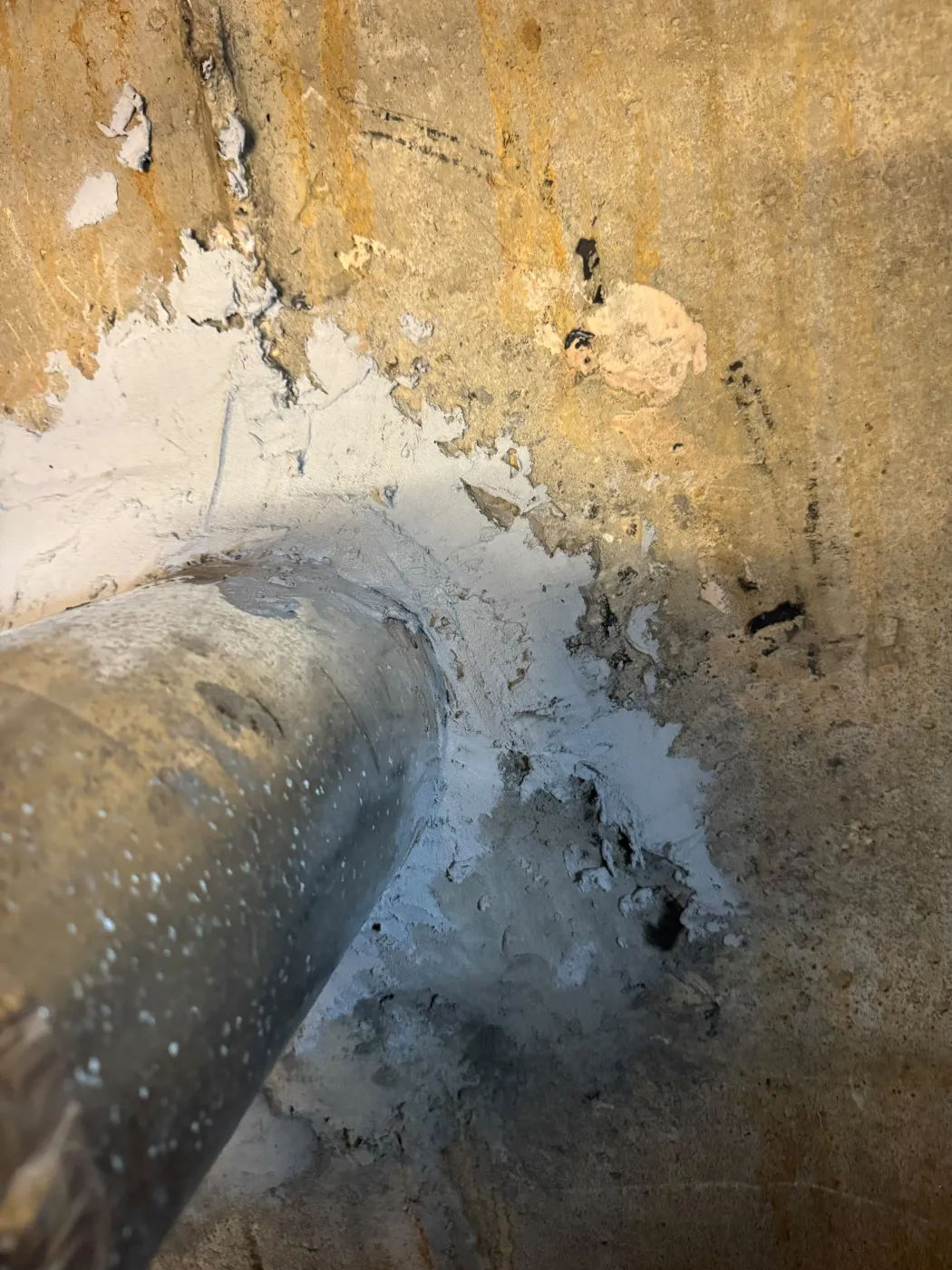
That last one is common in New York basements. The boiler in a row house or small apartment building usually vents through a pipe into the base of a masonry chimney, and the seal around it is easy to overlook.
Flue repair deals with specific openings. When the tiles are damaged along much of the flue, patching stops making sense and the answer is liner repair or relining. In a chimney that was never lined, it is a new flue.
What is included
- The flue examined along its length, with photos
- Open joints between flue tiles refilled
- A cracked or broken tile at the top of the flue replaced
- Loose mortar cleared from the pipe connection at the chimney wall
- The gap around the pipe sealed
- Fallen tile and mortar removed from the base of the flue
- Photos of each repair
Signs you need it
- Pieces of clay tile in the firebox or at the cleanout
- A gap or crumbling mortar where the boiler pipe meets the chimney
- Soot marks on the wall around that connection
- An exhaust smell in the basement when the heat comes on
- Stains on a wall the chimney runs behind
- An inspection that found cracked tiles or open joints
How the job goes
Inspect the flue
We look at the flue from the bottom and the top and photograph the liner, so every crack and open joint is located before anything is repaired.
Check the connection
On a heating flue the pipe from the appliance is followed to the chimney wall, and the seal around it is checked for gaps and loose mortar.
Clear the debris
Broken tile and fallen mortar are taken out of the flue and the cleanout, so nothing is left sitting in the passage.
Repair the liner
Open joints are refilled with mortar made for heat, and a damaged tile at the top of the flue is replaced.
Seal the pipe
Crumbling mortar is raked out around the pipe and the gap is sealed all the way around, with the pipe set so its end does not stick out into the flue.
Show what changed
You get photos of the repair next to the ones from before, and we say so if the flue needs more than a repair.
From our own jobs
Our photos, not stock.
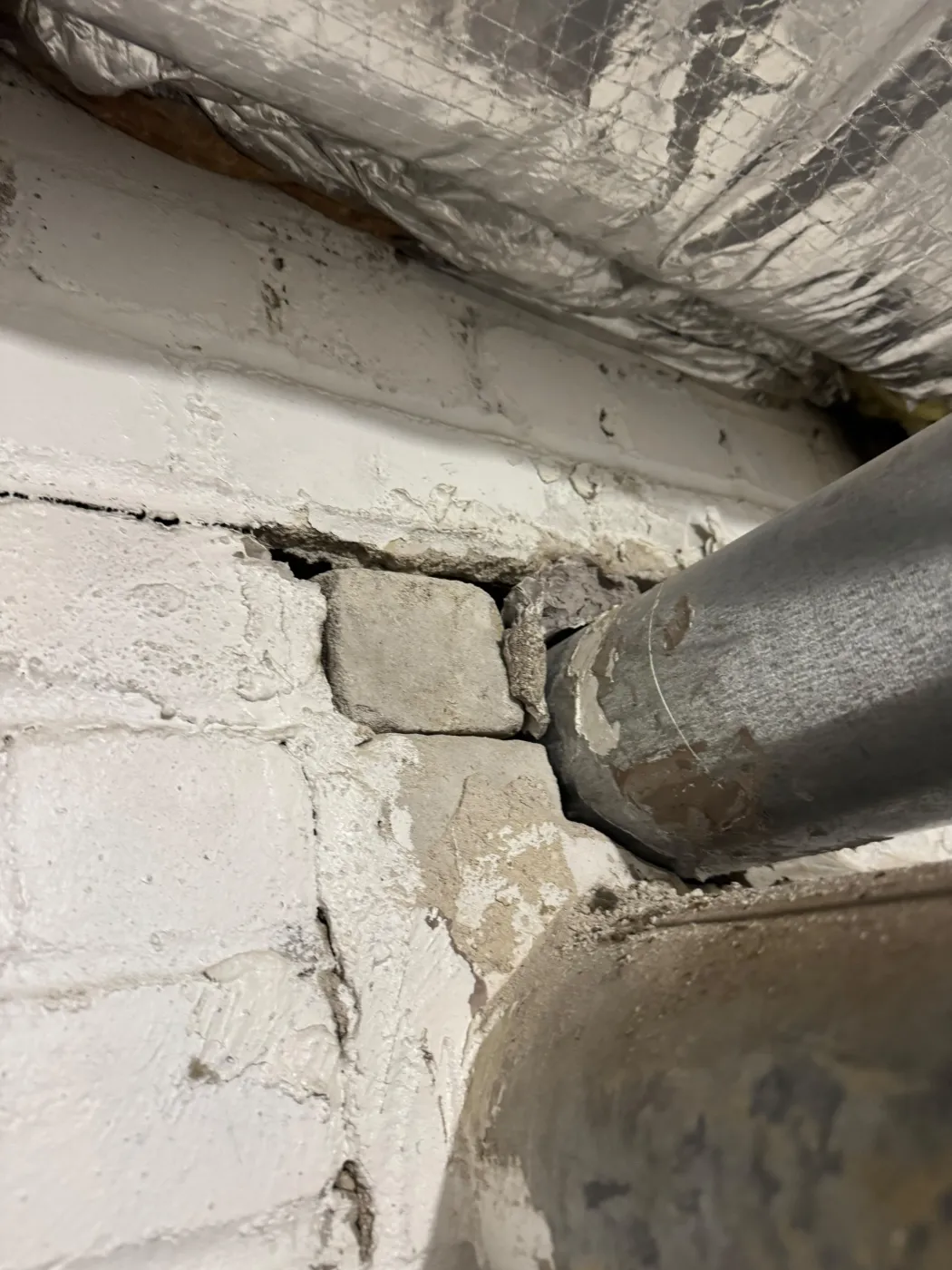
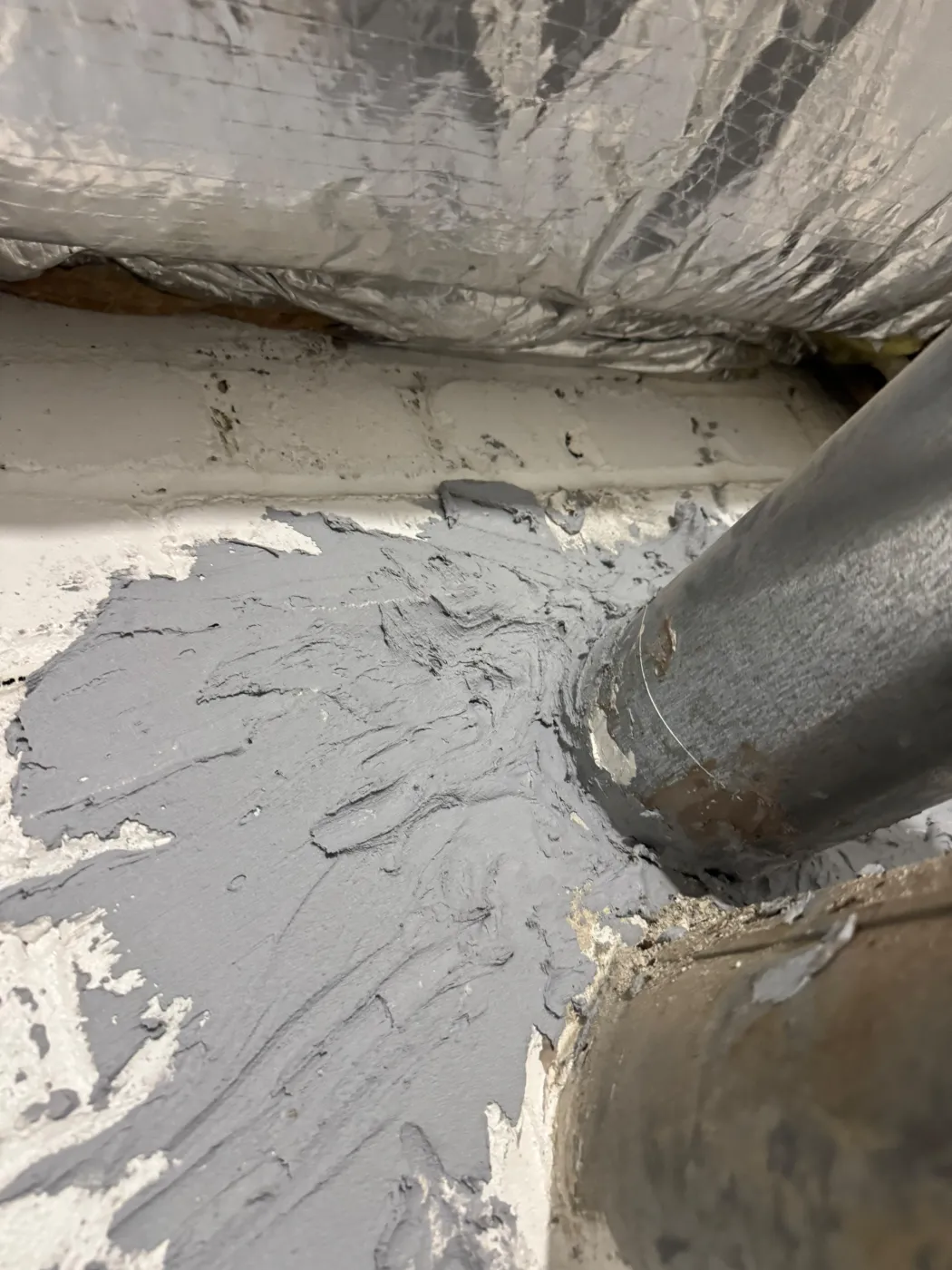
A flue pipe where it enters the chimney wall: the gap and loose mortar we found, and the same connection sealed.
Why it matters
The liner is what keeps heat and exhaust inside the flue. Through a cracked tile or an open joint, hot gases reach the brick, and through gaps in old brickwork they can reach the wood framing and the rooms next to the chimney. With a wood fire that is a fire risk. With a boiler or furnace it is a carbon monoxide risk, because that exhaust cannot be seen.
Leaks also spoil the draft. Air drawn in through a gap at the pipe or an open joint cools the gases and slows them, and an appliance with a weak draft can spill exhaust at the bottom.
Broken tile is also a blockage in waiting. Pieces that fall can lodge in the flue or pile up at the base and close off the opening the appliance vents into.
Chimney flue repair: common questions
What is the difference between flue repair and liner repair?
They overlap. This page covers particular openings: a cracked tile, an open joint, a gap at the pipe connection. Liner repair is about the liner as a whole, clay or metal.
Is a gap around the boiler pipe really a problem?
Yes. That joint is part of the flue, and a gap there lets exhaust into the basement and room air into the chimney, which weakens the draft. It is also one of the simpler repairs, as the before and after photos on this page show.
Can I use the fireplace with a cracked flue tile?
Hold off on fires until it has been looked at. A crack can open wider when the flue heats, and you cannot judge that from the room. Photos from inside the flue show whether it is a single tile or a sign of wider damage.
What should I do if I smell exhaust near the boiler?
If a carbon monoxide alarm sounds, get everyone outside and call emergency services. If it is a smell near the flue pipe with no alarm, have the appliance and the chimney checked before you rely on them.
Related chimney services
Tell us what is going on. We will tell you what it needs.
Call or text with your ZIP code and a line about the problem. For dryer vents, text DRYER and your ZIP.