
Boiler chimney cleaning in New York City
Oil and gas boilers heat a great many of New York's row houses and apartment buildings, and the masonry chimneys they vent into slowly fill with soot and debris from the bottom up. We clean the chimney from the cleanout at the base to the cap, along with the pipe that connects the boiler to it.
Boiler chimney cleaning, explained
A boiler heats water or makes steam for radiators and baseboards. Its exhaust leaves through a metal connector pipe, sometimes called the smoke pipe, into a flue that runs up through the building. Boiler chimney cleaning covers that flue, the cleanout at its base and the connector pipe.
Oil is the reason this job exists in so many New York buildings. An oil burner leaves fine black soot on the flue walls and in the pipe, and more of it when the burner is out of tune. Soot holds moisture and turns acidic. It does not just narrow the flue, it wears away the mortar and the metal it sits on.
Gas boilers are cleaner but not exempt. Many were converted from oil, and the old soot is still in the chimney. Gas exhaust is cooler and wetter, which loosens that soot and flakes the lining, and all of it drops to the bottom.
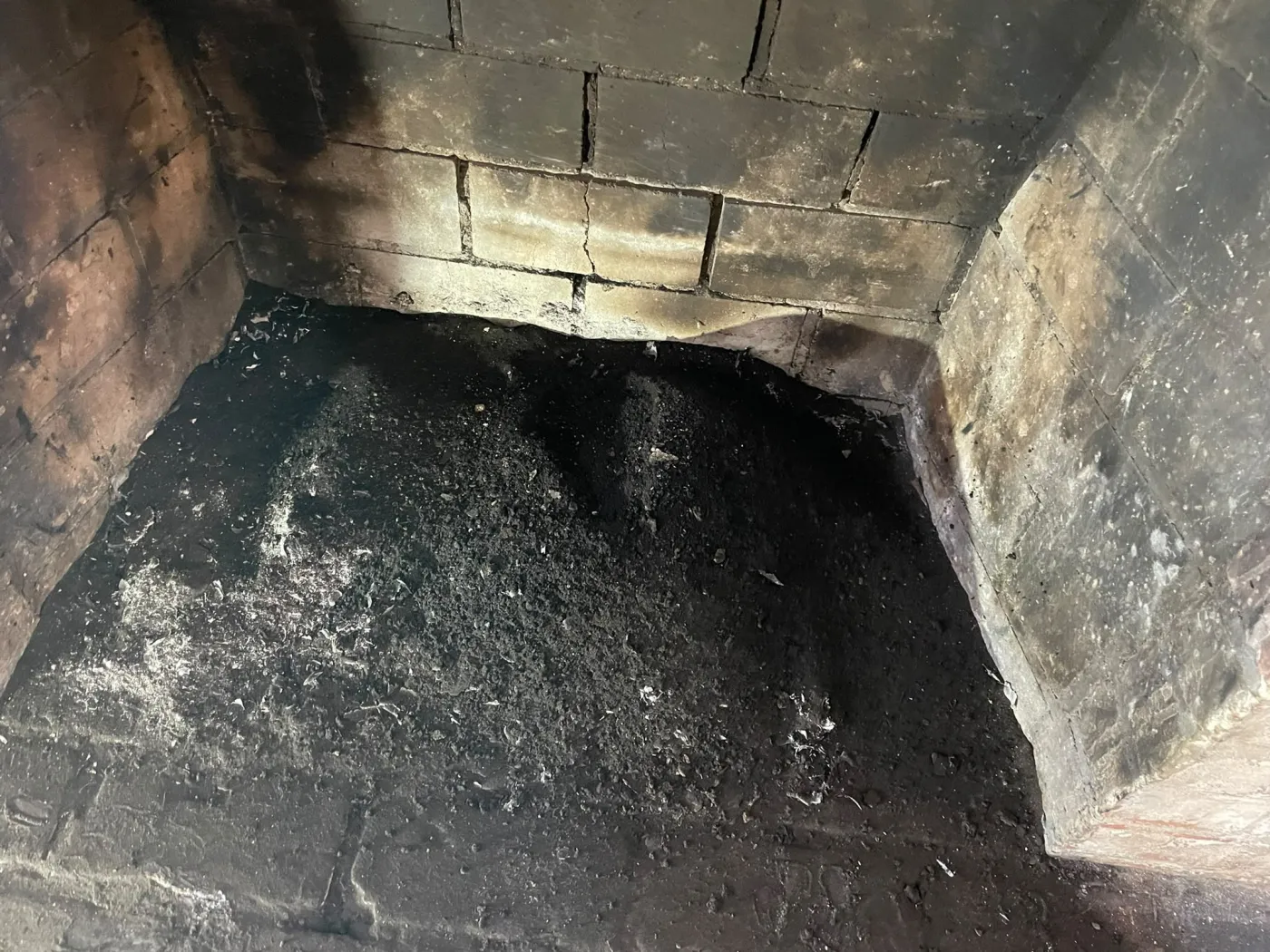
That is what the cleanout is for: a small door at the base of the chimney, below the point where the pipe enters, where fallen soot and debris collect and can be taken out. When nobody empties it, the pile rises until it blocks the pipe opening. A forced-air system has a furnace instead of a boiler, and that has its own page: furnace chimney cleaning.
What is included
- The cleanout opened and emptied
- The connector pipe taken down and cleaned of soot
- The flue brushed from top to bottom
- Soot vacuumed and bagged, not left in the boiler room
- The pipe refitted and its joint at the chimney wall sealed
- Photos of the flue, the cleanout and the pipe, before and after
Signs you need it
- Soot on the floor or walls around the boiler
- A cleanout that is full, or has never been opened
- An oily or smoky smell in the boiler room when the burner fires
- A boiler that shuts down or needs frequent resets
- A recent conversion from oil to gas
How the job goes
Shut down and look
The boiler is switched off and allowed to cool. We look at the pipe, the wall connection, the cleanout and the top of the chimney.
Empty the cleanout
The door at the base of the chimney is opened and the soot and debris behind it are shoveled and vacuumed out.
Take down the pipe
The connector pipe is removed, brushed clean and checked again, because oil soot hides rust. A pipe that is rusted through gets a quote for new vent pipe.
Brush top to bottom
A brush on flexible rods is run the full height of the flue. What it loosens falls to the base and is removed through the cleanout.
Seal the connection
The pipe is refitted and the gap where it enters the chimney is closed with mortar or sealant.
Restart and check
The boiler is fired and we check that it is drafting into the chimney. You get photos of what was found and what was left behind.
From our own jobs
Our photos, not stock.
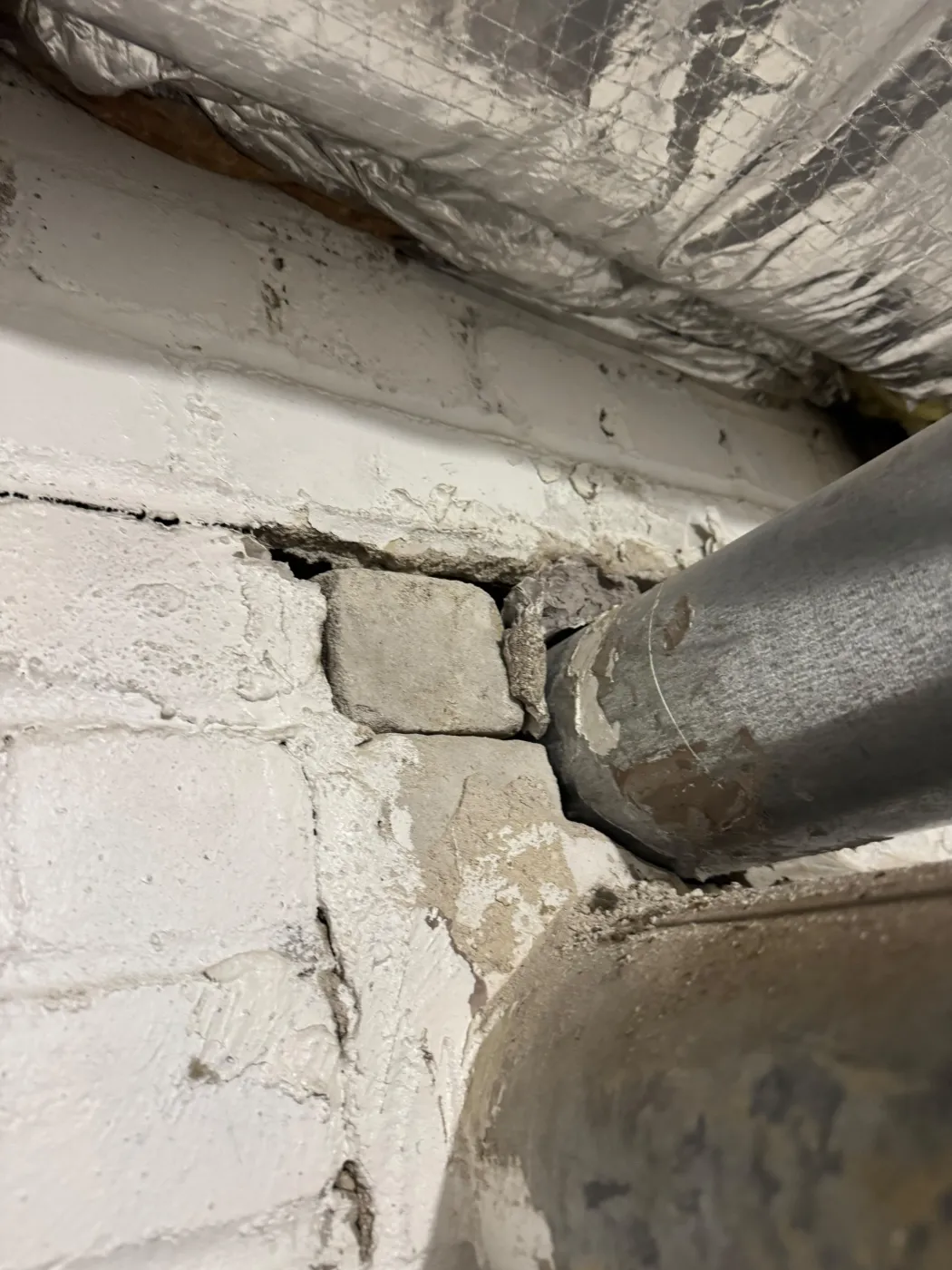
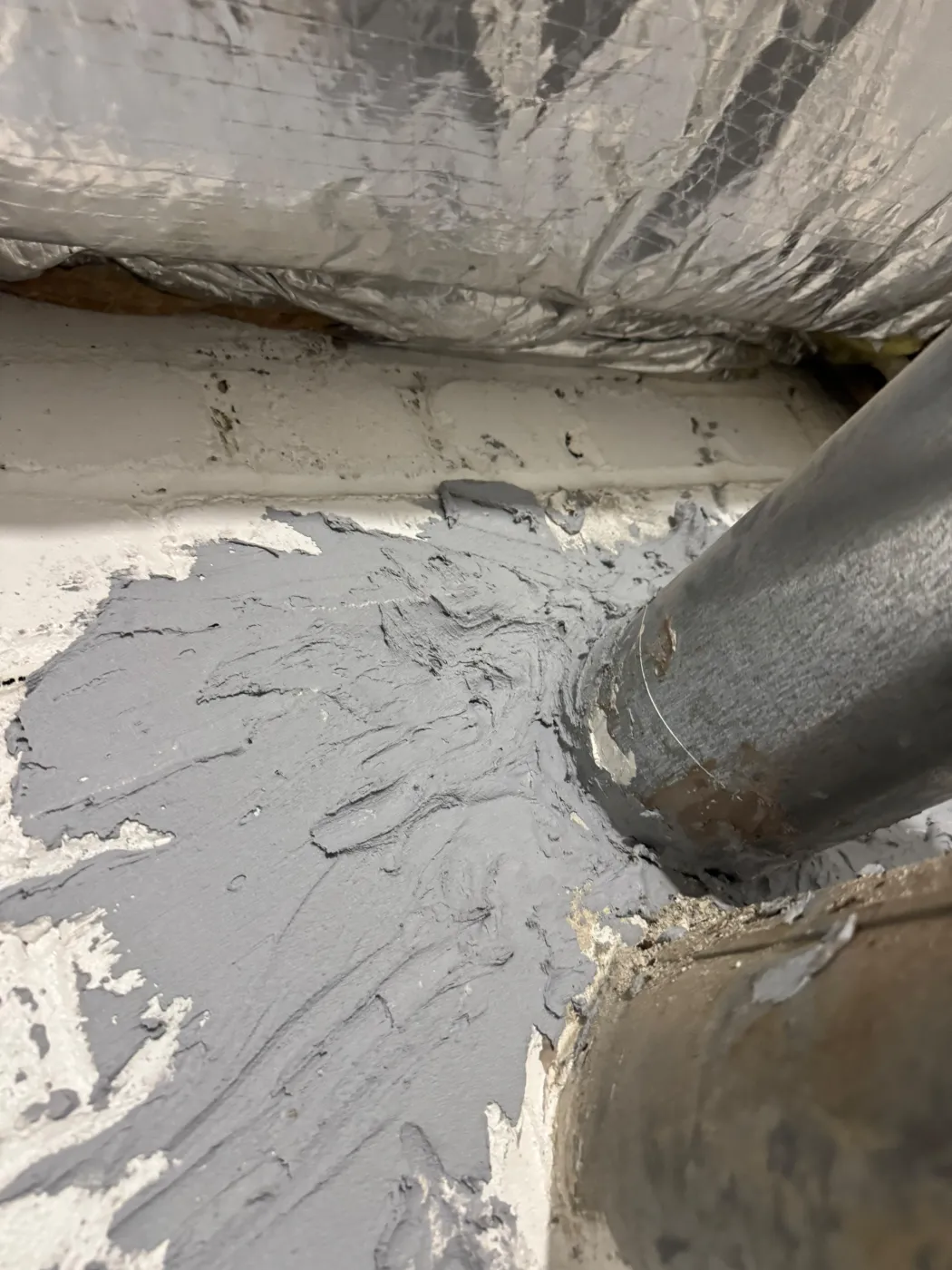
Where the connector pipe meets the chimney wall: an open gap with loose mortar, and the same joint after sealing.
Why it matters
A blocked boiler flue pushes exhaust back into the boiler room, and that exhaust can contain carbon monoxide. In an apartment building the boiler room sits below every home in the building, which is why supers and managers treat the chimney as part of the heating plant.
Soot also costs fuel and equipment. A boiler that cannot draft burns poorly, makes more soot and can shut itself down in the middle of a cold spell. A gap at the wall connection makes it worse, because the chimney then draws air from the room instead of pulling exhaust from the boiler.
Boiler chimney cleaning: common questions
The oil company services my boiler every year. Is the chimney included?
Usually not. A tune-up covers the burner and the passages inside the boiler, and often the pipe, but the chimney flue and the cleanout at its base are separate. Ask your service company what was done, and if nobody has opened the cleanout, it is time.
We converted from oil to gas. Does the chimney still need cleaning?
Yes, and the conversion is the time to do it. The old oil soot is still in the flue, and gas exhaust tends to loosen it. Have the flue inspected as well, since a gas boiler may need a liner the oil boiler did not.
Will the heat be off during the cleaning?
Yes. The boiler has to be off while the pipe is down and the flue is being brushed, so there is no heat from it during the visit, and no hot water if the boiler makes that too. Managers of occupied buildings usually schedule the work outside the heating season or give residents notice.
Related chimney services
Tell us what is going on. We will tell you what it needs.
Call or text with your ZIP code and a line about the problem. For dryer vents, text DRYER and your ZIP.