
Dryer vent repair in New York City
A dryer vent only works if it is one sealed path from the dryer to the outdoors. We reconnect joints that have come apart, replace crushed or torn hose, reseal leaks with foil tape and fix the hood or flap outside.
Dryer vent repair, explained
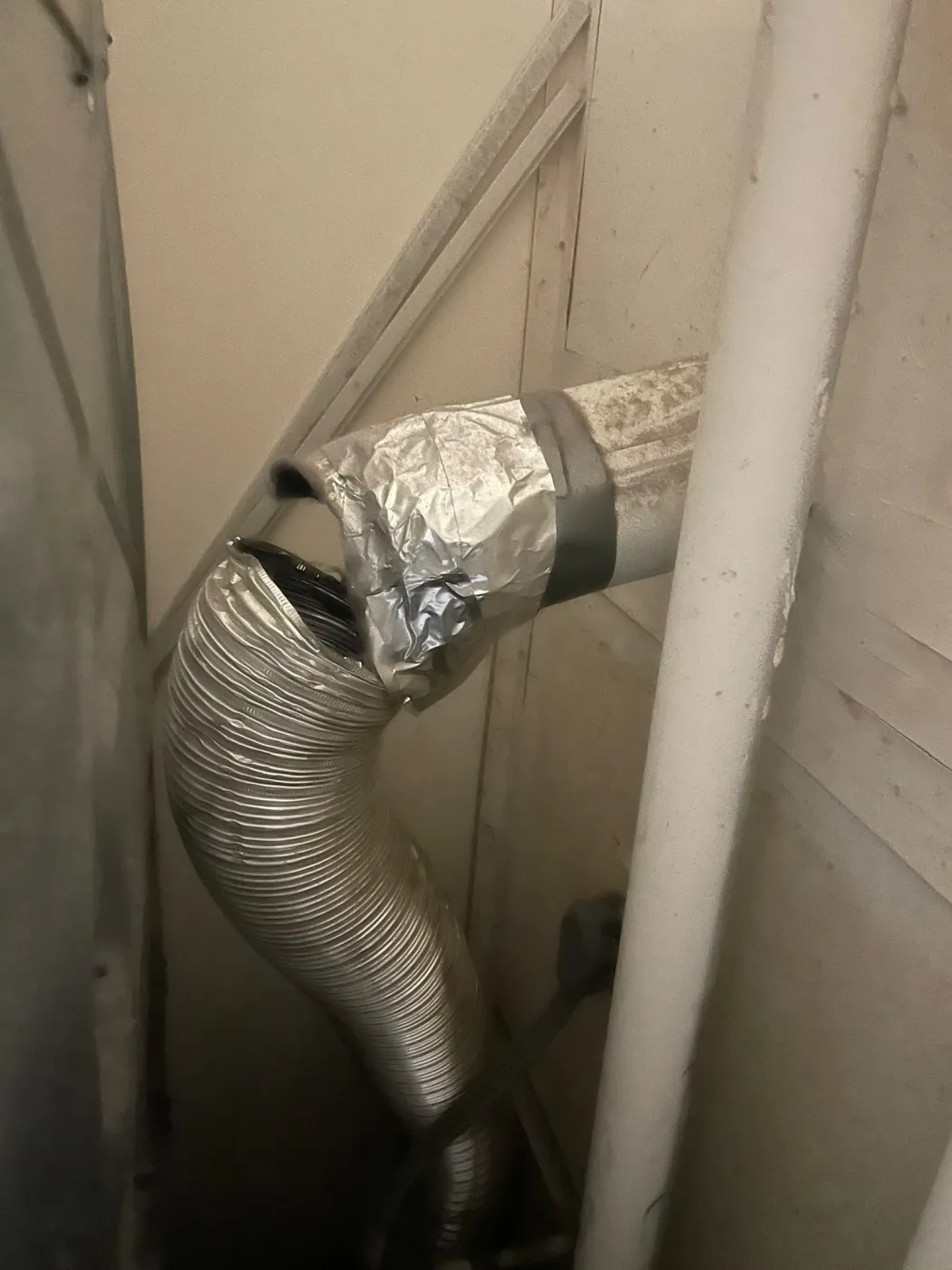
A dryer vent is a simple thing: a hose from the dryer to the wall, a duct through the building, and a hood with a flap where it comes out. Repair is needed when one of those pieces stops doing its part. The damage is usually small. The effect is not, because the dryer is now blowing hot, wet, lint-filled air somewhere other than outside.
Most damage happens behind the dryer. The machine is pushed back too far and the hose is flattened or folded. Thin foil hose tears when the dryer is moved. A clamp works loose and the hose slips off its collar, and nobody sees it because it is behind the machine.
The rest happens where you cannot look. Joints between duct sections pull apart inside a ceiling or wall, often where they were held with cloth tape that dried out in the heat. Outside, hoods crack and flaps break off or stick. In row houses and older apartment buildings, a renovation can knock a joint loose without anyone noticing.
What is included
- The whole line inspected from the dryer to the outlet
- Separated joints refitted and sealed with foil tape
- Crushed, kinked or torn hose behind the dryer replaced
- Loose or missing clamps tightened or replaced
- A broken hood or flap repaired or swapped for a new one
- Photos of the damage and of the finished repair
Signs you need it
- Lint piling up behind or under the dryer
- Warm, damp air in the laundry area while the dryer runs
- A hose that is flattened, folded or patched with cloth tape
- A stain or damp patch on a wall or ceiling along the vent route
- An outlet flap that is missing, broken or stuck open
- Drying times that got worse right after the dryer was moved
How the job goes
Inspect end to end
We pull the dryer out and look at the hose, the clamps and the wall connection, then follow the duct as far as it can be reached and check the hood outside.
Find the leak
With the dryer running, a leak shows itself as warm air and lint escaping at a joint, and as weak flow at the outlet.
Quote the fix
You see photos of what is wrong and get a quote before any repair starts.
Repair the line
Joints are pushed back together and sealed with foil tape. Damaged hose is cut out and replaced with new vent hose, clamped at both ends.
Fix the outlet
A cracked hood or a broken flap is repaired or replaced, and the gap around it is sealed against the weather.
Clean and test
Lint that built up at the damaged spot is brushed and vacuumed out. Then the dryer runs and we check each repaired joint and the outlet.
From our own jobs
Our photos, not stock.
Why it matters
A leak inside a wall or ceiling puts two things where they should never be. The first is lint, which settles in a closed space on framing, wiring and insulation. The second is moisture: every load sends the water from your clothes down that duct as warm, damp air, and at a leak it soaks into whatever is around it.
A crushed or kinked hose does a different kind of harm. It chokes the airflow right at the dryer, so the machine runs hot and long, and lint packs into the narrow spot until it blocks.
A broken flap matters too. Stuck shut, it blocks the line. Stuck open or missing, it lets cold air, rain and animals in.
Dryer vent repair: common questions
Can I patch the hose with duct tape?
Not with ordinary cloth duct tape. Dryer heat dries out its adhesive and the patch lets go. Joints are sealed with foil tape, and a hose that is torn or crushed is better replaced than patched.
How do you repair a joint that is inside a wall or ceiling?
It depends on where it is. Some joints can be reached from the basement, a closet, an access panel or the outlet. If one has separated in a closed cavity, the wall or ceiling has to be opened at that spot, and we tell you so before any work starts.
Do I need a repair or a whole new vent?
Repair makes sense when the line is sound and one part has failed: a joint, a clamp, the hose, the hood. If the duct is plastic or vinyl, damaged in several places or needlessly long, replacement is usually the better choice. Text DRYER and your ZIP code to (917) 983-1283 and describe what you see.
Should the vent be cleaned at the same time?
Usually, yes. Lint collects on both sides of the damage, so cleaning the line once it is sealed means the repair starts with full airflow.
Related dryer vent services
Tell us what is going on. We will tell you what it needs.
Call or text with your ZIP code and a line about the problem. For dryer vents, text DRYER and your ZIP.