
Air duct cleaning in New York City
The dust on your registers is a small sample of what is sitting inside the ducts behind them. We clean the whole forced-air system, supply side and return side, and show you photos of what was in there and what we left behind.
Air duct cleaning, explained
A forced-air system is a loop. The blower pulls air out of your rooms through the return grilles, passes it through the filter and over the heating and cooling equipment, and pushes it back out through the supply ducts to a register in each room. Whatever is floating in that air goes along: household dust, lint, pet hair, plaster dust from old walls. The filter stops part of it. The rest settles inside the ductwork, and some of it is picked up again every time the system starts.
Air duct cleaning means removing that buildup from the whole loop, not only from the openings you can see: the supply ducts, the return ducts, the plenums where the ductwork joins the equipment, and the registers and grilles in the rooms. When the inspection shows they need it, the coil and the blower are cleaned too. Cleaning one side and skipping the other leaves the rest of the dust in circulation.
In New York City, ductwork comes in every shape. A brownstone may have central air added long after the house was built, with flexible duct threaded through closets and soffits. A detached house usually has sheet metal trunk lines across the basement ceiling. An apartment may have a small air handler in a closet, and a storefront may be fed by a unit on the roof. The method is the same in all of them. What changes is how we reach the ducts.
What is included
- Supply ducts cleaned from the registers back to the plenum
- Return ducts and the return plenum cleaned
- Registers and grilles taken off, cleaned and refitted
- Dust collected by vacuum while the ducts are brushed
- Coil and blower inspected, and cleaned when they need it
- Filter and filter slot checked for fit
- Photos of the ductwork before and after
Signs you need it
- Dust settling on furniture soon after you wipe it
- Dust or debris visible inside a register or return grille
- A stale or musty smell when the system starts
- Rooms getting less air than they used to
- Recent renovation, or a move into a home with an unknown history
- Signs of mold or pests in or around the ductwork
How the job goes
Inspect and quote
We take off a few registers, open the access points and look inside the supply side, the return side and the air handler. You see the photos and get a quote before any work starts.
Cover the openings
The system is switched off and the registers are covered, so the dust that gets loosened travels toward the vacuum and not into your rooms.
Put ducts under suction
A vacuum is connected to the ductwork near the air handler. It pulls air through the ducts the whole time they are being cleaned.
Brush every run
A rotary brush on flexible rods goes down each supply and return run and knocks the dust off the duct walls. The suction carries it to the vacuum.
Clean plenums and grilles
The supply and return plenums are brushed and vacuumed by hand, and the registers and grilles are cleaned before they go back on.
Close up and show
Any access opening we made is closed and sealed, the system is run, and you see photos of the same spots before and after.
From our own jobs
Our photos, not stock.
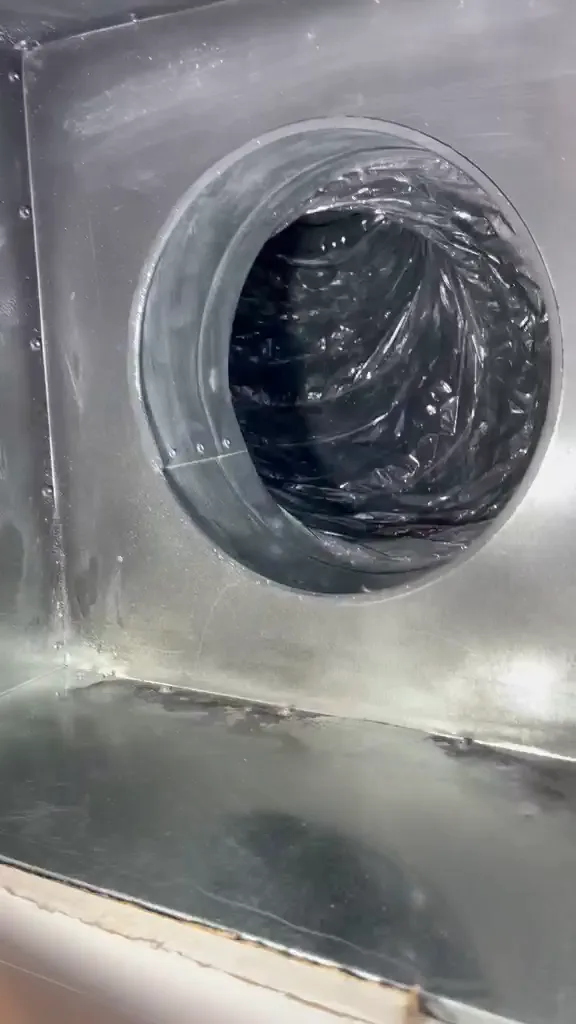
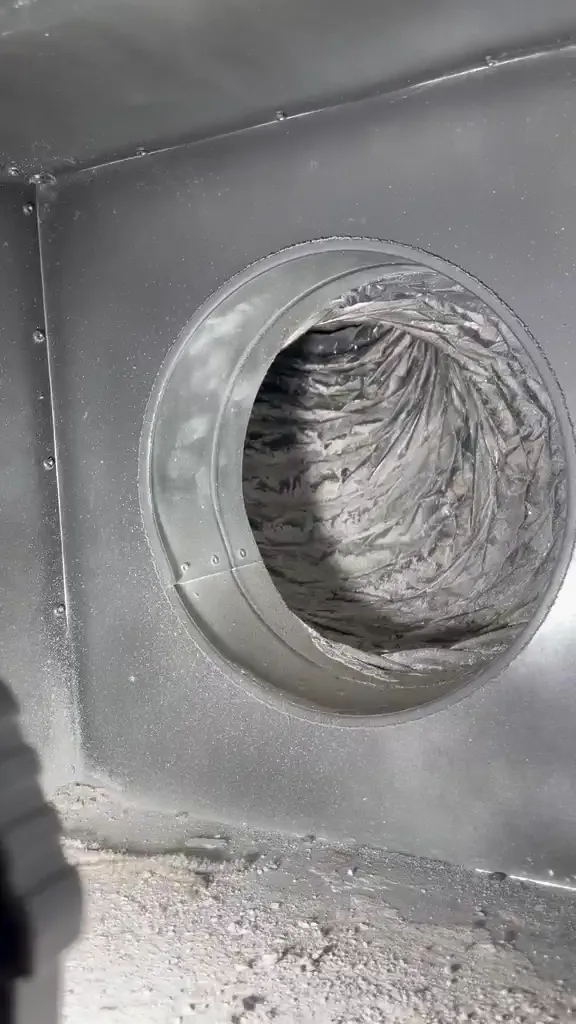
The same supply plenum and flex duct collar, coated with dust and then cleaned back to bare metal.
Why it matters
According to the U.S. EPA, indoor air can be 2 to 5 times more polluted than outdoor air. A duct system does not create that pollution, but it moves the same indoor air around your home again and again, and whatever has settled in the ducts is part of what it moves. For anyone sensitive to dust, pet dander or mold, that can aggravate allergies.
There is a mechanical side too. Dust that gets past the filter lands on the coil and the blower. A coated coil moves less heat and a coated blower moves less air, so the system runs longer to do the same job.
The honest test is to look inside. If the photos show bare metal, leave the ducts alone. If they show a gray layer on every surface, it will keep circulating until it is removed.
All 10 air duct services
The other air duct pages split this work up by building, by part and by problem. Residential air duct cleaning covers houses, brownstones and apartments. Commercial air duct cleaning covers offices, shops, clinics and gyms, where the systems are larger and the equipment is often on the roof. After-renovation air duct cleaning deals with the drywall dust and sawdust that get pulled into the returns during construction.
Several pages deal with the equipment at the center of the system. Coil cleaning is for the evaporator coil indoors and the condenser coil outdoors. Blower cleaning is for the fan wheel and housing that move all the air. HVAC unit cleaning takes the whole cabinet in one visit: coil, blower, drain pan, condensate line and filter slot. PTAC cleaning is for the through-the-wall units under apartment, hotel and office windows, which have no ducts but collect the same dust.
The last two are add-ons to a cleaning, not replacements for one. Air duct disinfecting is a treatment applied to cleaned ductwork that has had mold, water, pests or a lingering odor, and the moisture source has to be fixed as well. UV light installation mounts a UV-C lamp near the coil to help keep that wet surface cleaner between cleanings.
On the job
Short clips from real air duct jobs.
Air duct cleaning: common questions
How often should air ducts be cleaned?
There is no single schedule that fits every home. Pets, renovation work and a filter that does not fit all fill ducts faster, while a home with a well-fitted filter can go a long time. A look inside tells you more than a calendar does.
Will the cleaning leave dust in my home?
The method is set up to avoid that. The ducts stay under suction while they are brushed, and each register stays covered until its run is finished, so loosened dust is drawn to the vacuum.
Do you clean the coil and blower as part of duct cleaning?
We look at both during the inspection and show you what we find. If they are coated, we quote coil cleaning and blower cleaning along with the ductwork, because clean ducts connected to a dusty air handler do not stay clean.
How do I get a quote?
Call or text (917) 983-1283 with your ZIP code, the type of building and a rough count of the rooms with vents. A photo of a register and of the furnace or air handler helps us tell you more.
Related air duct services
Tell us what is going on. We will tell you what it needs.
Call or text with your ZIP code and a line about the problem. For dryer vents, text DRYER and your ZIP.