
Coil cleaning in New York City
A coil coated with dust cannot move heat the way it was built to, so the system runs longer and cools less. We clean the evaporator coil indoors and the condenser coil outdoors, and show you the fins before and after.
Coil cleaning, explained
An air conditioner or heat pump has two coils. The evaporator coil sits indoors, in the air handler or mounted on the furnace. The blower moves room air through it, the refrigerant inside takes up the heat, and moisture from the air condenses on the cold metal and drains away. The condenser coil sits in the outdoor unit and gives that heat up to the outside air.
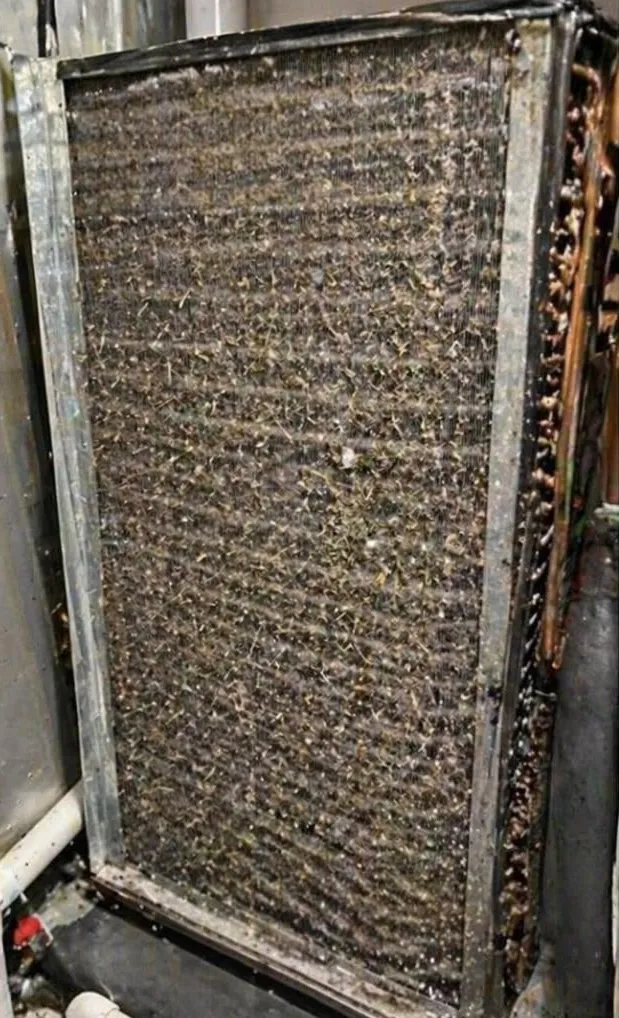
Both are made of thin metal fins packed close together. That makes them good at moving heat and just as good at catching dirt. The indoor coil is wet all summer, so dust that slips past the filter sticks to it and mats over the side the air enters. The outdoor coil pulls in whatever is nearby: soot, leaves, seed fluff, lint from a dryer vent.
In New York City, outdoor units sit on flat roofs, in side alleys and in small backyards. Indoor coils are tucked into closets and above ceilings, where nobody looks at them. A coated coil is often found during air duct cleaning, when the air handler is opened.
What is included
- Evaporator coil inspected on both faces where the cabinet allows
- Loose dust and matted lint brushed and vacuumed from the fins
- Coil washed with a cleaner made for coils, then rinsed
- Drain pan cleaned and the condensate line cleared
- Outdoor condenser coil cleared of leaves, lint and dirt, then rinsed
- Photos of each coil before and after
Signs you need it
- Air from the vents is not as cold as it used to be
- The system runs for long stretches without reaching the set temperature
- Ice on the indoor coil or on the refrigerant line
- Water around the air handler, or a stain on the ceiling under it
- The outdoor unit is matted with dirt, fluff or lint
How the job goes
Shut off power
Power to the air handler and the outdoor unit is switched off before any panel is removed.
Open and photograph
The access panel comes off and the coil is photographed as found. The dirty face is the one the air reaches first, often the side you cannot see from the door.
Brush and vacuum
Dry dust and matted lint are lifted off with a soft brush and a vacuum, moving along the fins and never across them, because the fins bend easily.
Wash and rinse
A cleaner made for coils is applied to loosen what is packed between the fins. It is rinsed off, and the runoff goes into the drain pan.
Clear the drain
The pan is cleaned and the condensate line is cleared, so the water the coil makes has somewhere to go.
Clean outdoors and test
The condenser coil is cleared of debris and rinsed. Power goes back on and the system is run to check airflow and drainage.
From our own jobs
Our photos, not stock.
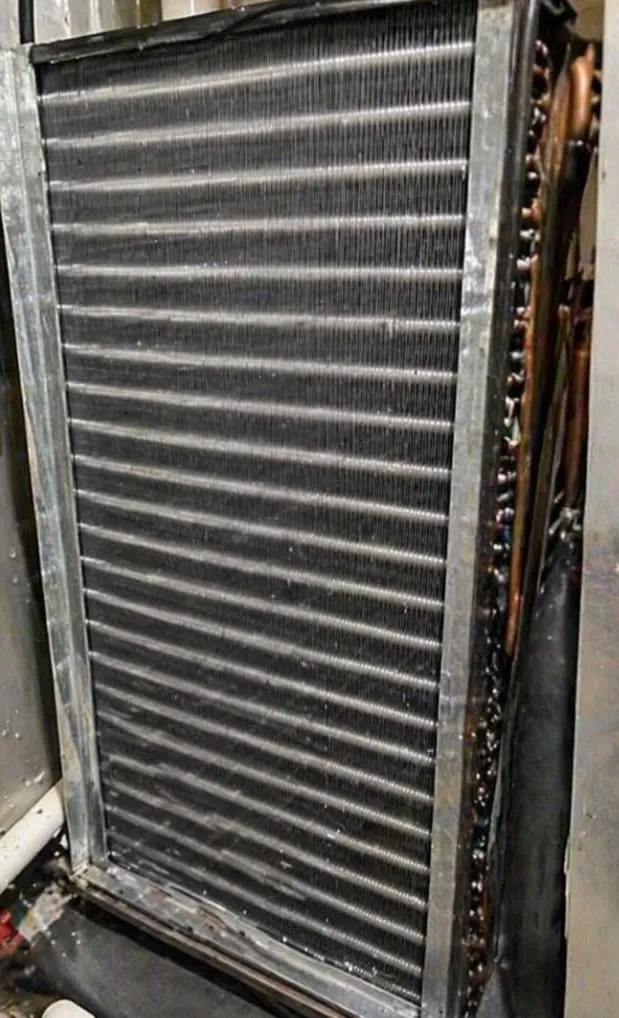
The same A/C coil. Dust matted across the fins, then the fins open again after cleaning.
Why it matters
A coil works by contact between air and metal, and a layer of dust acts like a blanket between them. The system still cools, but it runs longer for the same result. That shows up on the electric bill and as wear on the compressor, one of the most expensive parts to replace.
Indoors, less airflow also lets the coil get too cold. The moisture on it turns to ice, the ice blocks more air, and the cooling stops. When the ice melts, or when dust and slime plug the drain, the water goes where it should not: onto the floor, into the ceiling, or into the apartment downstairs.
A wet, dusty coil is also a place where mold can grow, and all the air in the home passes through it.
Coil cleaning: common questions
Is coil cleaning included in air duct cleaning?
The coil is looked at during a duct cleaning, but cleaning it is separate work: the cabinet is opened, the coil is washed and the drain is cleared. It is often done on the same visit.
Why did my coil freeze?
Most often because not enough air is moving across it. A clogged filter, a coated coil and a dirty blower all cause that. Low refrigerant can do it too, and that is a repair, not a cleaning. Either way, switch the cooling off and let the ice melt before anyone works on it.
How do I keep the coil clean afterward?
Start with the filter. Nearly all the dust on an indoor coil got there by going through or around one, so a filter that fits its slot without gaps matters most. Some owners add a UV light near the coil to help keep the wet surface cleaner between cleanings.
Related air duct services
Tell us what is going on. We will tell you what it needs.
Call or text with your ZIP code and a line about the problem. For dryer vents, text DRYER and your ZIP.