Chimney liner repair in New York City
A cracked or corroded liner lets heat and exhaust reach parts of the chimney and the house that were never meant to see them. We find the damage, show it to you, and repair the liner or reline the flue.
Chimney liner repair, explained
The liner is the inner wall of the flue. In most masonry chimneys it is a stack of clay tiles joined with mortar. In others it is a metal tube that was added later. Its job is to keep heat, smoke and exhaust inside the flue until they are out of the building.
Clay tiles crack when they are heated too suddenly, when a chimney fire runs through them, or when water gets in and freezes. The mortar joints between tiles wash out and leave gaps. Tile faces flake off where a gas appliance has been sending damp exhaust up a cold flue. Metal liners fail in their own way: acidic moisture corrodes them, and seams can open.
Liner damage is hard to see from the firebox or the roof. It usually turns up during a chimney inspection, when the flue is checked along its full height. In New York City that often means an old row house chimney with bends in it and tiles that have been in place since the house was built.
This page is about the liner as a whole. One open joint, or a gap where a boiler pipe enters the chimney, is a smaller job covered under chimney flue repair. When a chimney has no liner at all, or a new appliance needs a different size, the job is chimney flue installation.
What is included
- The flue swept so the liner surface can be seen
- Every tile, joint and seam checked
- Damaged tiles at the top of the flue replaced
- Open joints refilled and surface cracks coated
- Relining where the damage is too widespread to patch
- Photos of the damage and of the repair
Signs you need it
- Pieces of clay tile in the firebox or at the cleanout
- A chimney fire, even a small one
- A smoke or exhaust smell in rooms the chimney passes
- White staining or damp patches on the chimney
- Rust flakes dropping from a metal liner
How the job goes
Sweep, then look
Soot hides cracks, so the flue is brushed and vacuumed first. Then we go over the liner from top to bottom and photograph what is cracked, open, flaking or corroded.
Repair or reline
A few bad joints, or one broken tile near the top, can be repaired. Damage spread along the flue, or a metal liner that has corroded through, calls for relining. You get a quote for the option that fits.
Make the repair
Broken top tiles are taken out and replaced, and open joints and cracks are filled and smoothed from inside the flue. If the flue is being relined, a new stainless steel liner goes in and is connected.
Check the result
The repaired liner is looked over again from end to end, and you get photos of the finished work.
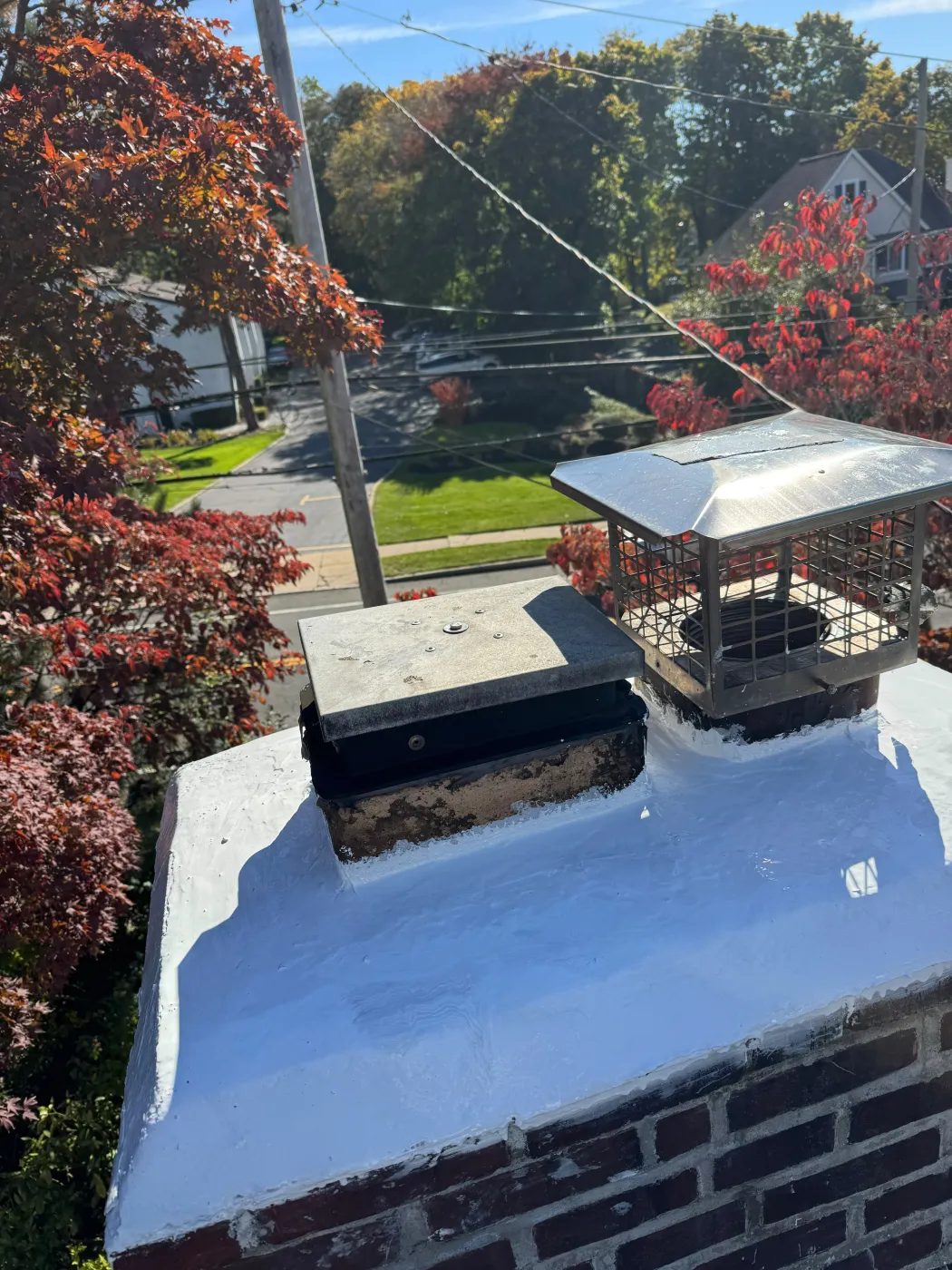
From our own jobs
Our photos, not stock.
Why it matters
A liner does three things. It keeps the heat of a fire or a burner away from the bricks and from the wood framing that sits close to many old chimneys. It keeps smoke and carbon monoxide inside the flue. And it gives exhaust a smooth passage of the right size, so the chimney drafts properly.
A liner with gaps does none of these well. Heat and acidic moisture reach the mortar and eat it away, and exhaust can work through the masonry into the house. Liner damage caught early costs far less to fix than the masonry damage that follows when it is left.
Chimney liner repair: common questions
Can a cracked clay liner be repaired, or does it have to be replaced?
It depends on how much is damaged and where. Open joints and a small number of cracks can often be repaired in place, and a broken tile at the top can be swapped out. When tiles are cracked or missing along the length of the flue, relining is the sounder fix.
Is it safe to keep using the fireplace with a cracked liner?
It is better not to. A crack gives heat and exhaust a way out of the flue, and from the firebox you cannot tell how far it runs. Wait for the inspection before the next fire, and if the flue serves a boiler or furnace, have it checked soon.
My metal liner is rusting. Can it be patched?
Generally not. Once a metal liner has corroded through in one place, the rest is usually close behind. It is replaced, and we look for the cause, which is often rain from a missing cap or a liner that was not suited to the appliance.
Related chimney services
Tell us what is going on. We will tell you what it needs.
Call or text with your ZIP code and a line about the problem. For dryer vents, text DRYER and your ZIP.