
Furnace chimney cleaning in New York City
A furnace flue gets no attention because there is no fireplace to remind you it is there. We clear the soot, scale and debris from the flue, its base and the connector pipe, so exhaust leaves the house the way it should.
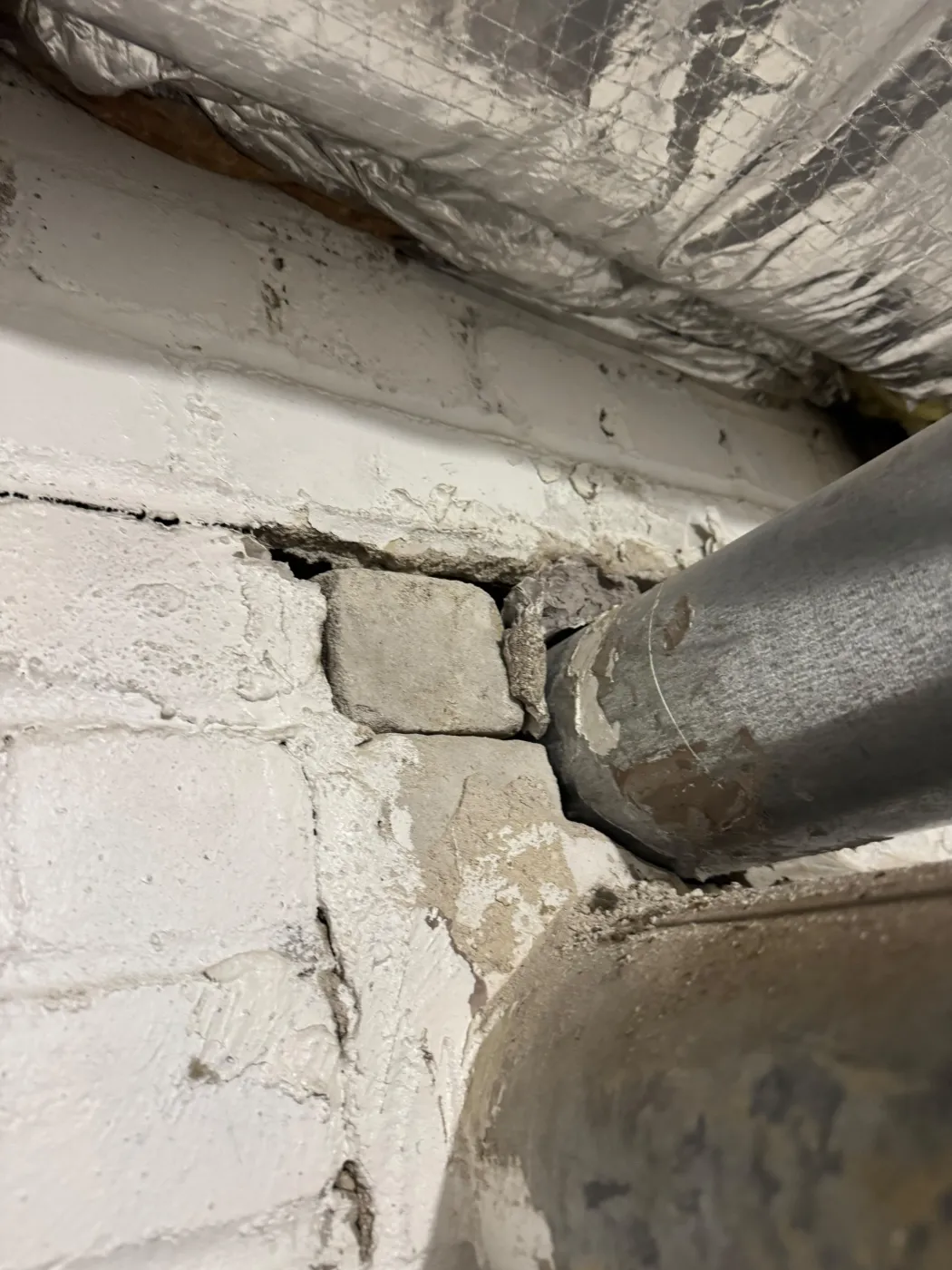
Furnace chimney cleaning, explained
A furnace heats air, and a blower sends that air through the ducts. The burner's exhaust goes the other way: out through a metal connector pipe and up a flue in the chimney. Furnace chimney cleaning is the cleaning of that exhaust path, from the furnace outlet to the top of the chimney.
What collects there depends on the fuel. An oil furnace leaves soot. A gas furnace burns cleaner, but its exhaust is damp, and that moisture makes the flue lining flake. The flakes, along with rust, mortar sand and leaves, fall to the bottom of the flue and pile up right where the connector pipe enters, until they start to block the opening.
Plenty of New York City houses heat with a basement furnace that vents into a brick chimney as old as the house. The sensible time to clean it is late summer or early fall, before the heating season starts. NFPA 211 says chimneys, fireplaces and vents should be inspected at least once a year, and a furnace flue is part of that.
If your heat comes from radiators or baseboards, you have a boiler, not a furnace. The work is similar, but oil soot and the cleanout matter more: see boiler chimney cleaning.
What is included
- The connector pipe taken down, brushed out and checked for rust
- The base of the flue cleared of scale and debris
- The flue brushed along its full height
- The pipe refitted and sealed where it enters the chimney
- The cap and the top of the flue checked
- Photos of what came out and of the cleared flue
Signs you need it
- Soot or dark streaks around the furnace or its pipe
- Rust or white deposits on the connector pipe
- Flakes or grit collecting at the base of the chimney
- A furnace that keeps shutting itself off
- A stale exhaust smell in the basement when the heat runs
How the job goes
Look, then cover
We check the furnace outlet, the connector pipe, the opening in the chimney and the flue above it. Then the furnace is switched off and the floor around the chimney base is covered.
Clean the pipe
The connector pipe comes down, is brushed out and is looked over for thin spots and holes. A pipe that has rusted through is flagged for replacement.
Clear the base
Scale and debris piled at the bottom of the flue are taken out through the cleanout door or the pipe opening and vacuumed up.
Brush the flue
A rotary brush on flexible rods travels the height of the flue to knock down what is clinging to the walls, and the fallen material is collected.
Refit and test
The pipe goes back with its upward slope, the joint at the chimney wall is sealed, and the furnace is run so we can check that exhaust is being drawn up the flue.
From our own jobs
Our photos, not stock.
Why it matters
A furnace needs a clear path for its exhaust every minute it runs. When the flue or the pipe is partly blocked, exhaust backs up and spills into the basement, and it can carry carbon monoxide with it. A forced-air system moves air through the whole house, so what is in the basement air does not always stay there.
There is a cost side too. A furnace that cannot vent well runs poorly and can shut down on its safety controls when you need it most. And debris left sitting damp at the base of a flue wears away the liner and the mortar around it, which turns a cleaning into a repair.
Furnace chimney cleaning: common questions
Does a gas furnace really need its chimney cleaned?
Yes, though for a different reason than a fireplace. Gas leaves little soot, but the flue still fills from the bottom with flaked lining, rust, mortar sand and whatever falls in from the top. Checking it once a year and cleaning it when there is buildup keeps the opening clear.
My furnace vents through a plastic pipe out the side of the house. Do I need this?
Not for the furnace. High-efficiency furnaces vent directly outdoors and do not use the chimney. If a gas water heater still vents into that chimney, though, its flue is worth checking, since it is now working alone in a passage sized for more.
Can you clean the ducts at the same visit?
They are different systems: the flue carries exhaust out, and the ducts carry heated air to the rooms. We do both. If you want the supply and return ducts done as well, see air duct cleaning and tell us when you call.
Related chimney services
Tell us what is going on. We will tell you what it needs.
Call or text with your ZIP code and a line about the problem. For dryer vents, text DRYER and your ZIP.