
How a dryer dries
A dryer does two things. It heats air, and it moves that air through the tumbling clothes and out of the building. The second job matters as much as the first. The air leaving the drum is full of water, and it has to go somewhere.
When the vent is restricted, the wet air leaves slowly. The drum stays hot and humid, the clothes steam instead of drying, and the timer runs out with the load still damp. So you run it again.
The causes, most likely first
Work down this list in order. The first four are all airflow problems.
- A lint screen that is full, or filmed over so air cannot pass through the mesh
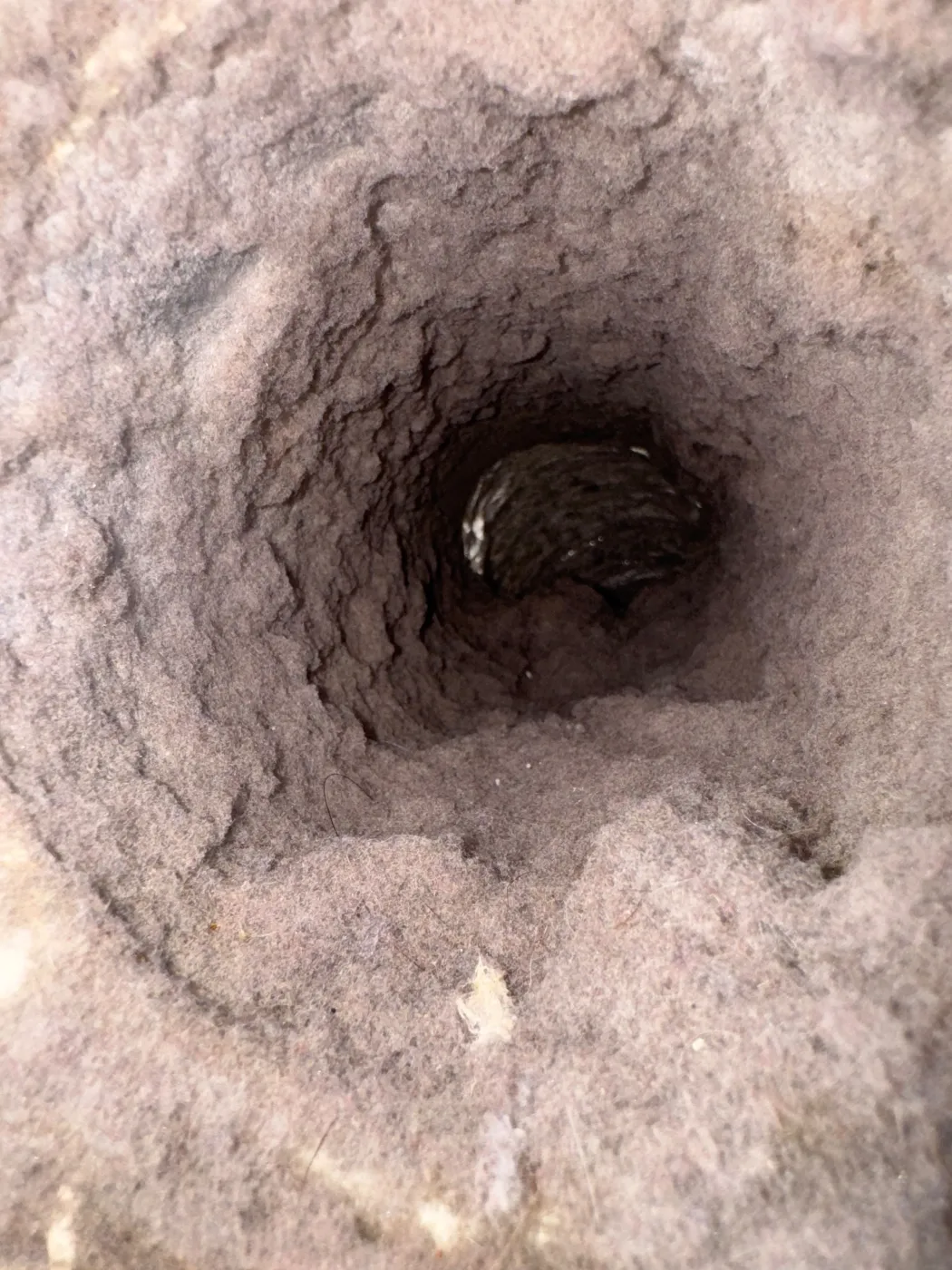
- Lint built up along the vent line inside the wall or ceiling
- A hose crushed or kinked behind the dryer
- An outside flap stuck shut, a nest in the hood, or a screen over the outlet matted with lint
- Loads that are too large, or clothes coming out of the washer too wet
- A fault in the dryer: the heating element or gas burner, a thermostat, a sensor
What each cause looks like
Start with the screen. Hold it under a tap. If water pools on the mesh instead of running through, residue has filmed it over. Wash it with dish soap and a soft brush and let it dry.
Lint in the line is the cause you cannot see. The screen catches only part of what the clothes shed. The rest goes into the duct and sticks, mostly at turns and joints. New York layouts make it worse. In a row house the vent may cross the whole basement ceiling to reach an outside wall. In an apartment the dryer often sits in a closet, with the vent rising through the building.
The hose is the cause people create themselves. Push the dryer back hard against the wall and a soft foil hose folds flat. The outlet comes next: a flap glued shut by lint, a bird's nest in the hood, or a screen someone added to keep birds out that now holds a mat of lint.
Only after those does the washer or the dryer come into it. A washer with a weak spin hands over clothes that are heavier and wetter than they should be, and no dryer finishes those in one cycle.
How to tell a vent problem from a dryer problem
Go outside while the dryer is running, find the outlet and put your hand in front of it.
With a vent problem, the air at the outlet is weak and the flap barely lifts. Indoors, the top of the dryer is hot to the touch, the clothes come out hot but damp, and the laundry area feels warm and humid. You may see lint collecting behind the machine or around the door.
With a dryer problem, the air at the outlet is strong but cool. The clothes come out damp and barely warm, because the drum is turning and the fan is blowing but nothing is heating the air. That points to the heating element, the gas burner or a control part, and it is a job for an appliance technician.
There is one overlap to know about. A dryer has safety parts that cut the heat when it overheats, and a clogged vent is a common reason it overheats. So a vent problem can turn into a no-heat problem. If a technician replaces a blown thermal fuse and the vent stays clogged, the new fuse is likely to go the same way.
What you can check yourself
Before you call anyone, run through these. If they all look right and the air at the outlet is still weak, the restriction is in the part of the line you cannot reach.
- Clean the lint screen, and wash it if water will not pass through
- Slide the dryer out a little and check the hose for kinks, tears and flat spots
- Check that the hose is still attached at both ends
- Watch the outside flap open while the dryer runs
- Try a smaller load and see whether one cycle is enough
What fixes it
A line full of lint needs to be brushed from end to end, not just vacuumed at the first bend. That is dryer vent cleaning: a rotary brush on flexible rods works through the whole run, the lint is collected, the outlet is opened up, and a test run shows whether the air outside is strong again.
If the line is blocked solid, finding where is half the job, and our dryer vent clog page covers it. When the hose is flattened or ripped, or a joint has separated behind the wall, cleaning will not hold and the damaged section needs dryer vent repair.
Why not just run it twice
Because the second cycle is the symptom, not the fix. With a restricted vent, every load runs hotter and longer than it should. That wears out the heating parts, shows up on the utility bill and is hard on the clothes. Lint is also flammable, and heat backing up into a duct lined with it is how dryer fires start.
If you want it looked at, text DRYER and your ZIP code to (917) 983-1283 for a quote. You get photos showing what the line was holding.
Related services
Call or text (917) 983-1283 for a quote.