
Go by condition, not by the calendar
A duct system is a loop. The return side pulls room air in, the filter catches part of what rides along, and the supply side pushes the air back out to the rooms. Whatever the filter misses settles inside the ducts a little at a time.
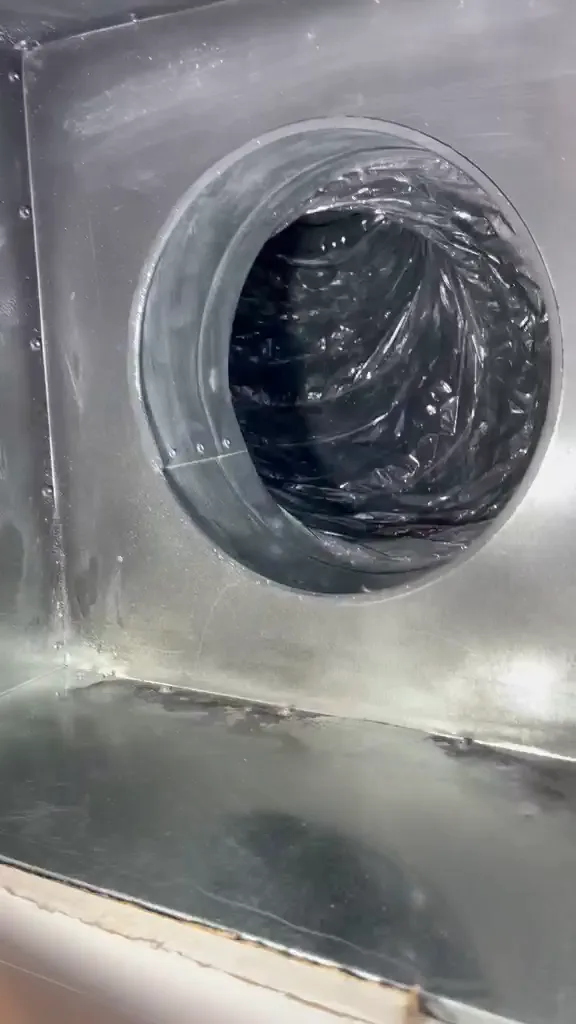
In a home with a decent filter that gets changed on time, that layer builds slowly. In a home with a clogged filter, a shedding dog and a kitchen renovation last spring, it builds fast. That is why a look inside tells you more than a date does. Take a register cover off, shine a light in and take a photo with your phone. A thin gray film is normal. A matted layer, loose debris or anything growing is not.
First, check whether you have ducts at all
Many New York apartments have no ductwork. If your heat comes from radiators and your cooling from a unit in the window or in a sleeve under it, there are no ducts to clean. The unit itself is what collects dust and moisture, and it needs its own service. That is PTAC cleaning, a different job.
Apartments with central air usually have a small air handler in a closet or above a dropped ceiling, with short duct runs to each room. Short runs hold less dust than a house full of ductwork, but the returns sit close to the kitchen, the front door and the hallway, so they work hard. In a co-op or condo, ask management which parts of the system belong to your unit and which belong to the building before you book anything.
What moves the date up
Some events put more into the system in one season than ordinary living does in years. If one of these applies, do not wait for the usual interval.
- Renovation or heavy repair work while the system was running
- Moving into a home whose history you do not know
- Pets that shed
- Visible mold on a register or inside a duct
- A musty smell in the first moments after the air starts
- Allergies that are worse indoors when the system runs
- Water in the ductwork from a leak or an overflowing drain pan
- Signs of mice or insects in the ducts
Renovation, moving in and pets
Renovation is the big one. Drywall dust and sawdust are fine enough to pass a loaded filter and light enough to travel the whole system. Have the ducts cleaned once the dusty work is finished, not partway through. The timing is covered under after-renovation air duct cleaning.
When you move in, you inherit whatever the last household left: their pets, their smoking, their contractor's dust. If nobody can tell you when the system was last cleaned, assume it was not, and start with a look.
Pets do not ruin ducts, but hair and dander collect at the return grille and load the filter sooner. Homes with pets usually sit at the short end of the range. Changing the filter more often does more good than anything else you can do yourself.
Mold and allergies
Visible mold is not a scheduling question. Mold needs moisture, so something is wet that should be dry: a sweating duct, a blocked drain pan, a leak above the ceiling. The order is clean first, then treat the cleaned ductwork, and fix whatever is making it wet. Skip that last step and the growth is likely to come back. See air duct disinfecting for how that part works.
Dust in the ducts can aggravate allergies, because the system stirs it up every time it starts. Cleaning removes one source of that dust. It is not a medical treatment, and it will not do much if the real source is a carpet, a pet bed or an open window on a busy street.
What a house changes
A house or a brownstone with central air has more of everything: longer runs, more returns, a furnace or air handler in a basement that makes its own dust. The same ducts often carry heat in winter and cooling in summer, so the system never really rests. Row houses that had central air added later tend to have flexible duct threaded through tight spaces, where sags and sharp bends collect debris.
The answer is the same in kind, though. Look first, then decide. A larger system simply has more places for dust to settle and more reasons to check.
Why it is worth checking
The U.S. EPA says indoor air can be 2 to 5 times more polluted than outdoor air. Ducts are only one contributor, but they are the one that touches every room, and the one nobody sees.
Between cleanings, keep the filter fresh, keep furniture off the returns and vacuum the register faces. If you want to know where your system stands, we open a register or two, photograph the inside for you, and quote the job before anything is cleaned. Read more about air duct cleaning, or call or text (917) 983-1283.
Related services
Call or text (917) 983-1283 for a quote.