
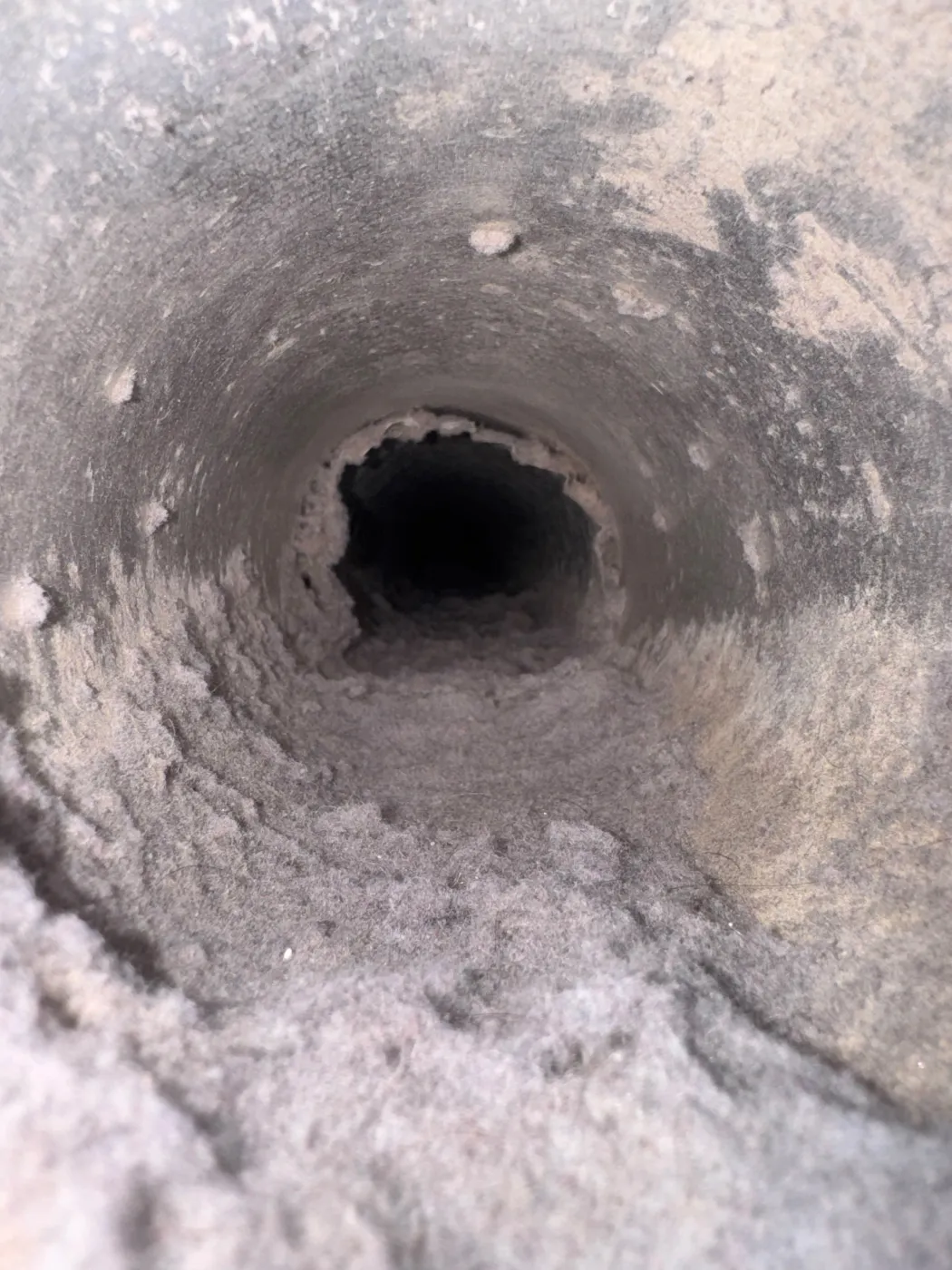
Why a vent becomes a fire risk
By the U.S. Fire Administration's count, about 2,900 home clothes dryer fires are reported each year. The leading cause it lists is failure to clean.
The reason is simple. Lint is fine, dry fiber, and it lights easily. A dryer makes heat on purpose and relies on moving air to carry that heat away. When lint narrows the vent, the air slows down and the heat stays in the machine and the duct, which is exactly where the lint has collected. Nothing looks wrong from the outside. The dryer still turns and the clothes still dry, eventually.
The signs most people notice
People tend to explain the familiar signs away: the dryer is old, the load was big, the towels are thick. If the same loads dried in one cycle last year, something has changed, and it is usually the vent. Take these four at face value.
- Loads that come out damp and have to go around again
- Clothes and the top of the dryer very hot at the end of a cycle
- A burning or scorched smell while the dryer runs
- A laundry room that turns hot and humid whenever the dryer is on
The signs people miss
Lint in the wrong places. A film of lint on the wall behind the dryer, on the floor under it or around the door seal means air is being forced out through gaps instead of down the vent. Lint on the outside wall around the outlet, or hanging from the flap, means the outlet itself is clogging.
A flap that does not move. Go outside while the dryer runs. The flap should swing wide open and the air should be strong and warm. A flap that barely lifts is telling you the line is restricted.
A dryer that quits and then works again. Dryers have a safety thermostat that cuts the heat when the machine gets too hot. If yours stops heating partway through a load, or shuts off and runs normally later on, it may be protecting itself from a blocked vent. A dryer that suddenly will not heat at all may have blown its thermal fuse for the same reason.
Dampness. Condensation on the laundry room window, a musty closet, or a damp patch on the wall or ceiling along the vent's route can mean moist air is escaping from a joint that has pulled apart. Where the air leaks, the lint leaks too, into a space nobody can see.
Not knowing where the vent goes. If you have just moved in and cannot say where the vent ends, nobody has been checking it. The same goes for a hose behind the dryer made of thin plastic or sagging foil. It should be replaced with metal, which is covered on our dryer vent replacement page.
If you smell burning
Stop the dryer and do not restart it to finish the load. Clean the lint screen, look behind the machine for lint or scorch marks, and leave the dryer off until the vent has been checked.
If you see smoke or flame, keep the dryer door shut, get everyone out and call the fire department from outside. Opening the door feeds air to the fire.
Habits that lower the risk
The first five are yours to keep up. The sixth is the one that gets put off. A yearly cleaning suits most homes. Heavy use shortens that, and so does a long line with several turns, which is common in row houses and apartment buildings.
- Clean the lint screen before every load
- Do not run the dryer while you are asleep or out of the home
- Do not machine dry anything that has had cooking oil, gasoline or solvent on it
- Keep boxes, clothes and cleaning supplies away from the dryer
- Check from time to time that the outside flap opens fully
- Have the whole vent line cleaned on a regular schedule
What a cleaning does about it
A cleaning removes the fuel. The dryer comes forward so the hose can be looked over. The line is brushed from the dryer end to the outlet with a rotary brush on flexible rods, which scrubs the lint off the duct walls. The loosened lint is gathered up, the outside hood is cleared, and the dryer is run to test the air coming out. You get photos from before and after the cleaning, so you can see what was sitting in the line.
Our dryer vent cleaning page goes through the visit step by step. If the line turns out to be fully blocked, see dryer vent clogs. To get a quote, text DRYER and your ZIP code to (917) 983-1283.
Related services
Call or text (917) 983-1283 for a quote.