
What you are probably hearing
Birds are the usual tenants. Chimney swifts cling to the inside wall of a flue and fix a small nest of twigs to it. Starlings and sparrows build bulky nests of grass and twigs near the top that can fill the whole opening. Raccoons treat an open flue like a hollow tree and raise their young on the smoke shelf just above the damper.
You rarely see any of them. The sound tells you most of what you need to know.
- Fast, high chattering that swells and fades through the day: baby birds being fed
- Fluttering and scrabbling low down, near the damper: a bird that has fallen and cannot fly back up
- Frantic scratching in daylight: a squirrel that slid down a slick flue and cannot climb out
- Heavier thumps, with growls or a chittering cry, mostly at night: a raccoon, often a mother with young
What not to do
Each of these makes the situation worse.
- Do not light a fire or burn paper to drive the animal out
- Do not open the damper to look if something may be sitting on it
- Do not reach in or try to grab the animal
- Do not cover the top of the flue while anything is still inside
- Do not use the fireplace until the flue has been cleared and checked
Why a fire is the worst idea
Young animals cannot climb or fly out, so smoke does not move them. Nest material is dry twigs and grass sitting in the path of the flames. And a flue plugged by a nest cannot carry smoke, so it comes back into the room along with carbon monoxide.
Reaching in is the second worst. A cornered wild animal bites and scratches, and raccoons in particular can carry disease.
What to do first
Make sure the damper is closed, and close the glass doors or set a screen across the opening, so nothing can come down into the room. Keep children and pets away from the fireplace.
A single bird that has dropped into the firebox can often be let out. Close the doors to other rooms, darken the room, open one window or outside door wide and then open the fireplace. The bird heads for the light.
A squirrel that is trapped, a raccoon, or a nest with young in it is not a job to take on yourself. For a live squirrel or raccoon, call a wildlife control operator. We do not trap or remove live animals. When you call us about the nest and the cap, say what you have heard, when you hear it and whether the flue serves a fireplace or a heating appliance.
That last detail matters. If the blocked flue belongs to a boiler, furnace or water heater, treat it as urgent. Exhaust that cannot rise comes back into the building, and that exhaust includes carbon monoxide.
Why timing can matter with birds
Some birds are protected by law while they are nesting. Chimney swifts are one example. When a nest is active, with eggs or young in it, it generally has to stay where it is until the young have flown.
The wait is not long. The young grow quickly, the chattering stops, and swifts leave for the south before the cold weather arrives. In the meantime keep the damper shut and the fireplace unused. Once the birds have gone, the nest can come out and the flue can be cleaned and capped, so the same birds do not move back in next spring.
This is one reason to call before doing anything. Identifying the bird and the stage of the nest decides whether the work happens now or a little later.
After the animal is gone
Getting the animal out is the wildlife operator's half of the job. What it leaves behind is the rest: twigs, leaves, grass, fur, droppings and sometimes animals that did not make it out. Nest material can pack a flue solid. It blocks the draft, it burns, and it smells in damp weather.
The nest is removed, the flue is swept from top to bottom and the smoke shelf is cleared. Then the flue, the damper and the top of the chimney are checked for damage. Our nest removal page covers that visit, and the sweeping itself is described under chimney cleaning.
A cap with a mesh screen prevents a repeat
An uncapped flue is an open invitation, and many older New York chimneys have never had a cap. Animals come back to a spot that worked. A flue that held a nest this year is likely to hold one next year unless something changes.
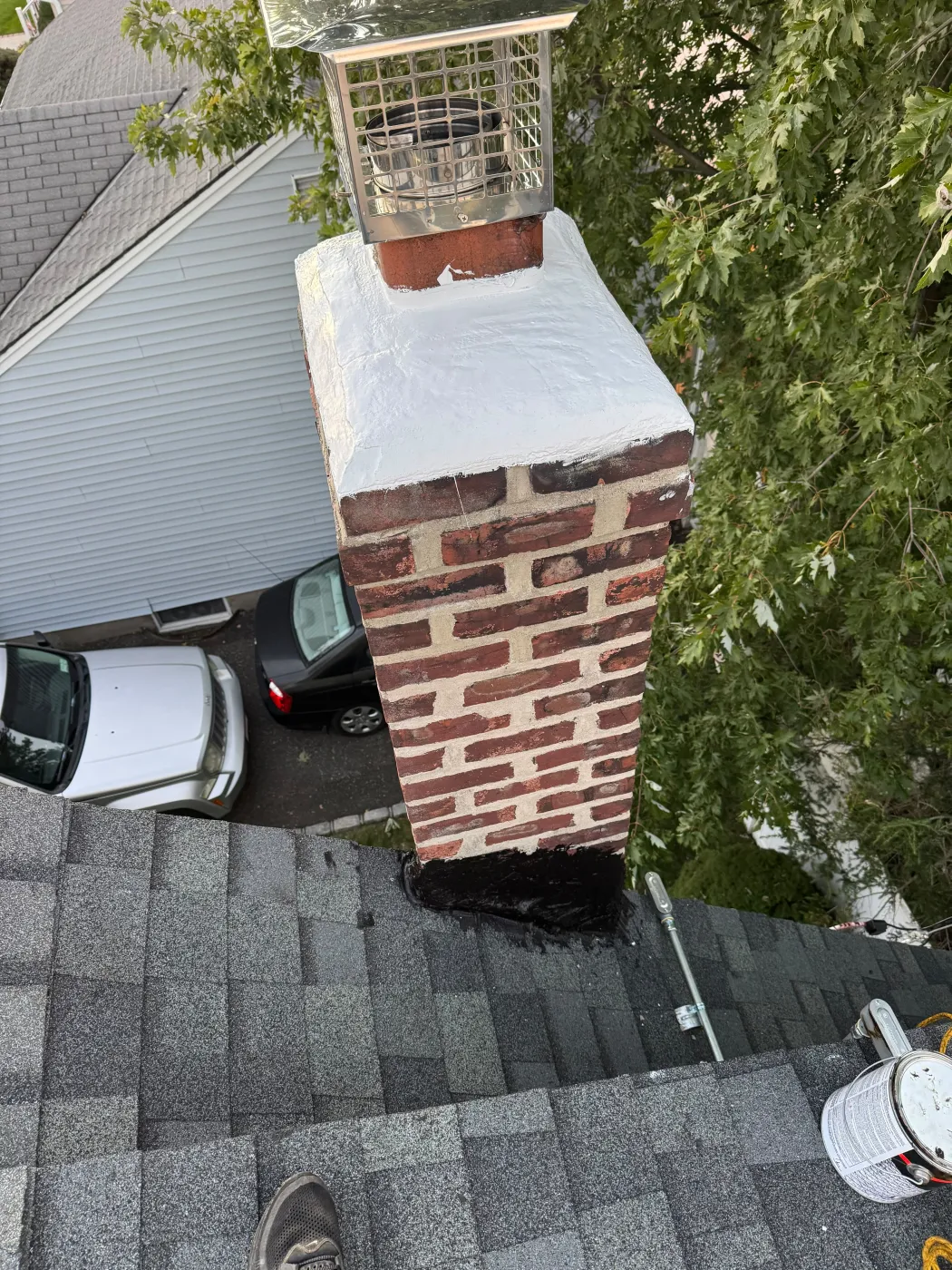
The change is a cap with a mesh screen: a lid that sheds rain, with mesh sides that let smoke out and leave no opening big enough for an animal. Every flue on the stack needs its own, including the one that serves the boiler. If there has never been a cap, see rain cap installation. If the old one is rusted or its mesh is torn, see chimney cap replacement.
Call or text (917) 983-1283 and we will quote the nest removal and the cap. You get photos of what was in the flue and of the cap once it is on.
Related services
Call or text (917) 983-1283 for a quote.